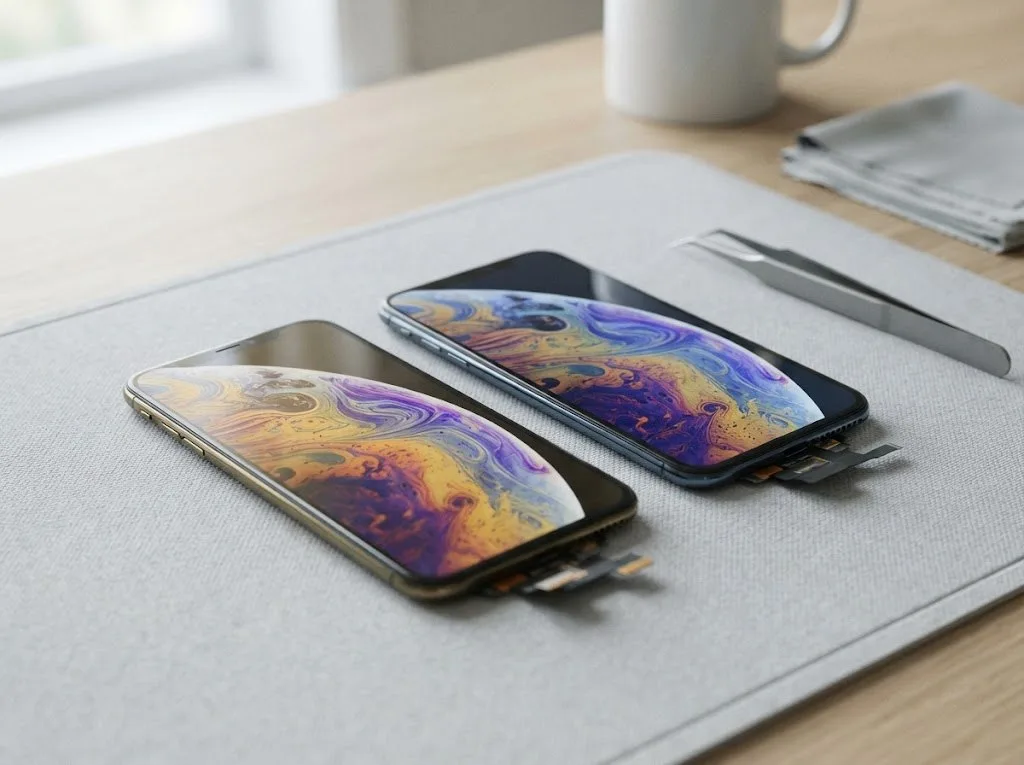
A cracked back is not always a reason to swap the whole body; the decision depends on the frame's geometry, not the crack's visible size.
Cracked Glass With a Straight Frame
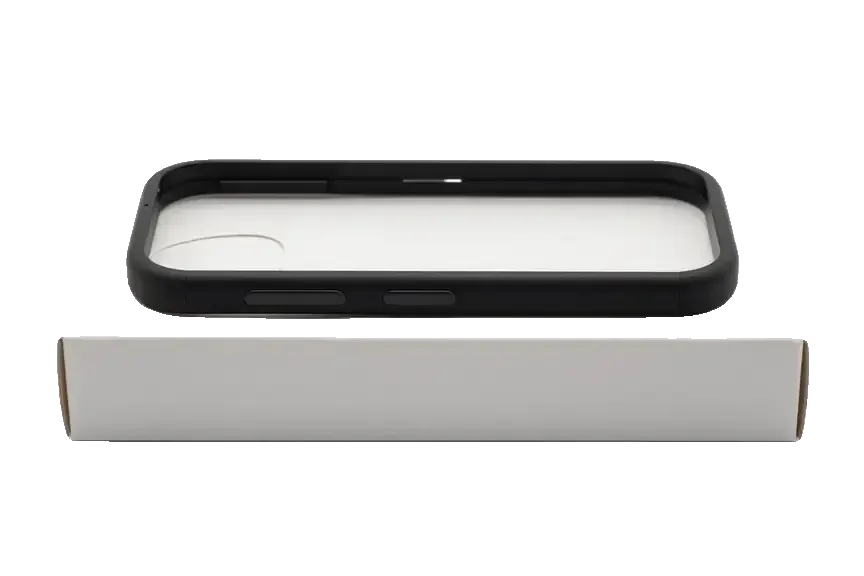
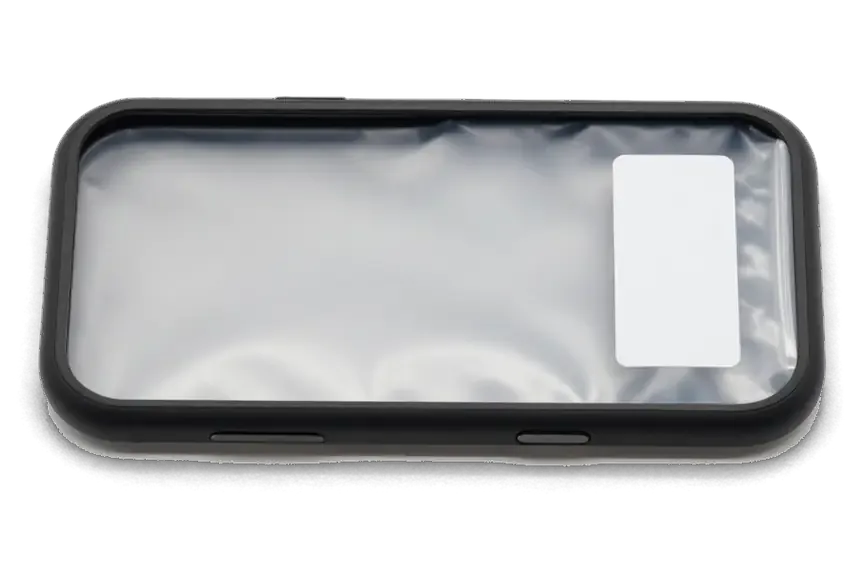
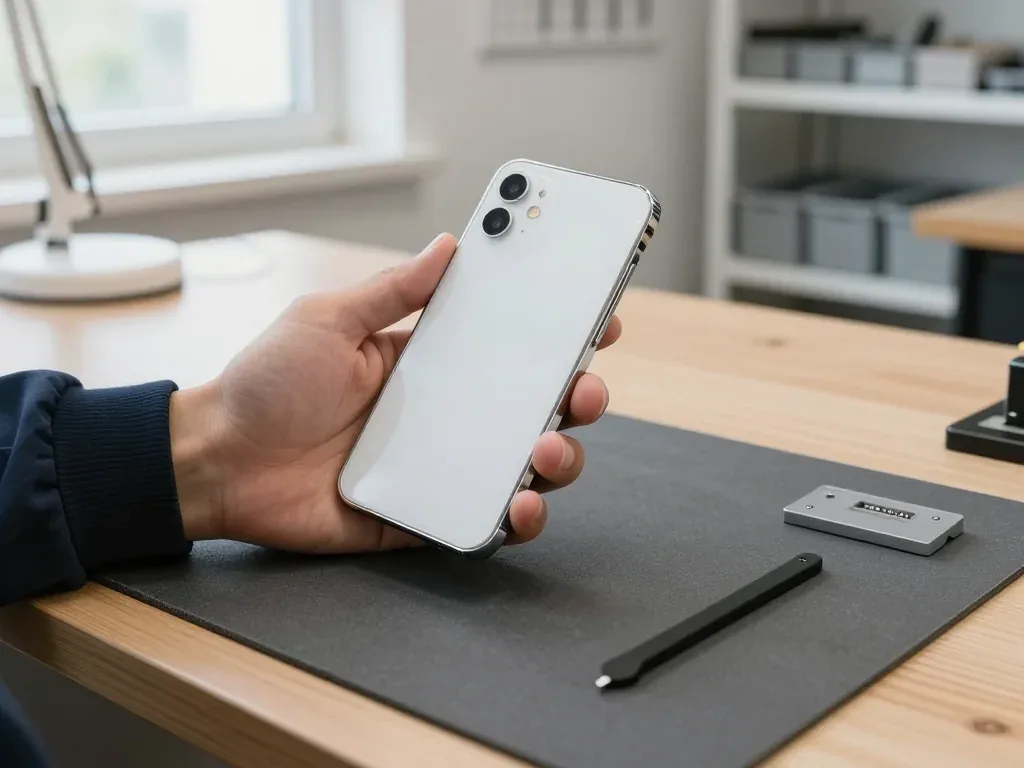
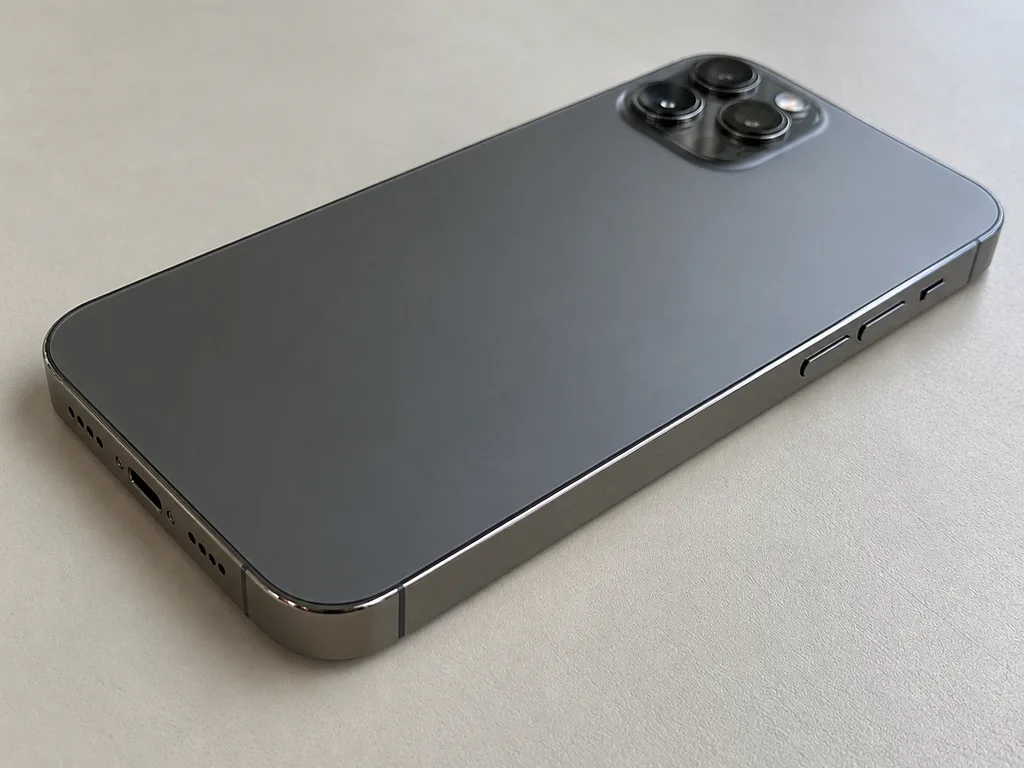
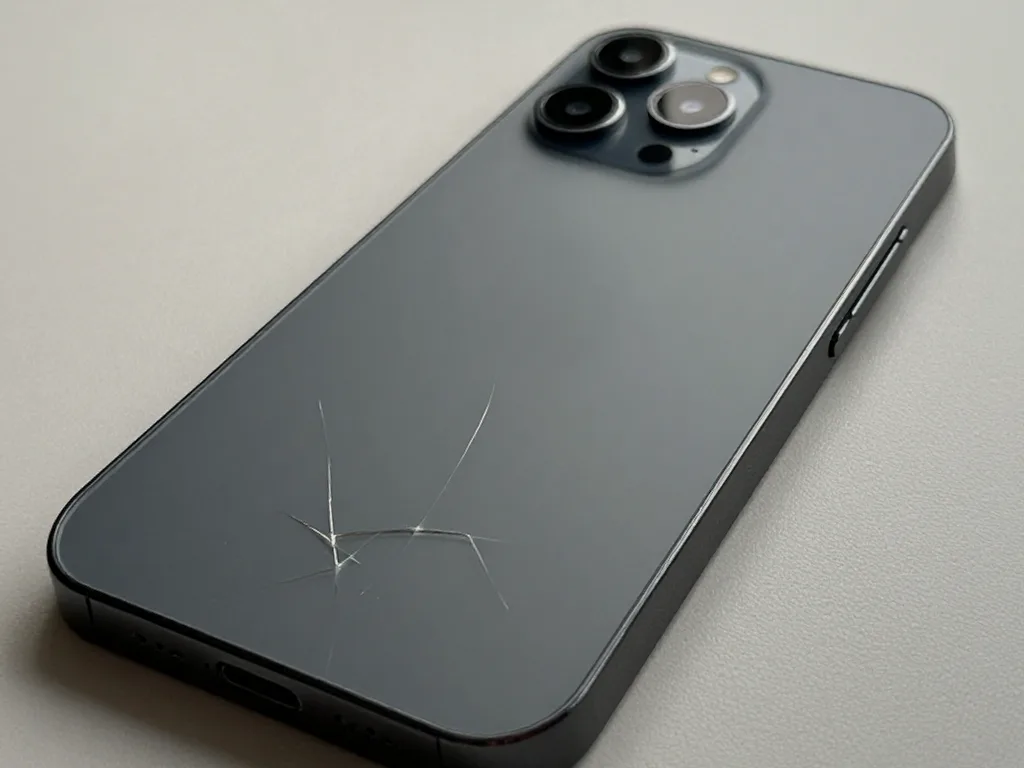
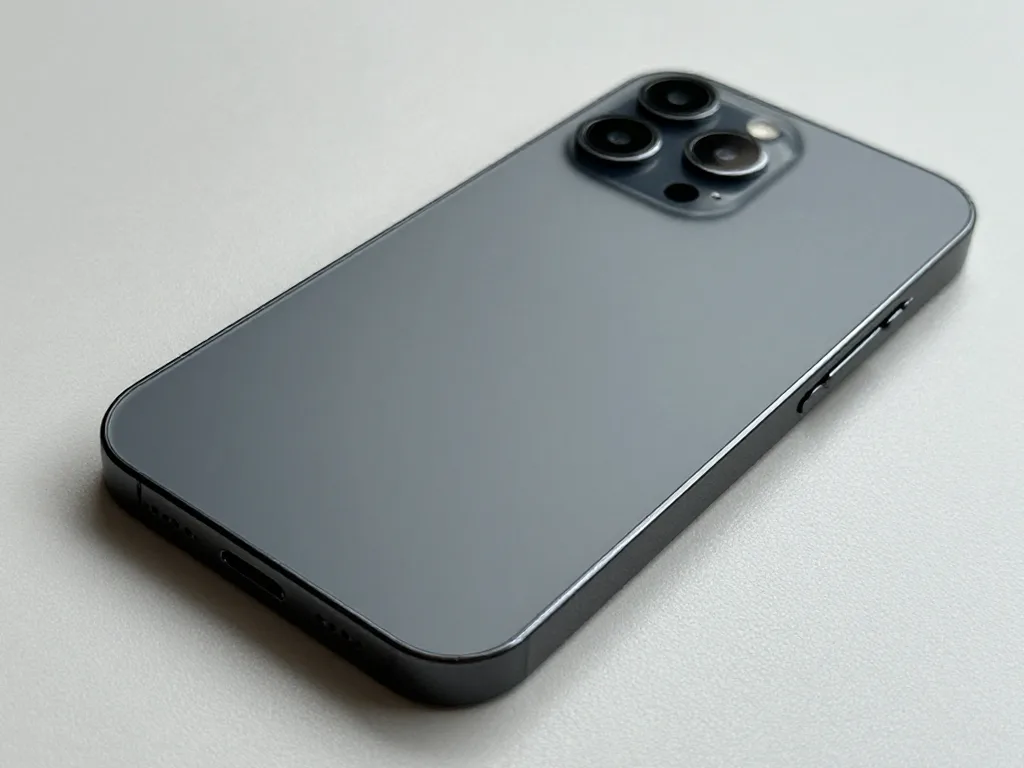
When only the rear panel is cracked and the body is straight, we replace the glass alone on iPhone 8 and newer, keeping your original chassis and buttons. The panel comes off under a laser, separating the adhesive contour without cutting into the middle frame or touching the wireless charging coil underneath. Because the chassis stays in place, your buttons, antenna inserts and the shade of the metal remain exactly as they left the factory. We show the new panel in its packaging before it goes on, and the work usually finishes in well under an hour. Run a fingernail along the body edge first — a hairline bend you can feel but not see is the usual reason a fresh panel lifts again within weeks.
Dents, Bends and When the Frame Decides
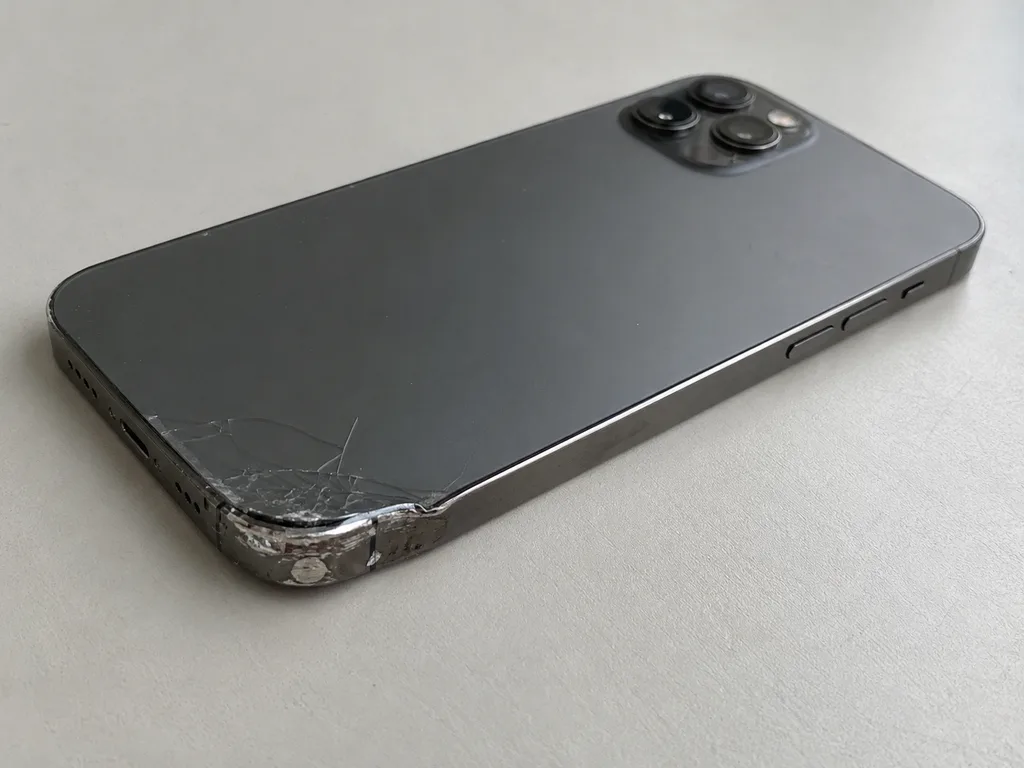
If the frame is bent or dented, the entire housing must be replaced: fresh glass will not lie flush on a warped middle chassis, and the resulting gaps admit dust and moisture again. Even a shallow dent near a corner changes the angle where the adhesive contour meets the metal, so the seal never closes evenly. On iPhone 6 and 6 Plus the aluminium bends gradually in a pocket, so a working phone can already be out of geometry. During the complimentary 15-minute diagnostics, we place the device on a flat plate and inspect the gap beneath every edge. If the frame rocks, glass alone is wasted work.
Comparing Three Ways to Repair
Which parts each repair replaces and moves| Job | When it fits | What we transfer | What we check after |
|---|
| Rear glass only | Cracked glass, straight body, iPhone 8 and newer | Nothing, chassis stays | Wireless charging, camera, flash |
|---|
| Full housing | Dented or bent body, cracks at the edges | Board, battery, cameras, buttons | Touch ID or Face ID, network, buttons |
|---|
| Camera glass only | Cracked lens island, rest of the body undamaged | Nothing | Camera focus, flash, microphone |
|---|
How the Housing Design Differs Across iPhone Generations
A crack means different work on a 4s and an 11 Pro Max, since screws, glue or a steel band hold the back panel by generation.
Screws, Glue and Steel Frames
With the 4s, two screws release the rear panel — no heat, no laser; on the 8 and later models the rear panel is glued to the body, so a laser cuts it off before the replacement gets bonded in place. Between those ends sit the 5, 5s and SE, which use a two-piece back held by clips and adhesive, and the 6 and 6s, where the aluminium shell is pressed rather than glued. On the X, XS, XS Max and 11 Pro the rear glass sits on a polished stainless steel band that resists bending far better than the softer rails of a 7 or 8.
What Happens to Water Resistance After the Housing Is Opened
- Factory seal — the plant-pressed gasket bond cannot be matched by any hand-applied strip.
- Fresh adhesive — we fit a new gasket, yet it restores splash protection, not the original rating.
- SIM tray — its rubber ring ages and compresses, a weak point even on an untouched phone.
- Buttons and openings — mute switch, volume keys and speaker mesh each lose seal grip once the body is opened.
- Practical advice — after a repair, avoid pools and downpours; if the ports get wet, dry them right away.
Our iPhone Housing Replacement Process in Astana
Everything is put in writing before we touch the phone — from the initial WhatsApp photo to handing you the removed part in a bag at the end.
Starting With a WhatsApp Photo, Ending With a Written Receipt
Snap the damage and send it via WhatsApp; within 5 minutes an engineer answers with the cost and offers a free slot. Once work begins, the receipt lists the price, the part, the turnaround and the warranty terms. That reply comes from a technician, not a call-centre script, so the estimate accounts for the model, the body damage and whether the part sits on our shelf. The receipt takes 2 minutes to prepare and names the exact housing — original or aftermarket — so nothing is left to interpretation. Housing replacement runs on this same sequence at both of our branches. That is the full path of iPhone housing replacement in Astana — from your opening message until the job is done. The receipt protects you if the conversation later drifts — it names the exact part, so there is no room for a vague "something similar" at pickup.
What You See Before and After the Work
- Factory packaging first — we open the new housing in front of you and show the seals.
- Internal transfer — into the fresh chassis go the board, the battery, the cameras, the Taptic Engine, and the button flexes.
- Your check on site — together with the engineer you verify Face ID, True Tone, the cameras, microphones, speakers, charging and network.
- Paperwork and old part — the device returns with the receipt, warranty card and removed housing in a bag.
- Why keep the old housing — its antenna inserts and small brackets are often missing at later repairs elsewhere.
Turnaround and Waiting Options
- Standard timing — most housing jobs take 20–40 minutes; 72% of iServices repairs finish while the customer is in the branch.
- Where you wait — settle into our seating area with Wi-Fi and coffee, or arrange courier pickup.
- Opening hours — Mon–Fri 10:00–19:00, weekends and holidays 11:00–18:00, same at both branches.
- If the part is out of stock — wait until the next delivery; the WhatsApp quote says if the housing is available today.
- Free diagnostics — 15 minutes with the engineer, even if you decline the work.
Checks We Perform Once the Housing Is Reattached
A housing that looks right can hide a loose connector, so every job ends with ten minutes testing functions dependent on the parts we moved.
Running the 32-Point Check Together With You
Once the work is done, we carry out a 32-function check lasting roughly 10 minutes: Face ID, True Tone, the cameras, microphones, speakers, charging and network — and you stand beside the engineer throughout. The rear assembly carries the wireless coil, the flash, the microphone and several antenna contacts, each getting a live test rather than a visual glance. You watch the True Tone shift, tap through both cameras, record a voice note and place a call while the engineer reads the signal. Face ID cannot be repaired by swapping a part — it is paired to the board, so if it fails after a housing job the cause is almost always a pinched flex during reassembly.
Wireless Charging and the Coil on the Back Panel
- Coil transfer — the induction loop and flex move to the new panel; a crease or torn trace usually causes power loss.
- Pad test — every iPhone 8 and newer goes on a mat during final check; the icon alone doesn't prove alignment.
- Speed check — we compare battery percentage climb speed, since a damaged loop can draw power but slower.
- Magnet ring — the MagSafe ring is checked for hold and position; a shifted ring weakens attachment and misaligns the phone.
- Flash and microphone — the rear microphone and flash share one assembly, so both are recorded and fired once before handover.
Genuine vs Aftermarket Housing Fit and Colour Differences
The housing is the one part of the phone you actually look at every day, so fit, colour and finish matter as much as the internal work.
Shade, Fit and Matte Coating on the 11 Pro
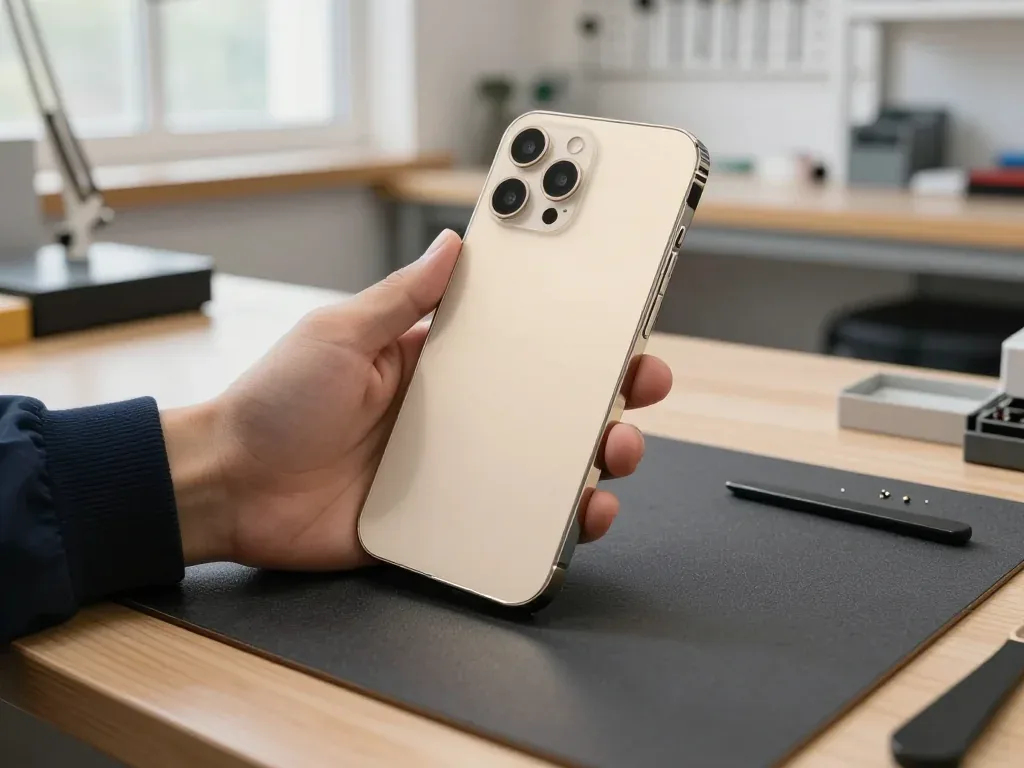
Shape can be replicated by an aftermarket housing, yet the exact shade seldom is; reproducing the matte glass of 11 Pro and 11 Pro Max is the toughest task, so 64% of buyers here pick a genuine part. On space grey and gold panels the difference is small at a glance but obvious side by side, because aftermarket coatings read slightly cooler or flatter under direct light. A good aftermarket shell still lines up with the buttons, SIM tray and camera cutout, while a cheap one leaves a hairline gap along the seam. Before fitting, the replacement component is shown to you in its factory packaging, and the job is covered by a warranty up to 1 year. Hold the new housing next to your old one under daylight, not shop lighting.
Is a New Housing Worth It on an Older iPhone
A new housing makes sense on an older iPhone when the rest of the phone is healthy, because the frame and glass make a working device feel worn out long before the internals fail. An iPhone 5, 5s or SE carries an aluminium body with glass inserts that scuff, chip and cloud over years of pocket wear while the board, camera and battery keep working fine. The same logic applies to an XR or 11 whose screen and Face ID are intact, since a fresh shell restores the feel of a still-quick device. On a 4s, 5 or 5s the housing is often the only component still available in good condition, so a clean body can extend the life of a phone otherwise retired for cosmetic reasons alone.
Summary: iPhone Housing Replacement
A final pass over the points that decide a housing job, so part, method and check-out routine are clear before you hand the phone over.
- Back glass versus full housing — cracked panel on straight body means glass-only; dent or bend means whole housing.
- Generation sets the method — screws on 4s, laser on 8, steel on X or 11 Pro.
- Water resistance — no housing job restores factory seal; treat repaired phone as splash-resistant.
- Functions to test on pickup — wireless charging, Face ID, cameras sit closest to moved parts.
- Original versus aftermarket — differ most in shade and matte finish, easiest in daylight.







 iPad
 MacBook
 iMac
 Mac mini and Studio
 Apple Watch
 AirPods
 Apple Pencil
 Apple TV
 HomePod