The 16 Pro Max is a large titanium phone with a 6.9-inch display and a tetraprism lens, so drops and pressure hit specific parts first. Here is what owners bring us and how we confirm the cause.
The Most Common Faults Owners Bring In
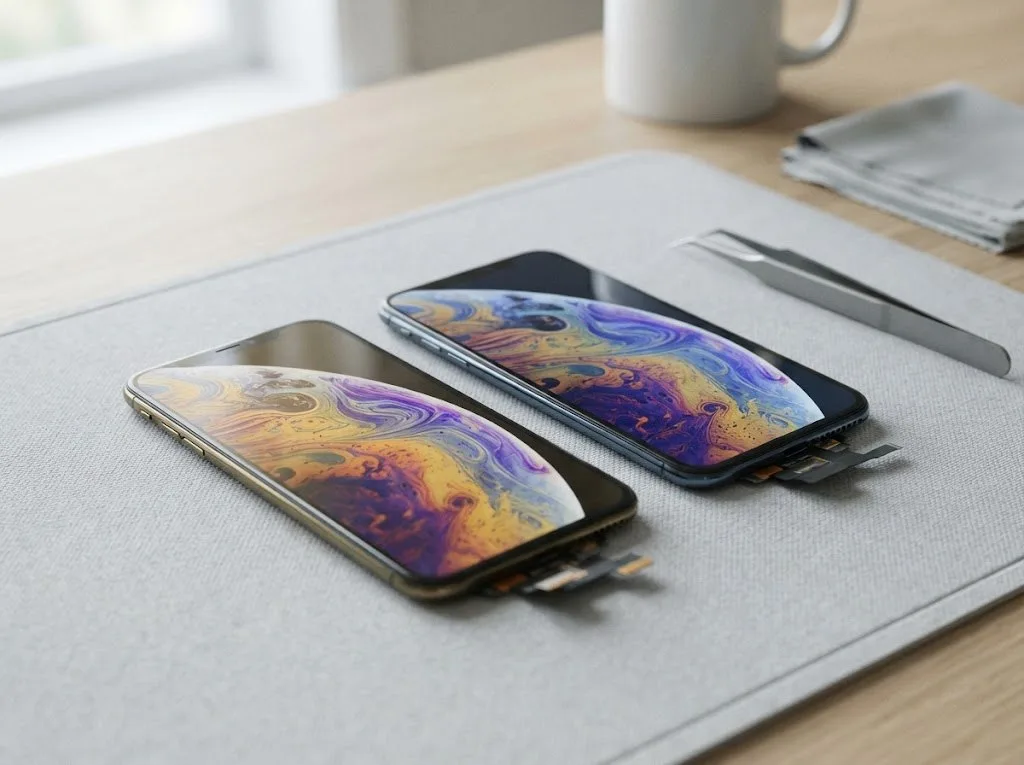
- Cracked front glass: the 6.9-inch panel takes the hit in most drops, and the outer sheet fails before the titanium frame or the board does.
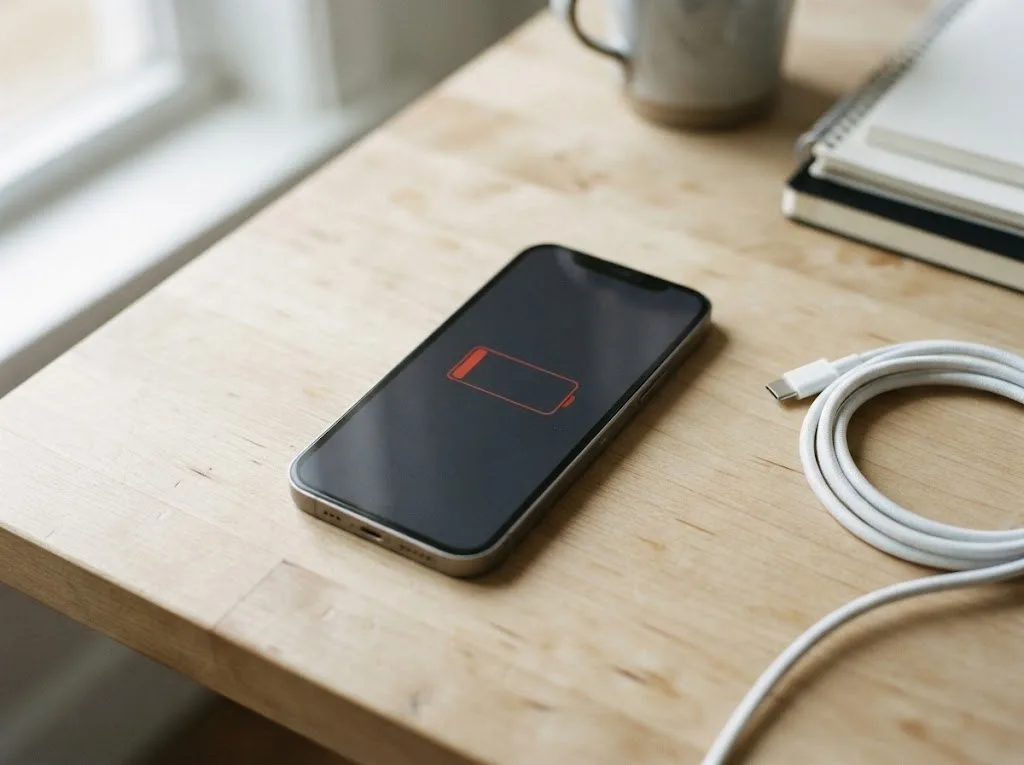
- Worn battery: heavy daily use on a large display drains cells faster, and owners notice early shutdowns and shorter runtime.
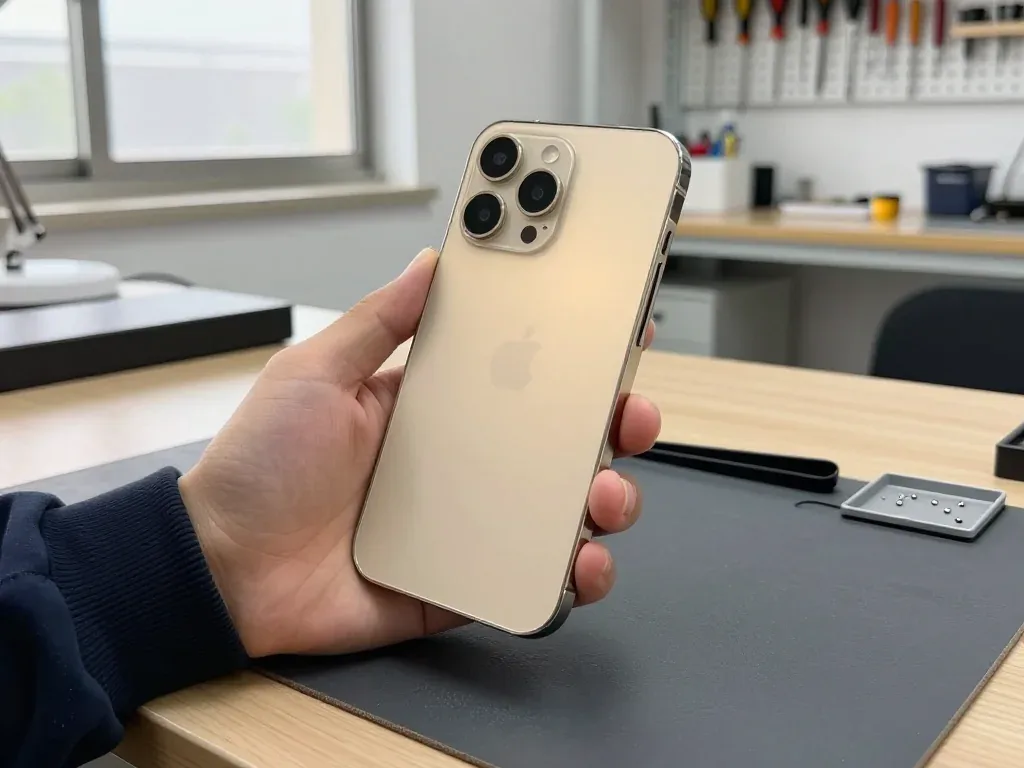
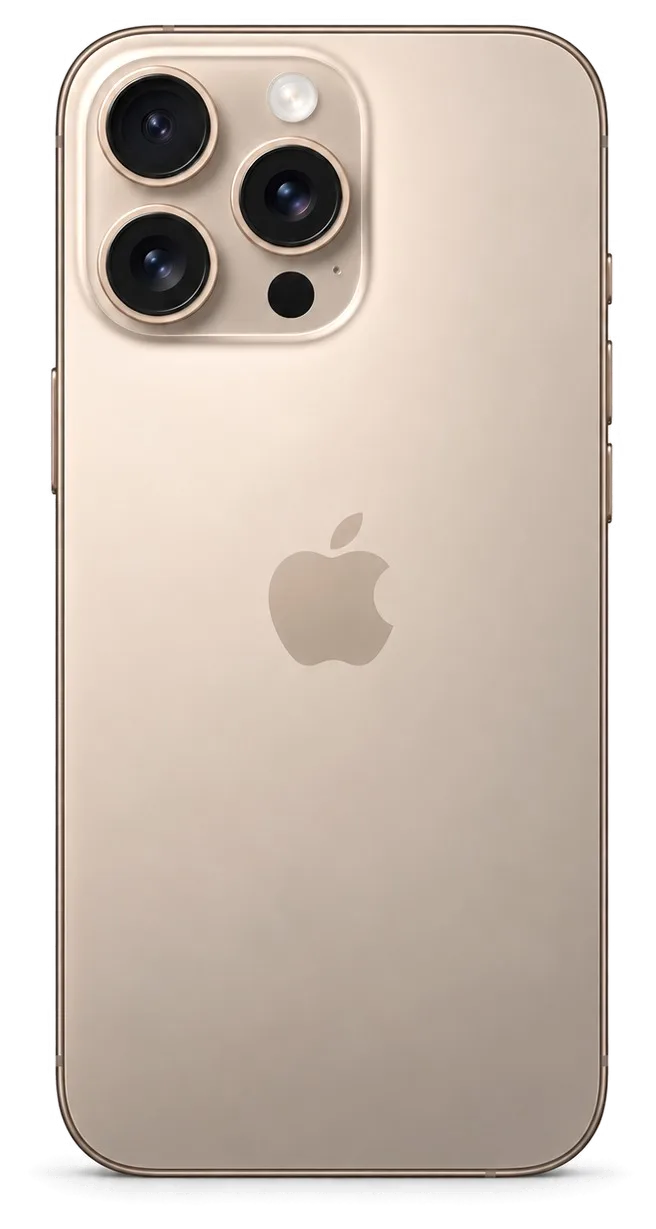
- Broken rear lens cover: the raised plateau catches surfaces when the phone is set down, so the outer cover cracks while the sensor stays intact.
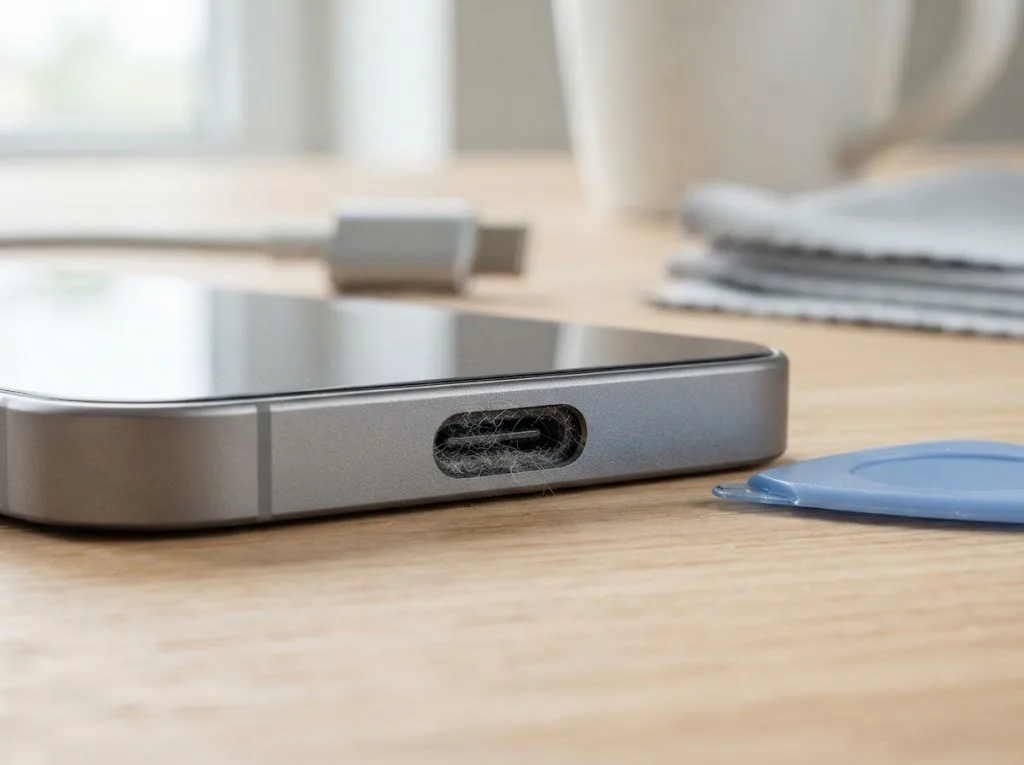
- USB-C charging faults: lint, moisture and cable wear reach the port first, and the phone stops charging reliably.
Symptom to Cause to What We Do
maps symptoms to causes and the matching fix| What you notice | Probable reason | What we do |
|---|
| Cracked front glass, touch works | Cracked outer sheet over an intact panel | Sheet-only replacement |
|---|
| Lines or green tint on screen | Damaged OLED module | Full display module swap |
|---|
| Battery drains fast, shuts down | Worn battery cells | Battery replacement |
|---|
| Will not charge on USB-C | Dirty or oxidised port | Port clean or flex swap |
|---|
| Blurry photos, cracked lens | Broken rear lens cover | Lens cover replacement |
|---|
How the Free 15-Minute Diagnostic Works
We run a free 15-minute diagnostic in front of you, even if you decide not to repair, and the engineer shows on the spot which part has failed. The check takes about a quarter of an hour: the technician opens the settings, tests touch across the whole panel, reads battery health, tries a known-good cable and inspects the rear plateau under light. Nothing is opened up before you see the result yourself. When a phone refuses to charge, a dirty or oxidised port is the likelier culprit than a dead board, and this check alone tells the two apart before any part gets ordered. Seeing the fault yourself removes the guesswork that makes owners suspicious of upsells, so you leave knowing the real cause.
iPhone 16 Pro Max Repair for the 6.9-Inch Display Glass or Full Module
A cracked 16 Pro Max screen is not always a full module job. Whether we replace only the glass or the whole display depends on the matrix underneath, and that choice decides what survives the repair.
When Only the Glass Can Be Replaced
If the OLED matrix under the top layer is intact and touch and image are clean, we can replace only the front sheet on the iPhone 16 Pro Max instead of the whole module. The 6.9-inch panel on this model is laminated, so the top layer and the matrix are bonded together, and separating them takes a heated press and a dust-free bench. We check the matrix first: dead pixels, green lines, a flickering image or unresponsive touch all mean the partial route will not cure the fault. When the picture is clean, the front sheet is the only part we change, and the factory OLED stays in your phone. With this option for an iPhone 16 Pro Max repair in Astana, the screen you already have stays in place along with its factory calibration — brightness and colour remain exactly as they were.
What Survives a Display Replacement
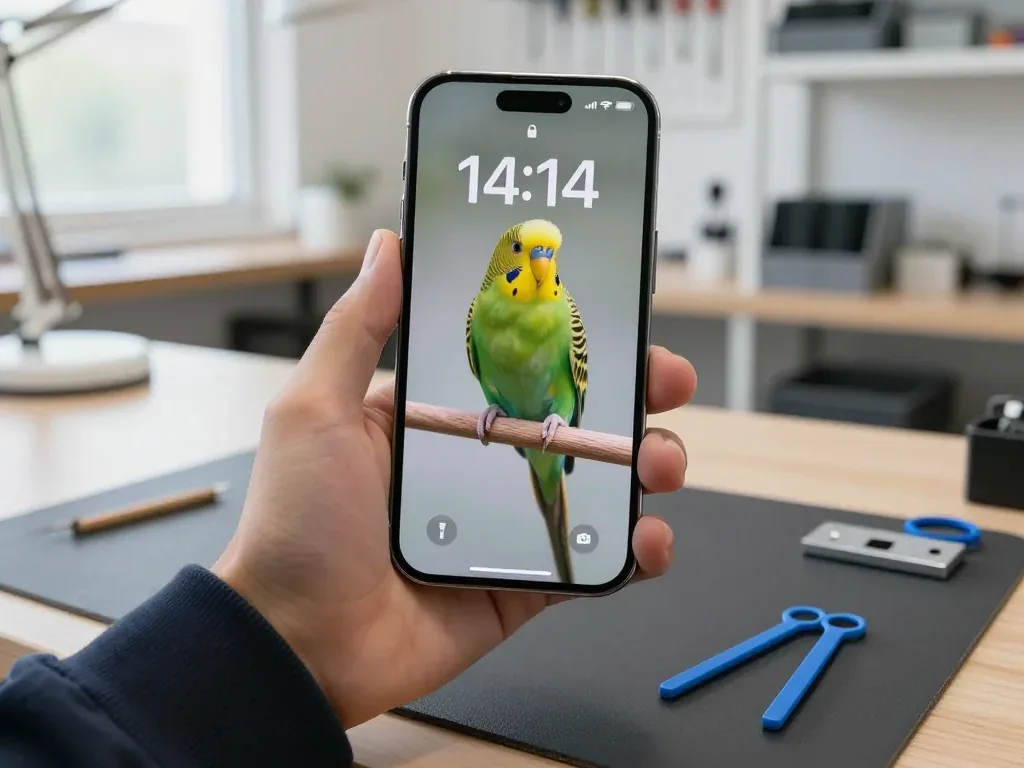
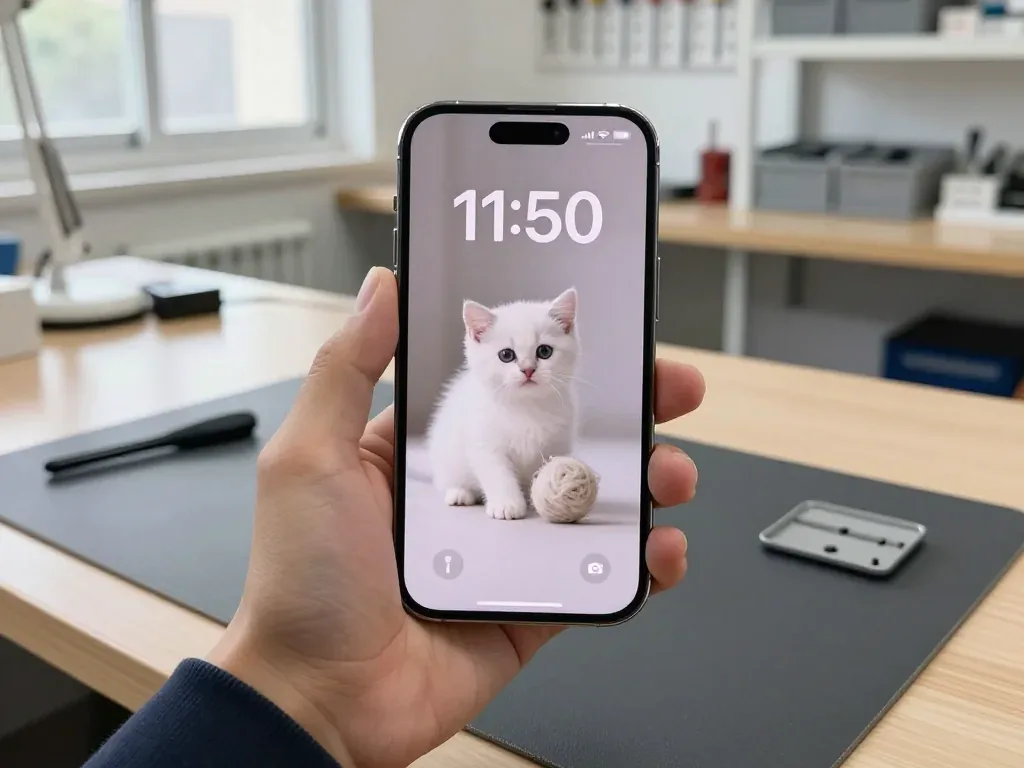
Face ID continues to function after a display replacement, since the TrueDepth module is separate from the screen; True Tone also works once its calibration has been carried over to the new panel. The TrueDepth assembly sits above the screen and is carried over from your original phone, which is why face unlock, the front camera and the proximity sensor all keep their serial pairing. True Tone is different: it relies on a calibration value stored for the original panel, and a technician has to copy that value to the replacement during the work. On some aftermarket panels True Tone cannot be carried over and stays off, which is the one function worth confirming before you choose a cheaper option.
Screen Work and How Long It Takes
An iPhone screen replacement takes about 40 minutes and is usually finished while you wait in our Astana waiting area. The swap is carried out by our engineers in your presence, and the lounge offers coffee and Wi-Fi, so those 40 minutes pass without a trip home. Most panel jobs on this model fall inside the 20–40 minute window, and the majority of repairs at our workshop are completed while the customer stays on site. Because that share is high, booking a free slot by photo on WhatsApp means you can often walk out with a fixed device the same visit, and the engineer confirms the result with you before you leave.
Original vs Aftermarket Part Which Functions You Keep
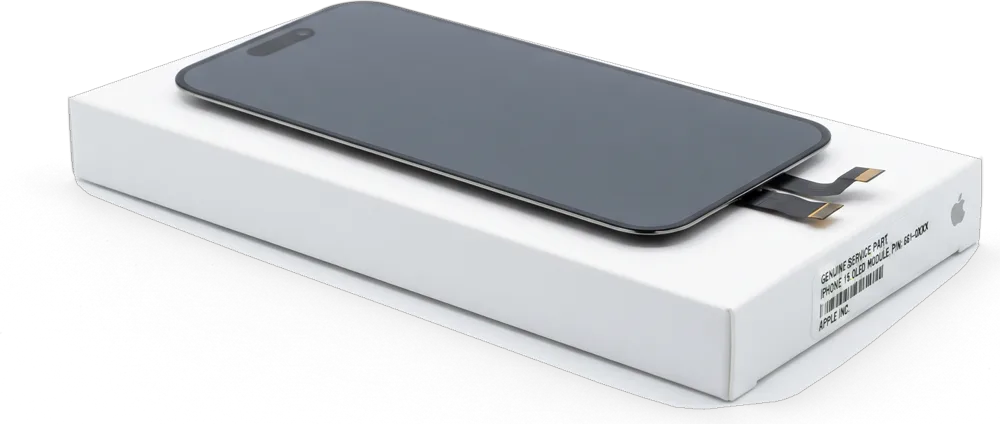
What you choose here decides which functions stay intact and what the phone reports afterwards. Before installation, each new component is shown to you in its factory packaging, and your decision is fixed on the receipt.
Original vs Aftermarket Parts Where They Differ
Which functions survive each component choice| Option | Functions kept | Best for |
|---|
| Genuine display | Face ID, True Tone, full brightness | Owners who want it as it was |
|---|
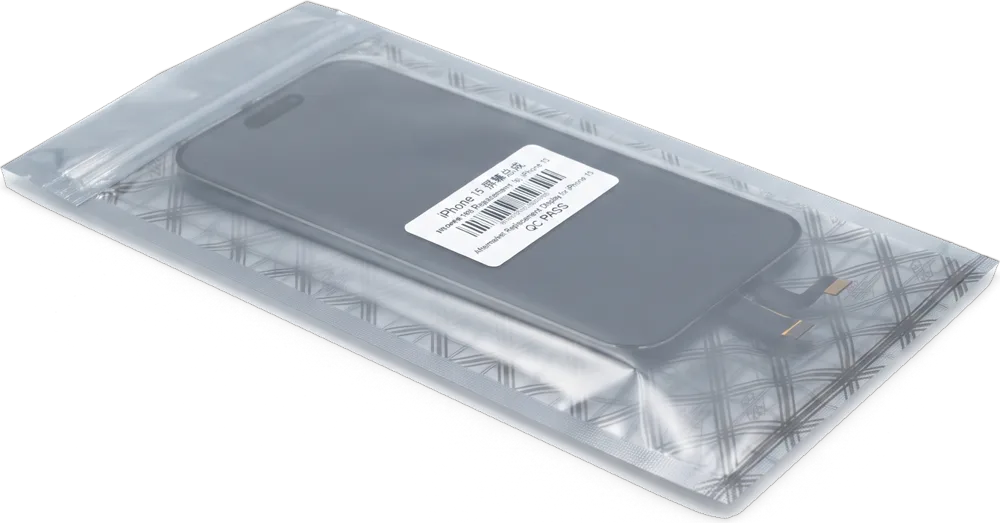
| Aftermarket display | Face ID works, True Tone may not transfer | Budget-conscious repairs |
|---|
| Genuine battery | Full health reporting | Long-term daily use |
|---|
| Aftermarket battery | Basic charging, health may not show | Quick low-cost fix |
|---|
Decoding the Unknown Part Message
That unknown part message signals component type rather than a fault, as the phone merely records that a module was swapped for a non-original one. It appears in Settings under the part history and names the piece the system could not verify against its own records. Nothing about the hardware stops working because of it: the display still lights up, the battery still charges, the camera still shoots. The alert is the device's way of telling you the serial number on the new unit does not match the one it remembers from the factory. It does not stop that unit from working, but it stays in the settings history, so it is worth knowing before you pick an aftermarket screen rather than discovering it afterwards.
Water Resistance After Any Repair
Once any repair has opened the iPhone 16 Pro Max, factory water resistance can no longer be guaranteed, even though we reseal the frame with fresh adhesive. The IP68 rating is measured at the plant on a sealed unit, and once the case has been opened that figure no longer applies to your specific handset. We press a new gasket along the perimeter and clamp it to cure properly, which restores splash protection for everyday use. Following a repair, treat the device as splash-resistant, not waterproof, and keep it clear of pools and heavy rain, since the seal is restored but the original rating cannot be re-established after the case has been opened.
Battery, Charging and Camera Glass Fixes
Beyond the screen, the 16 Pro Max most often needs power, charging or camera work. These are the quick jobs we finish while you wait, and here is how each one is handled.
Battery Replacement and When to Do It
Replacing the battery on an iPhone 16 Pro Max takes roughly 25 minutes, and we advise it once Battery Health drops and the phone shuts down or drains fast under load. The cell sits behind the display, so the same opening procedure applies and no other part is touched. We show the fresh cell in factory packaging before it goes in, then run a charge and temperature check. A worn cell also throttles performance, so a handset that feels slow is often a power-supply problem rather than a processor one. A quick Battery Health check first stops you from chasing the wrong fault, and the majority of jobs are completed while the customer sits in our waiting area.
USB-C Charging Faults and What Causes Them
A 16 Pro Max that will not charge on USB-C is most often a dirty or oxidised connector, and only a diagnostic in front of you tells a connector fault apart from a board issue. Pocket lint compacts into the socket and blocks the pins, which is why the cable seats loosely and charging cuts in and out. The socket sits on a flex that also carries the microphone, so a failed flex can take voice input with it. Cleaning or replacing the flex is a quick fix, but if the board is the cause the job moves to micro-soldering under a microscope, which is why the port is checked before any part is ordered.
Camera Glass and the Rear Panel
Cracked camera glass on the iPhone 16 Pro Max is replaced in about 20 minutes, and where only the rear cover is broken we swap that piece without changing the whole frame. The cover sits over the tetraprism lens on the 5x telephoto, so a knock there can scratch the optics underneath if debris gets in. We lift the shattered cover with heat, clear the lens surface and fit a new piece with the same seal. A cracked lens cover lets dust and moisture reach the camera, so a small chip is worth fixing early rather than waiting for blurry photos to appear.
Booking, Paperwork and What You Get Back
From the first WhatsApp photo to the moment you walk out, the visit follows a fixed order. Before any work begins, every agreed detail is written down on the receipt, so nothing shifts mid-repair.
Your WhatsApp picture leads to a completed receipt
Snap the damage and send it via WhatsApp: an engineer answers in 5 minutes, quoting a price and a free time slot; the price, part, turnaround and coverage terms are then fixed on the receipt in roughly 2 minutes. The 15-minute diagnostic takes place in your presence, and the technician shows exactly what is broken even if you decide against the repair. We are a direct contractor with in-house technicians and our own workshop, not an aggregator or a middleman, so whoever quotes your job is the one doing it. Original or aftermarket is named up front, and the replacement is shown in factory packaging ahead of installation. Getting the part type and the coverage period written down before the phone is opened is what separates a direct repairer from an aggregator, where terms can shift once the device is already in someone else's hands.
The 32-Point Check Before You Leave
- True Tone and Face ID: we verify display warmth and unlocking right in front of you during the visit.
- Cameras and microphones: front, rear and tetraprism zoom tested on real shots and voice notes.
- Speakers and charging: call audio, USB-C charging and network signal checked side by side.
- Documents: before leaving, you get the receipt, coverage card, and your old part back.
- Waiting area: coffee and Wi-Fi while the 20–40 minute job is completed nearby.
- Timing: most repairs finish while the customer waits, so most checks happen the same visit.
Warranty, Payment and the Old Part
Coverage lasts up to 1 year on every repair; you can pay with Kaspi, card, or cash, and the old part is returned together with the receipt and warranty card. A courier can be called if travelling across the city to the workshop does not fit your day. Our team has handled 46,000+ repairs over 11 years, and the same paperwork trail applies whether you fix a screen, a battery or camera glass. Keeping the removed piece matters if you ever resell the phone or make a claim, and it also proves which one actually came out of your device. Ask for the guarantee card to be filled in before you pay — an unwritten promise is worth nothing once you are out the door.
Summary: iPhone 16 Pro Max repair
A repair decision comes down to a few facts you can verify before work starts, not to a promise made at the counter.
- Free diagnostic: the engineer examines the phone while you watch and identifies the actual fault before ordering any part.
- Glass-only screen work: replacing just the glass is possible when the OLED matrix is intact; a damaged matrix needs the full module.
- Which parts to pick: Face ID works and True Tone remains with original components, whereas aftermarket parts can lose True Tone or set off a part warning.
- Water resistance: no repair restores the factory seal, so treat the phone as splash-resistant afterwards.
- Written receipt: part, turnaround and warranty fixed on paper protect you more than any verbal promise.







 iPad
 MacBook
 iMac
 Mac mini and Studio
 Apple Watch
 AirPods
 Apple Pencil
 Apple TV
 HomePod