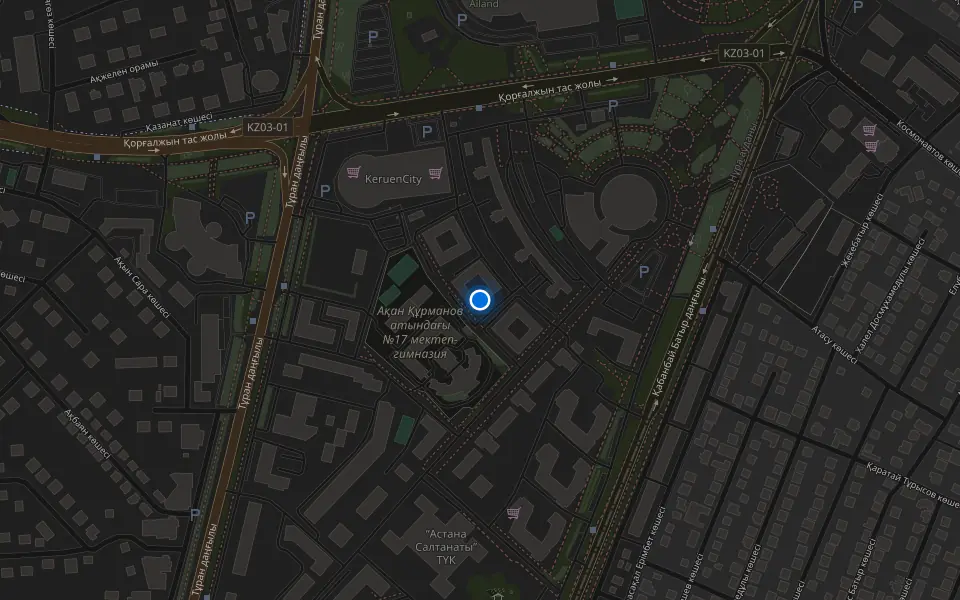
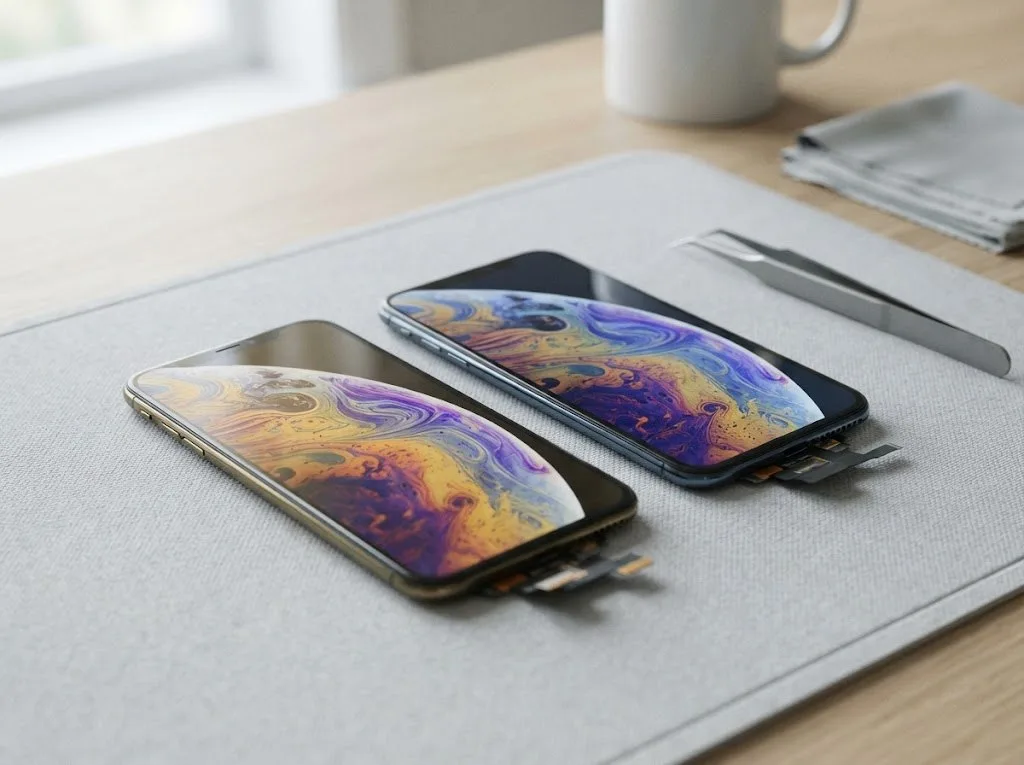
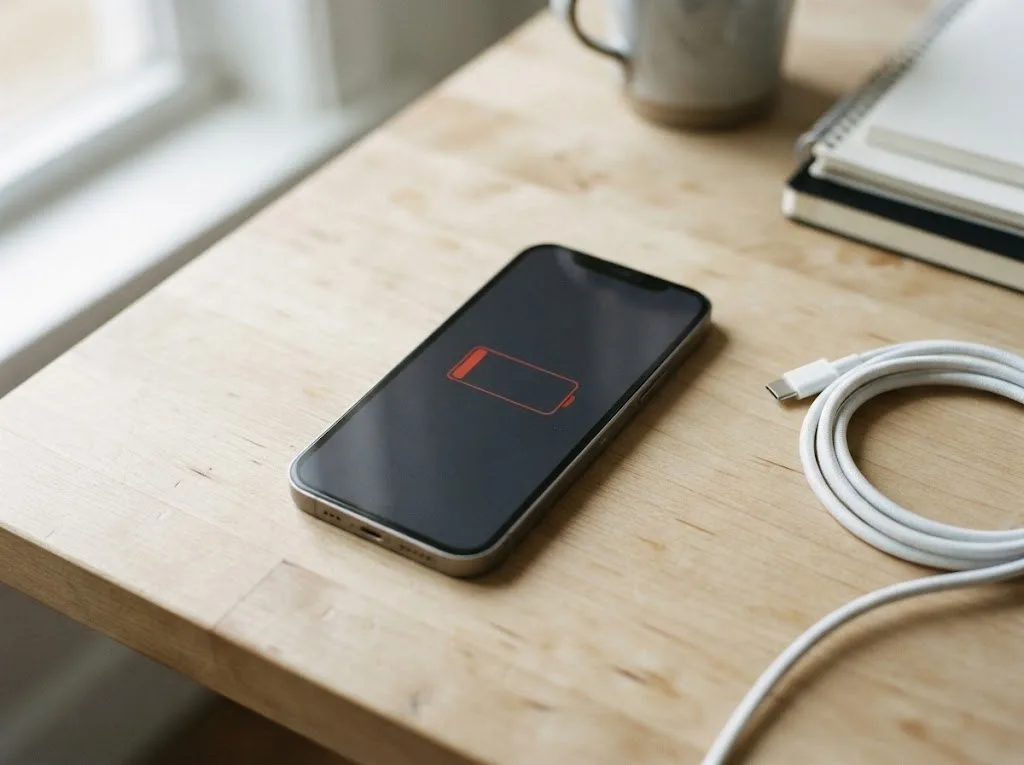
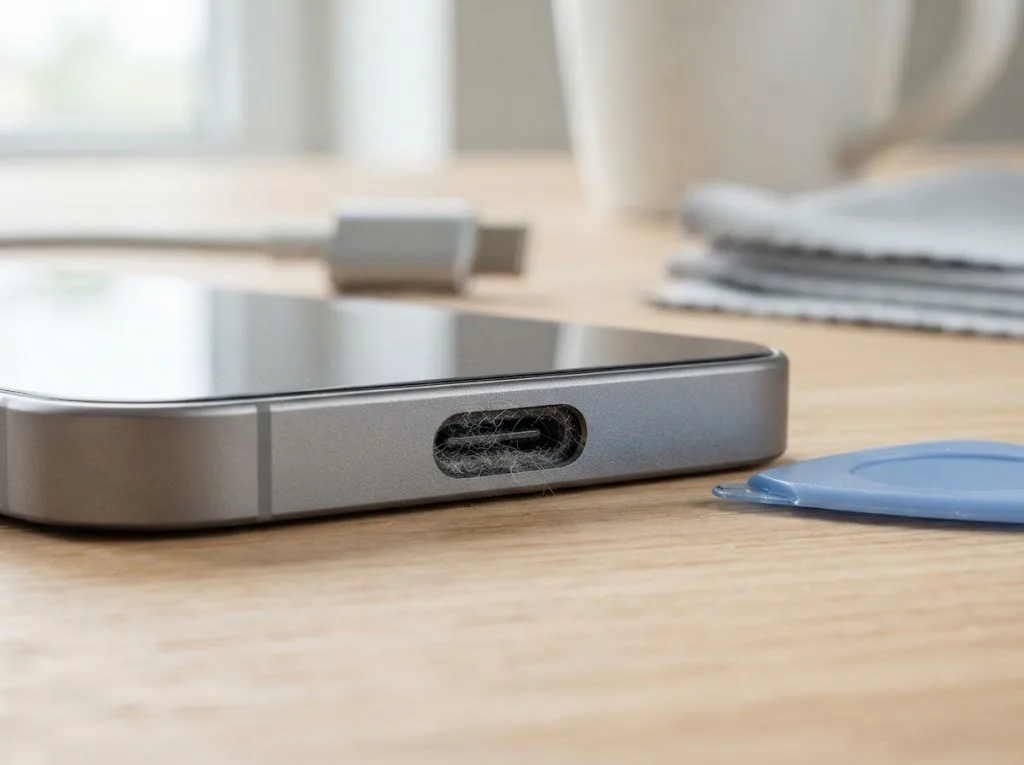
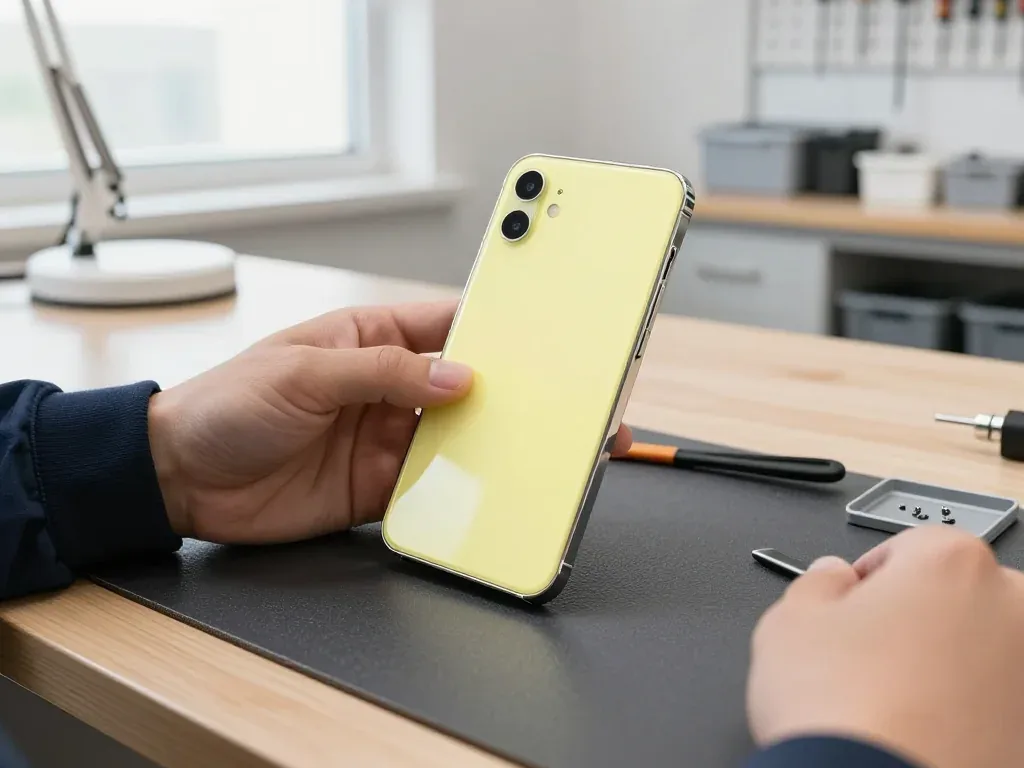
This iPhone 11 model has an LCD panel, two cameras and a Lightning port. The faults we see most often are front-panel damage, a worn cell, a clogged charging socket and cracked camera glass — each has a clear signature.
Screen, Touch and Face ID After a Drop
A cracked front panel is the single most common repair we take in, and in most cases the whole LCD assembly is replaced while the separate TrueDepth unit keeps Face ID working. The display carries the glass, the touch layer and the panel in one piece, so a shattered front or dead touch means a full swap rather than glass-only work. Separate from the screen sits the TrueDepth assembly, housing the dot projector plus the infrared camera — that is why Face ID often outlives drops that shatter the front glass. Stripes, a green tint or touch that fails in one corner point to the panel itself. If only the outer layer is shattered and the image is clean, ask the engineer to test touch across the whole surface first — a partial failure means the assembly, not the cover.
Battery, Charging Port and Why the Phone Dies Fast
Rapid battery drain points to a worn cell, whereas charging trouble usually traces to a clogged or corroded Lightning port rather than board damage — diagnostics reveal the actual cause. After two to three years of daily cycles the pack holds noticeably less charge, and the device may shut down under load or throttle performance. The socket collects pocket lint and oxidises on the contacts, so the cable seats loosely or charges only at an angle; the charging flex and power controller are checked only once the inlet is ruled out. A swollen pack that lifts the front needs attention the same day. Before agreeing to a board repair, have the inlet cleaned and tested with a known-good cable — many "dead" charging faults disappear at that step.
Symptom, Cause and What We Do
Common complaints matched to cause and action| Symptom | Probable cause | What we do |
|---|
| Screen with cracks or stripes | Broken cover or LCD assembly | Replace cover or full assembly |
|---|
| Drains within hours | Worn cells | Fit a new pack |
|---|
| Will not charge | Dirty or oxidised inlet | Clean and test the socket |
|---|
| Blurry photos | Cracked camera glass | Replace the lens cover |
|---|
Glass Only or the Whole Screen Module
On the iPhone 11 the display is an LCD panel bonded to the glass, so the choice between re-glassing and a full module swap depends on whether the panel underneath still works.
When Replacing Just the Glass Makes Sense
Re-glassing an iPhone 11 screen is done by us only if the LCD beneath remains intact and touch responds over the entire surface — that way the original panel stays, along with its True Tone calibration. A cracked top layer with a clean, evenly lit picture and no dead spots is the classic case for this route: the glass is separated, the old adhesive removed and a new sheet laminated onto the same display. It preserves the factory colour profile, so the screen looks exactly as it did before the drop. Re-glassing takes longer than a module swap and is not always the cheaper route once labour is counted, so ask for both options before deciding.
When the Full Module Is the Honest Choice
If the image has lines, dark patches or dead touch zones, the LCD itself is damaged and only a full module replacement restores a clean picture. Those symptoms mean the panel, not the cover glass, took the impact — re-glassing such a screen would leave the faults in place and waste the money spent on it. A module swap is the faster job of the two, and because the TrueDepth unit is separate from the display assembly, Face ID keeps working as long as the technician transfers it correctly. On our bench the swap is a 40-minute task, and we confirm Face ID and touch across the entire surface before handing the phone back.
What Changes With an Original or Aftermarket Screen
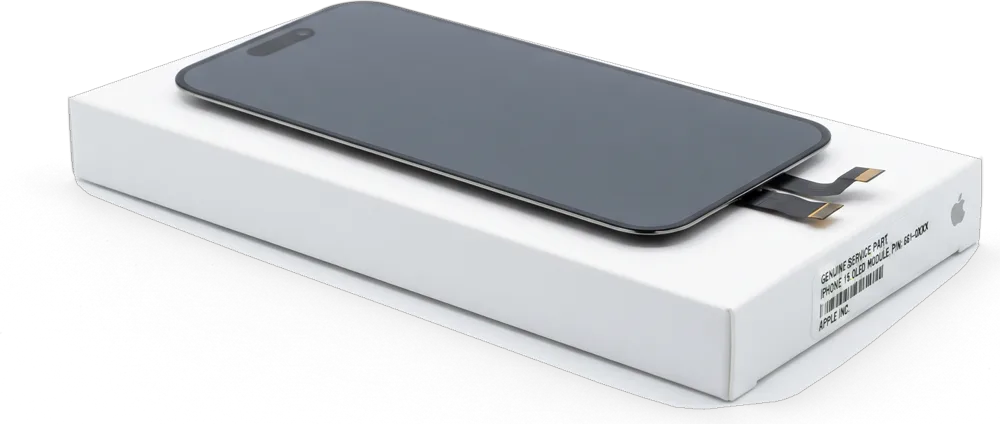
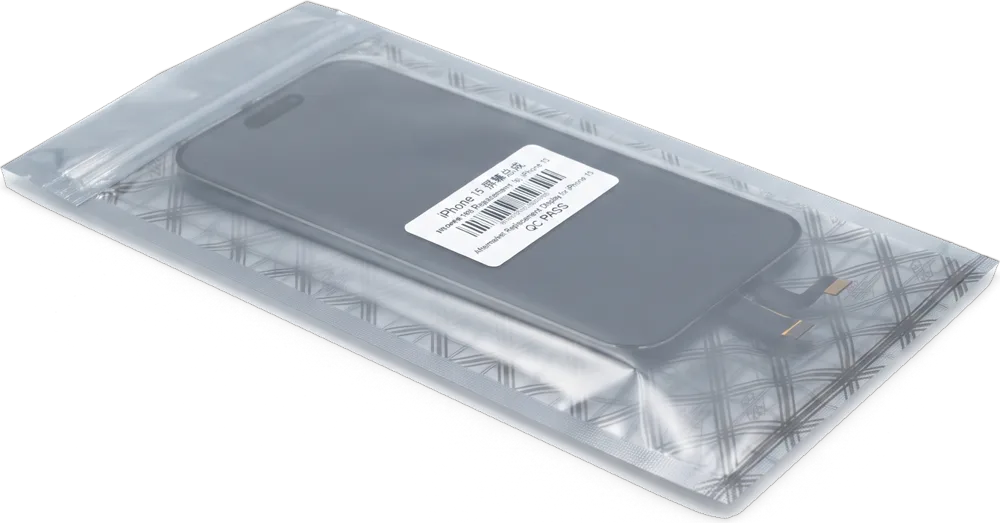
An original iPhone 11 screen keeps True Tone and full brightness, while an aftermarket panel can lose True Tone and may trigger the unknown-part message. The difference shows up in brightness under direct sun, colour accuracy on photos and how the panel behaves in cold weather. We show the new screen in its factory packaging before fitting it, so you can see which type you are getting before the phone is opened. Among our customers, 64% choose an original part; the rest pick a quality aftermarket panel and accept the trade-offs. Ask the engineer to state the type on the receipt — that line is what the warranty is tied to.
Face ID, True Tone and Water Resistance After the Fix
The questions owners ask most are whether Face ID survives, whether True Tone still works and whether the handset stays water-resistant — the answers depend on the component used and the repair itself.
Does Face ID Keep Working
Because the TrueDepth assembly is detached from the display and gets moved over instead of swapped, Face ID continues to function once the screen is fixed. The infrared camera, the flood illuminator and the dot projector sit in their own bracket at the top of the frame, wired to the logic board independently of the glass. When we swap a cracked front, the TrueDepth assembly moves across intact, so the sensor that maps your face never changes. This is the part owners worry about most, yet it is the least affected by a screen job. If unlocking by biometrics already failed before the drop, that is a TrueDepth fault on its own and needs a separate check, not a glass swap.
True Tone and the Unknown-Part Message
True Tone works on a new screen once the calibration is transferred, and it holds on original panels while some aftermarket ones lose it. The setting shifts white balance to match the room light, and it depends on a calibration value stored in the panel itself. On an original module that value carries over and the toggle stays active; on cheaper aftermarket panels the option can grey out. That unknown-part notice simply identifies which component kind is installed — nothing is broken, the phone runs fine, and we clarify the details before you make a choice. Around 64% of our customers pick an original part, which is why the message rarely comes up on our finished jobs.
Water Resistance Is Not Guaranteed After Opening
The factory water resistance of the iPhone 11 is not guaranteed after any opening, because the seal is broken when the handset is taken apart. The IP68 rating is set at the factory with a gasket compressed under controlled pressure, and once the frame is lifted that seal is spent. We re-apply the water-resistant adhesive on reassembly, but treat the device as splash-resistant rather than waterproof afterwards and keep it away from pools and sinks. Rain, a wet hand or a spilled drink are fine; a dropped-in-the-basin moment is not worth the risk on any repaired unit, ours included.
Turnaround Time for iPhone 11 Repair in Astana
Most iPhone 11 jobs are finished while you wait, and the whole visit from first contact to pickup usually takes less than an hour — here is what runs in what order.
From WhatsApp Photo to a Fixed Price
Message us a picture of the problem via WhatsApp; within five minutes an engineer answers with cost and an available appointment, and before repair starts the receipt locks in price, part, duration and warranty. Next, for 15 minutes the engineer performs no-cost diagnostics in your presence — regardless of whether you go ahead — and reveals the internal damage. Fixing the terms on paper takes about 2 minutes, and that same receipt names whether the replacement part is original or aftermarket. Getting the quote from a photo first means you arrive knowing the figure, so the in-person diagnostics only confirm the fault rather than surprise you. This is how iPhone 11 repair in Astana starts before you even leave home.
What Runs While You Wait
Repair jobs compared by duration and visit type| Job | Standard duration | Leave or wait |
|---|
| Module for screen | 40 minutes | Wait |
|---|
| Battery | 25 minutes | Wait |
|---|
| Glass for camera | 20 minutes | Wait |
|---|
| Repair of board | 1–3 days | Leave |
|---|
When the Phone Has to Stay With Us
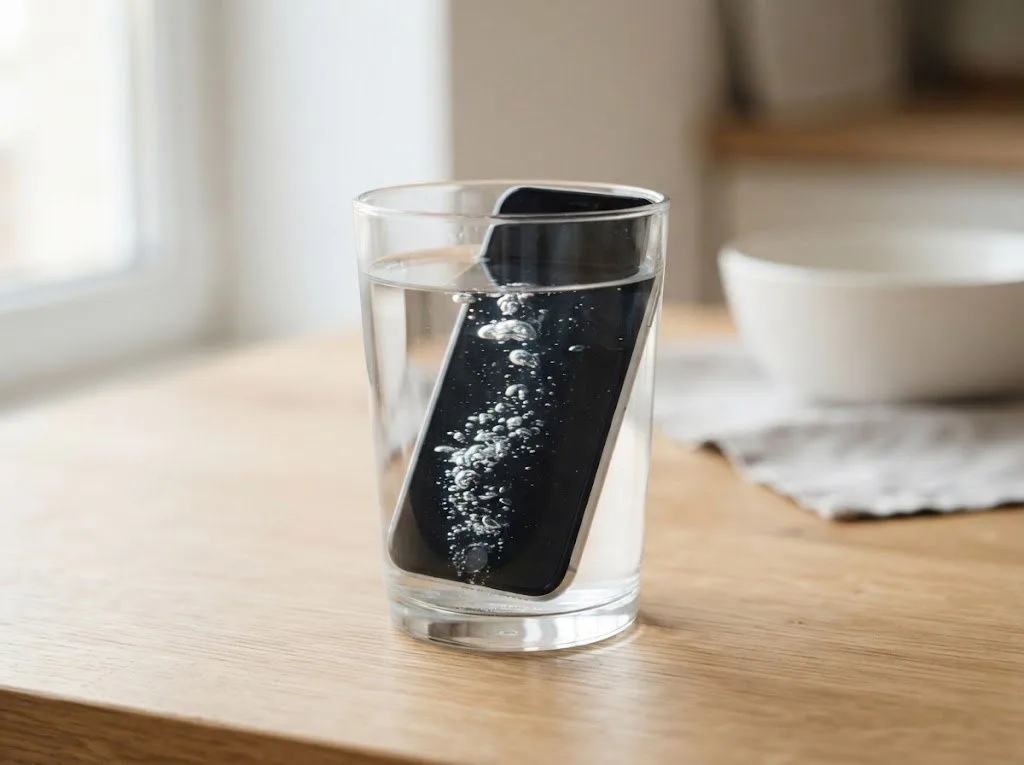
Board repair and water damage are the cases where the phone stays with us, because board work runs under a microscope and water diagnostics can take up to two days. Board repair alone takes 1–3 days, and the extra time covers micro-soldering under the microscope rather than a quick swap. A phone that fell in water should not be charged or dried with a hairdryer before it reaches us — that turns a clean-up into a board replacement. Bring such a device in switched off, and the engineer will tell you during the free check whether the board survived.
What You Get Back and Who Stands Behind the Work
The repair is only half the story — what you check at pickup, what stays in your hands and who is accountable decide whether the fix holds over months of daily use.
The 32-Point Check at Pickup
- Face ID plus True Tone: unlock the handset and check that the screen adjusts colour to ambient lighting, as both features depend on the sensor assembly.
- Cameras and microphones: open both lenses and record a voice memo, then play it back to hear each mic.
- Speakers and charging: run a video at full volume and plug in the cable to watch the indicator respond.
- Network and calls: check signal bars, place a call and switch to speaker to confirm the earpiece.
- Touch across the whole display: drag an icon along every edge to catch dead zones at the borders.
Receipt, Warranty and the Old Part
You get the handset back together with the receipt, the removed component and a warranty card valid up to 1 year; the price, part, turnaround and warranty were already entered on the receipt before work started. That document is written in about 2 minutes at intake, so nothing changes between the WhatsApp quote and the final handover. Our engineers note whether the fitted panel or battery is original or aftermarket, so you know exactly what sits inside the housing. The warranty card carries the same terms and covers the component we installed, not accidental damage. Hold on to both the card and the replaced part — should the same issue reappear, having them simplifies any claim.
A Direct Contractor, Not an Agency
At iServices the technicians are on staff and the workshop is our own, so whoever quotes your repair also performs it — a record of 11 years and 46,000+ repairs stands behind that. No dispatcher forwards your phone to a third-party bench, and no middleman adds a margin on top of the work. Snap a picture of the fault and send it over WhatsApp; an engineer responds in five minutes or less with cost and an open slot. Before handing the phone over, make a backup and turn off Find My so the repair is not blocked by an activation lock at pickup. Bring the device charged if it still powers on — it saves time during diagnostics, and the engineer can show you the fault on the display before any screwdriver touches the housing.
Summary: iPhone 11 Repair
A repair that lasts comes down to three things: the right part, a result you verify on the spot, and paperwork that still protects you months later.
- Diagnosis first: a free 15-minute check in front of you shows whether the LCD under cracked glass is intact and whether glass-only work is viable.
- Face ID survives: the TrueDepth module is transferred from the old screen, not replaced, so a swap keeps biometrics working.
- True Tone holds: original panels keep it, and aftermarket screens may lose it without a calibration transfer.
- Water resistance drops: once the phone is opened, treat it as splash-resistant and keep it away from sinks and rain.
- Documentation counts: keeping a fixed receipt, your warranty card and the replaced part shields you should the same problem come back.
- Match fault to part: choosing between glass and module, or original and aftermarket, determines whether True Tone and Face ID keep working.







 iPad
 MacBook
 iMac
 Mac mini and Studio
 Apple Watch
 AirPods
 Apple Pencil
 Apple TV
 HomePod