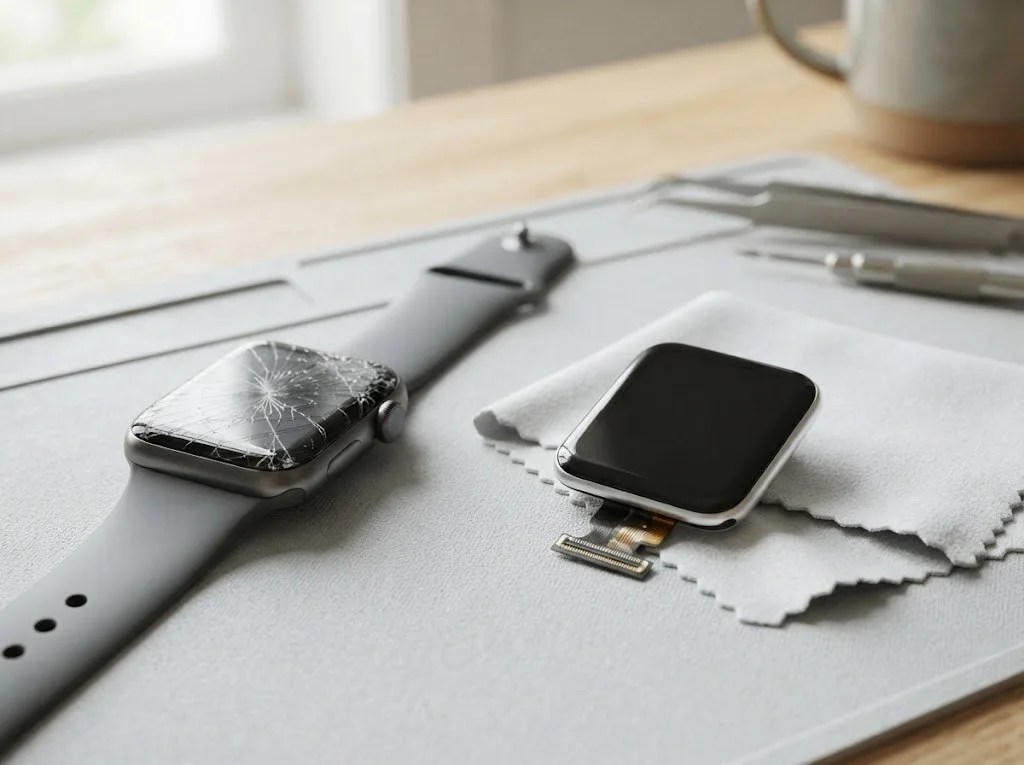
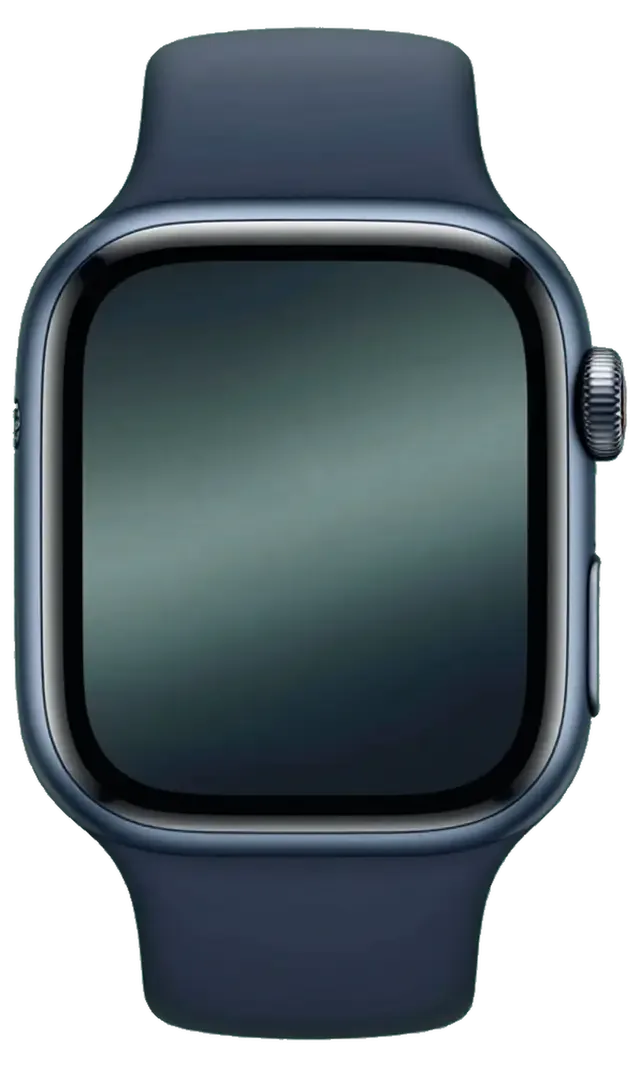
The Series 9 has a brighter screen and a front pane bonded to the panel, so a crack is not always a full display failure. For repair, first identify which layer failed before quoting.
A Shattered Front While the Image Stays Flawless
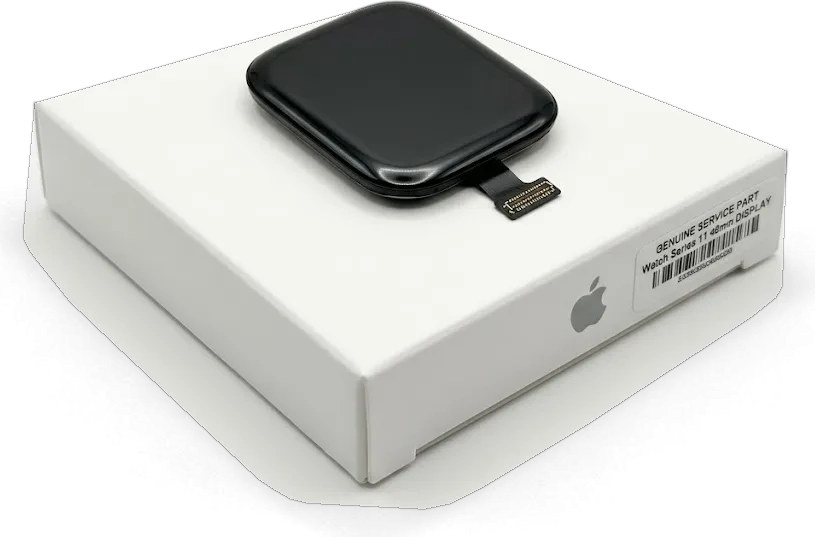
When the image is clean and touch works, we can replace only the protective glass on a Series 9 instead of the whole display module. The outer pane takes the impact, the screen underneath keeps its brightness, colours and Always-On behaviour. A glass-only job takes 20–40 minutes in the waiting area, and 72% of repairs finish while the customer is still there. The new part arrives in factory packaging and we open it in front of you before installation — 64% of customers pick an original component. Keeping your original screen preserves its brightness, but the crack line often hides micro-damage to the touch grid. If you need an Apple Watch Series 9 repair in Astana, the engineer checks the touch grid in front of you before any work starts.
Lines, Patches or Dead Touch
When swipes stop registering, or you notice dark blotches and vertical stripes, the display assembly has failed and gets swapped out as a complete unit. On the Series 9 the OLED, digitiser and front pane are bonded as one piece, so a glass-only repair on a dead screen is not possible without separating parts that were never meant to come apart. We confirm the diagnosis in 15 minutes, free of charge, in front of you — the engineer points at the exact line or patch and shows where the touch grid fails. If the fault sits in the display flex, the same test catches it. Forcing a glass-only job on a dead unit leaves you with the same fault and a second bill.
Glass Type on the Series 9 and What It Changes
How case finish and glass type shape the damage pattern| Case finish | Glass | Typical damage | Repair approach |
|---|
| Aluminium 41/45 mm | Ion-X | Spider cracks, edge chips | Glass-only or full module |
|---|
| Stainless steel 41/45 mm | Sapphire | Edge chips, star cracks | Full module more often |
|---|
| Any finish, dead touch | Bonded panel | Lines, dark patches | Display module replacement |
|---|
Apple Watch Series 9 repair for battery drain, swollen cells and charging faults
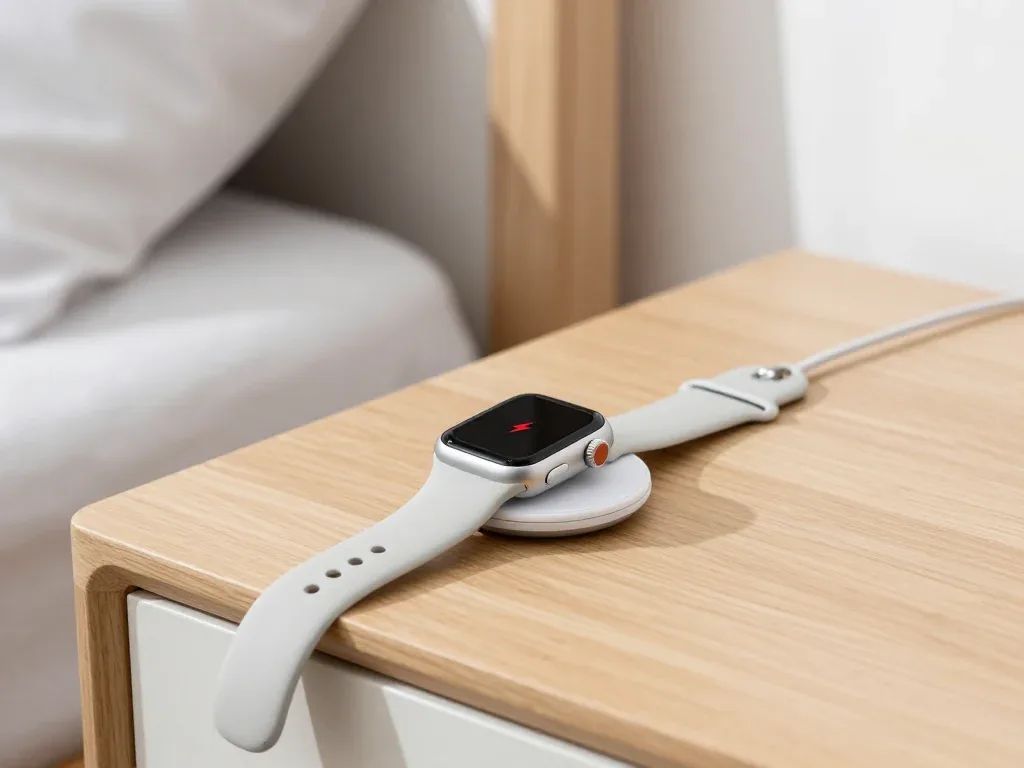
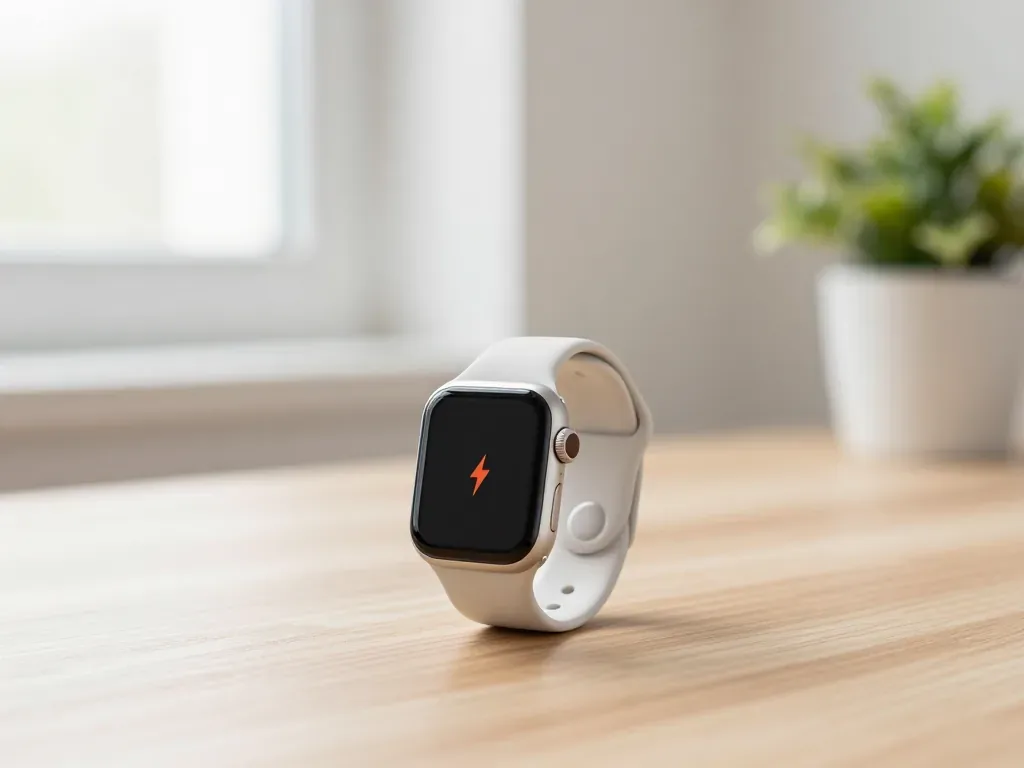
If your Series 9 is dead by lunchtime or won't take a charge, that points to a specific failed component. We separate a worn power source from a coil or logic fault before touching anything.
When the Battery Is Simply Worn Out
If the watch drops from full to empty in a few hours and shuts down in the cold, the cell has aged and we replace it. This component sits beneath the rear cover and feeds the mainboard through a small connector, so a tired one shows up as random shutdowns, slow top-ups and a watch that barely lasts a morning. On the Series 9 the pack is sealed behind the glass and the back plate, which is why a swap needs a heated opening rather than a screwdriver. Battery health in Settings is a guide, not a verdict, because a healthy reading can still collapse when the chip draws peak current, so we watch real drain during diagnostics rather than trusting one number.
A Puffed-Up Battery Pushing the Glass Upward
A swollen power source pushes the panel up and can crack it from inside, so we treat it as urgent and stop topping it up. As the battery swells it presses on the display and on the glue line sealing the glass to the chassis; once that bond breaks, the watch loses both its flat front profile and its resistance to water. We open the case, lift the display gently, remove the inflated unit and fit a fresh one, then reseal everything so the gap closes. Continuing to charge an inflated pack risks the glass separating and the seal failing, so bring it in before the panel lifts further rather than waiting for the watch to stop working.
Not Charging and Not Turning On
Which part fails behind each charging symptom| Symptom | Likely node | What we check |
|---|
| Charges on another stand only | Charger or cable | Accessory and contacts |
|---|
| Heats up, no charge | Charging coil | Coil and rear cover |
|---|
| Dead on any stand | Mainboard or battery | Circuit under microscope |
|---|
| Turns on, drains fast | Battery | Real drain at load |
|---|
Choosing an Original or Aftermarket Part
The component you fit decides how the Series 9 looks and behaves afterwards. We lay out what changes with a genuine versus an aftermarket unit so the choice is yours, not ours.
What an Original Part Preserves
With a genuine screen the Series 9 keeps its brightness level, Always-On function and touch sensitivity just as they were at the factory — that's the reason 64% of our clients pick this option. The assembly carries the same panel, digitiser and flex as the watch shipped with, so auto-brightness tracks ambient light across the full range and the always-on dimming step stays smooth rather than jumping between levels. Colour temperature also holds: whites stay neutral instead of drifting warm after a few months of use. On this model the screen sits close to the glass, and a genuine module keeps that gap and the anti-reflective coating consistent. Always-On and auto-brightness depend on the panel talking to the watch correctly, so a cheaper unit can leave the screen dimmer outdoors even when it looks fine indoors.
What an Aftermarket Part Changes
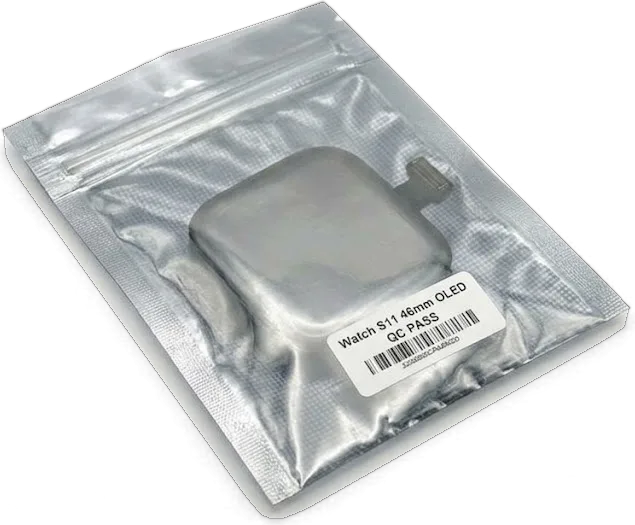
A third-party screen is cheaper and brings the display back to life, though brightness, colours and the feel of touch may not match the original exactly. Peak output on such a module often lands a step below the factory panel, colour skews a little cooler, and the glass may lack the same anti-reflective layer, so reflections read stronger under direct light. Touch sampling is usually fine for taps and swipes, though fast scroll gestures can feel marginally less precise. On a watch you wear every day this gap is mostly aesthetic; however, for Always-On use or reading outdoors, it becomes noticeable under strong sunlight rather than at the workbench.
How the Choice Is Fixed Before Work Starts
We show the new component in factory packaging and write the assembly, turnaround and warranty on the receipt before any work begins, so nothing changes mid-repair. The receipt carries four lines: which module goes in, whether it is original or aftermarket, the promised turnaround, and the warranty term, which lasts up to 1 year. That sheet is signed before the case is opened, and the same document travels with the watch to the bench. Fixing the choice on paper protects you if a different unit is offered later, and it means the guarantee you receive matches what was actually fitted, not a verbal promise.
Water, Crown and Sensor Faults After a Knock
Water, a sticky crown or a sensor that stopped reading are the faults owners worry about most. Each has a clear cause and a clear check, and we walk through them here.
Water Ingress and What Happens to Water Resistance
Each time the case is opened we apply fresh adhesive, yet factory-level water resistance can't be guaranteed — that's why swimming with a repaired Series 9 isn't recommended. The adhesive gasket sealing the rear cover is single-use: once opened, the old seal is spent and a fresh one goes in before the back is pressed down. That restores splash and rain protection for daily wear, but the original pressure rating cannot be recertified by a workshop. Moisture damage may appear days later as a flickering display or faulty sensors, and after a soak diagnostics need up to two days to reveal the full extent. If the watch took on water, bring it in before charging — current through a wet board turns a cheap clean into a board repair.
A Sticky or Silent Digital Crown and Side Button
A crown that feels gritty, jams or fails to respond to turning is typically worn or packed with dirt; we either clean it or swap it out so scrolling is restored. The Digital Crown drives interface scrolling and sits on a shaft with its own tiny seal, which is why grit and dried sweat collect there first. We flush the shaft, check the rotation encoder, and if the crown no longer clicks or registers turns, we fit a new assembly. The side button gets the same treatment: a stiff or unresponsive press often means a collapsed dome or dirt under the cap. Debris caught near the shaft gradually erodes the gasket, so any roughness you feel is an early signal — better to deal with it before moisture travels the same route inward.
Pulse, ECG and Connection to the iPhone
A pulse or ECG reading that stops following a knock usually points to the rear-cover sensor or its connection, which we test before and after every repair. The heart sensor and its electrodes sit in the rear cover, so any job that opens the back has to re-seat that module and its flex carefully. Bluetooth and Wi-Fi dropouts following a fall more often trace to a disturbed antenna connector than to the radio itself. We pair the watch to an iPhone and confirm live pulse and ECG traces rather than assuming the component survived the procedure. A weak trace or a flat line on the ECG usually means a loose flex, not a dead electrode, and re-seating it takes minutes rather than a full module swap.
What Happens During the Appointment and the Result
The majority of Series 9 repairs are completed on the spot, and every appointment follows an identical procedure. Here is what to prepare and what we hand back when the watch is done.
Preparing the Watch Before You Hand It In
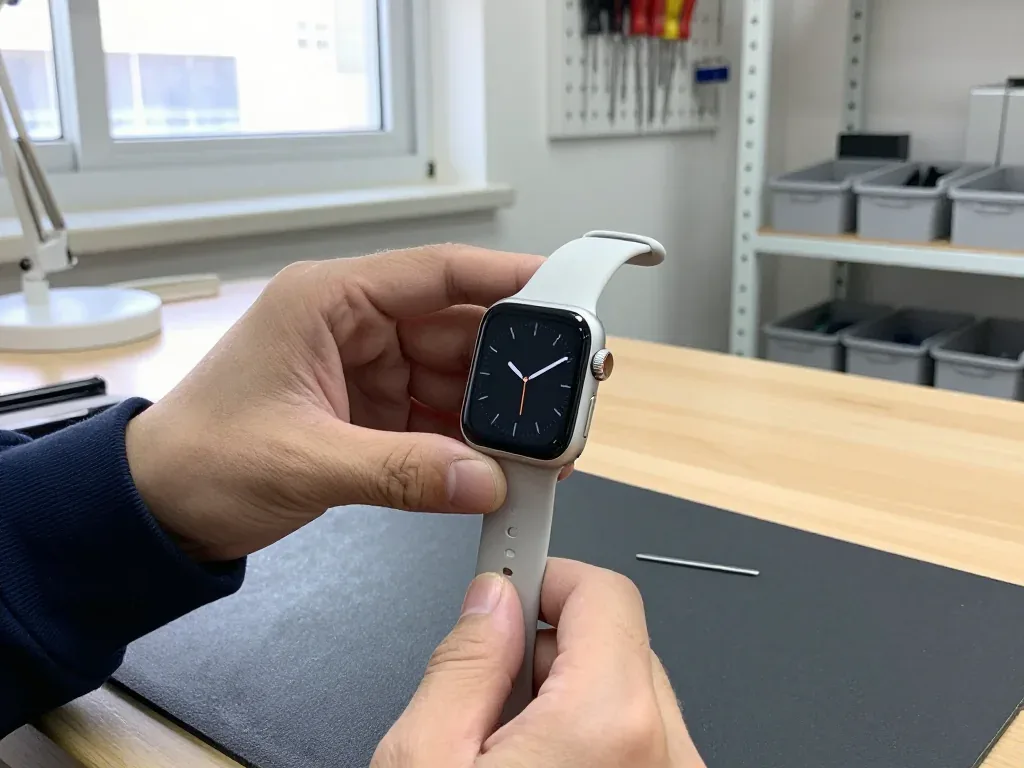
Before repair, unpair the watch from your iPhone so the backup stays on the phone and Activation Lock does not block the work. Open the Watch app, tap All Watches, then the info button and Unpair; the phone keeps a full snapshot of your watch face, layout and health data, so nothing is lost when the unit is wiped for testing. Activation Lock is the usual reason a handover stalls — a locked watch cannot be paired to the bench equipment, and nobody can bypass it for you. Bring the unit charged enough to power on, and note the passcode in case the engineer needs to reach the settings menu. Unpairing keeps your data recoverable on the phone, and it also lets the technician test the hardware freely without triggering a lock that would stall the job at handover.
From WhatsApp Photo to Finished Repair
Steps from first message to a finished watch| Stage | What happens | Time |
|---|
| First contact | Photo on WhatsApp, price quoted | Reply in 5 min |
|---|
| Diagnostics | Checked in front of you | 15 min |
|---|
| Paperwork | Component, turnaround, coverage fixed | 2 min |
|---|
| Repair | Done while you wait | Under an hour |
|---|
Final Inspection on Pickup and the Outcome
At handover we check 32 functions with you, including touch, pulse, charging, speakers and connection, then return the watch with the receipt, warranty card and old component. The engineer runs the unit through microphones, network and the Digital Crown while you watch, so a weak speaker or a dead haptic shows up on the counter rather than at home a day later. A courier can collect the piece and bring it back if you cannot visit the workshop during opening hours. Coverage runs up to 1 year, and the swapped-out component travels with you as a record of what came out. Testing together means any fault shows up before you leave the counter, and keeping the removed piece gives you proof of what was replaced if a claim question ever comes up.
Summary: Apple Watch Series 9 Repair
A few decisions shape the outcome of a Series 9 repair: which part goes in, how fast you act on a swelling cell, and what you check at the counter.
- Cracked glass, clean picture: the glass alone can be replaced, while lines or dead touch call for the full display module.
- Swollen battery: swap the cell once it starts lifting the screen, so internal pressure never reaches the panel.
- Water resistance: it drops after any opening, so treat a repaired watch as splash-resistant and keep it out of the pool.
- Unpair first: unlinking from the iPhone protects the backup and clears Activation Lock ahead of any work.
- Handover check: test touch, pulse, charging and sound on the spot, and take the old part and paperwork with you.







 iPad
 MacBook
 iMac
 Mac mini and Studio
 AirPods
 Apple Pencil
 Apple TV
 HomePod