Repairing an old Apple Watch in Almaty usually makes sense when the case and board are intact and only the glass, battery or display is worn. iServices handles these repairs while you wait, offers original or aftermarket parts, and backs the work with a warranty up to 1 year. Send a photo on WhatsApp for a quote in 5 minutes.
When Repairing an Old Apple Watch Still Makes Sense
The question is not how old the watch is. It is whether the casing is straight, the logic board is alive and the fault sits in a single part.
Service details: “Apple Watch repair”.
How long an Apple Watch actually lasts
An Apple Watch typically stays usable for several years, and the battery is usually the first part to reach the end of its life, not the processor or the sensors. A Series 3 that still pairs and tracks a full workout has outlived most of the components people worry about; what degrades is the cell behind the screen, which loses capacity with every charge cycle. Sensors and the chip tend to hold far longer than the software support window. A watch that still holds a full day of charge and tracks workouts without gaps is rarely the one worth replacing, even if the model is several generations old. If you are weighing whether to repair an old Apple Watch in Almaty, the answer usually comes down to the battery and the condition of the casing.
Three signs it is worth repairing
- Cracked glass, working unit: the display still lights up, the watch pairs and taps arrive, so the damage is limited to the cover glass.
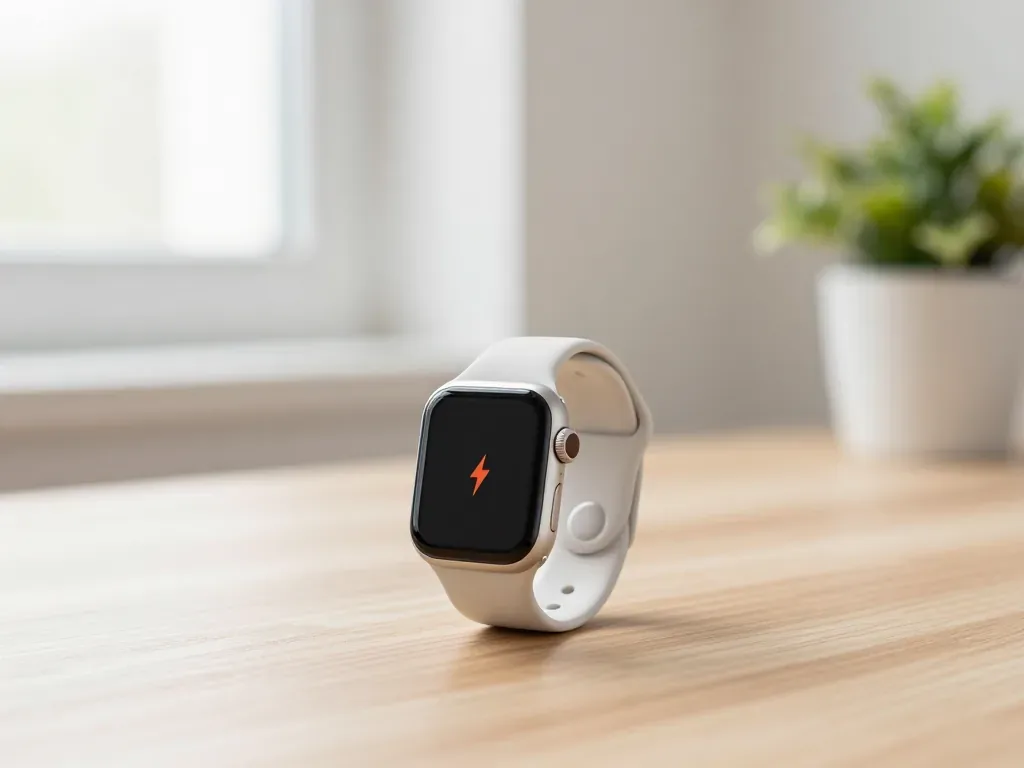
- Battery that dies before evening: a watch that needs a charge by mid-afternoon has a worn cell, not a dead chip.
- Straight casing, live electronics: no bend, no corrosion, no liquid inside — this is the cheapest scenario for owners of old Apple Watches in Almaty.
- Everything works but one function: a single dead speaker, a stuck crown or a dim display usually means one replaceable part, not a systemic failure.
When a newer model is the smarter choice
We tell customers to consider an upgrade when the work touches the mainboard, the casing is bent, or the watch no longer receives updates that the apps they rely on require. A circuit-level fault on a water-damaged unit is the clearest example: the job is complex, the outcome uncertain, and the money goes into a device already past its software window. The same logic applies to a bent or crushed shell, where seals no longer sit correctly. An Apple Watch SE covers the basics — calls, notifications, workouts — without the price of a flagship. Even then, a free 15-minute diagnostic in front of you settles the question faster than any online comparison, because the engineer can see whether the fault is isolated or systemic.
Glass, Display or Battery and What Repair Old Apple Watch Actually Needs Replacing
Three service types cover most of the work on older watches — a cracked screen, a failing display unit and a tired cell. Each solves a different problem, and choosing the right one starts with knowing what is broken.
Cracked glass or a damaged display
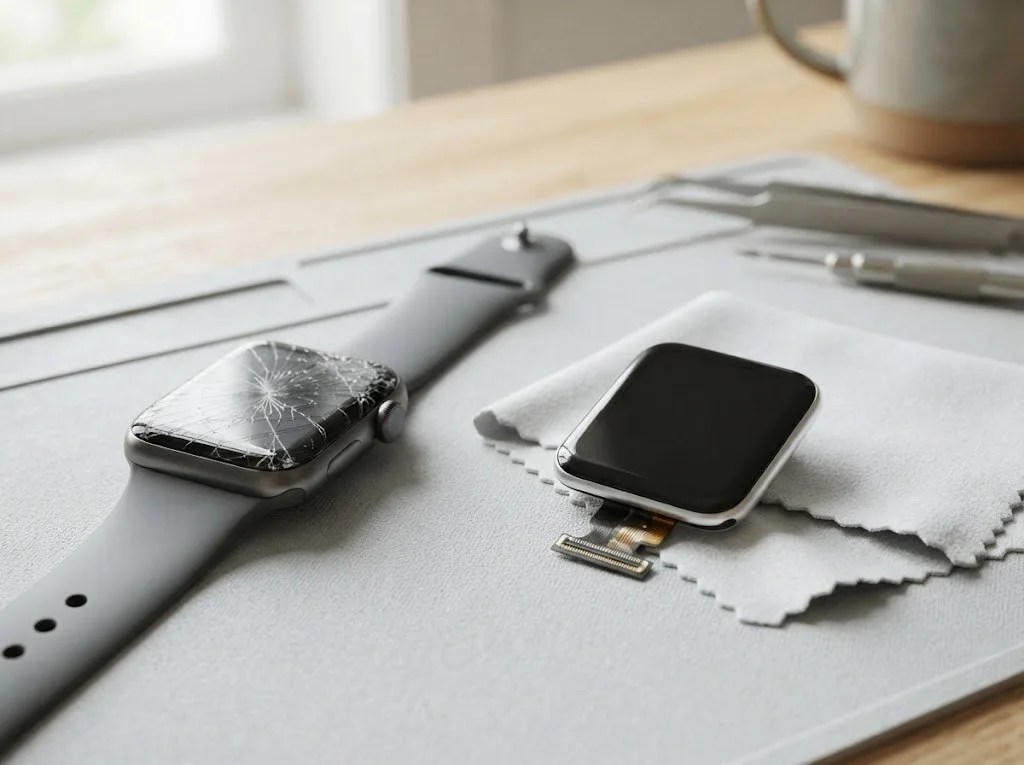
We replace just the outer glass when the OLED underneath is intact and the touch layer still responds, and we swap the full display assembly when the image or touch is affected. A crack that stops at the surface and leaves the picture clean usually needs the outer layer only, while dead pixels, a green tint or an unresponsive corner point to the panel itself. Polishing only removes surface scratches and never fixes a crack that reaches the edge, because the seal is already broken and moisture will find its way in. On an older watch the difference matters twice over — a whole assembly costs more and disturbs the factory seal, so ask the engineer to test the OLED and touch before agreeing to the larger job.
Battery wear and what changes after replacement
- Drains by midday: a watch that used to last until evening now dies before lunch on the same routine.
- Sudden shutdowns: the screen goes black at 20–30% or the device restarts when you raise your wrist.
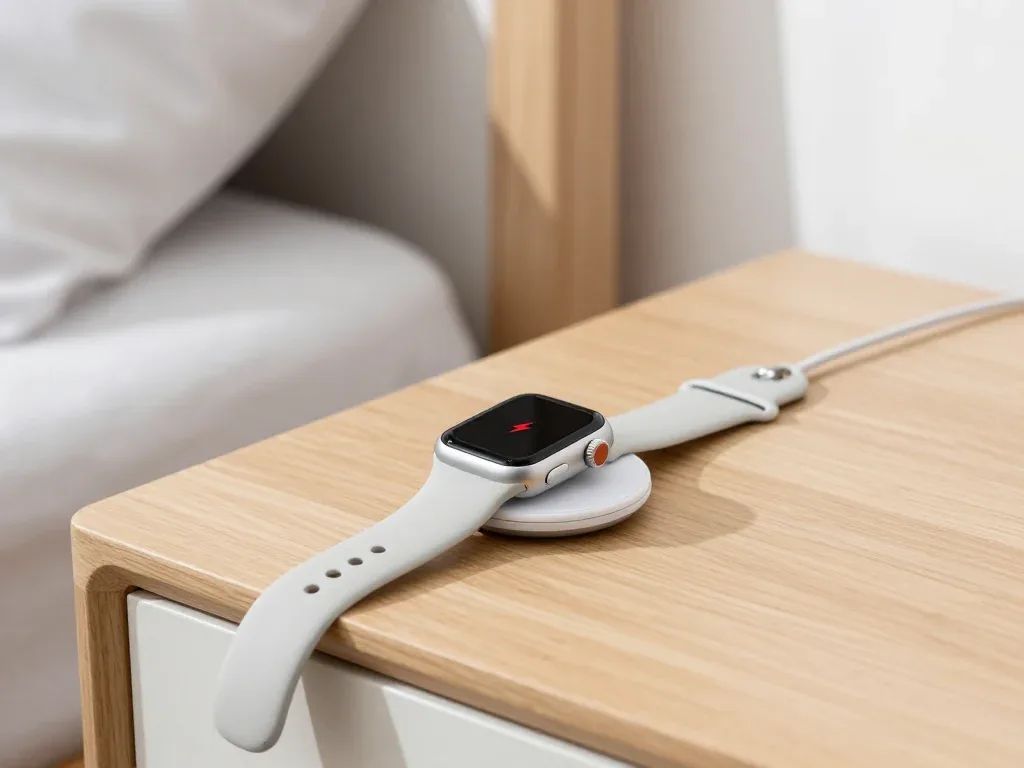
- Slow charging: the cell reaches capacity much later than it used to, or the watch runs warm on the charger.
- Swollen back cover: the rear case lifts slightly — stop charging and bring it in the same day.
- Health figure as a guide: the settings percentage is a rough signal, not a verdict, so the real test is hours between charges on a normal day.
- What changes after the swap: we install a new cell and the watch holds charge like a fresh unit — it does not run faster, and no software setting resets.
Comparing the common service types side by side
| Repair | What it covers | What we check first | Typical lifespan of the part |
|---|---|---|---|
| Glass replacement | Outer glass only | OLED image and touch layer | Depends on use |
| Display assembly | Full OLED and glass | Board and connectors | Depends on use |
| Battery replacement | Cell only | Charging and board health | Several years |
| Board repair | Logic board faults | Water exposure and corrosion | Depends on damage |
Original Part or Aftermarket and How to Choose to Repair Old Apple Watch
The choice between a factory part and a compatible one shapes how the watch feels afterwards. Below is what really separates them and how we help you decide without pressure.
What actually differs between original and aftermarket
An original part matches the factory fit, colour and touch response, while an aftermarket one is a compatible copy that costs less and may differ slightly in brightness or feel. On a display assembly the gap shows in glass hardness, oleophobic coating and how evenly the backlight spreads across the panel. A replacement battery usually holds the same shape and connector, though its cell chemistry and cycle rating vary by supplier. On older watches the difference matters most for the screen, because a copy panel can lose True Tone or look warmer, while a battery substitute is usually indistinguishable in daily use. Ask to see both options powered on before you commit, since a dim or yellow-tinted panel is easy to spot side by side and almost impossible to judge from a description.
How we show you the part before installation
We open the new unit in its factory packaging in front of you and let you compare it with the old one before anything is installed. The engineer lays both pieces on the mat, points out the connector, the flex cable and any difference in finish, then fits the replacement only after you nod. Price, part type, turnaround and warranty go onto the receipt before work starts, so the version you approved is the version recorded. Seeing both side by side is the fastest way to judge the difference yourself, and it removes the guesswork that comes from a phone call or a written quote. In our practice this two-minute comparison settles more doubts than any explanation over the counter.
Which option most customers pick and why
- Keeping the watch for years: roughly 64% of our customers choose an original part, mainly because they intend to wear the device for several more seasons.
- Budget-focused replacement: a good aftermarket option keeps the service economical when the watch is already near the end of its update life.
- Mixed approach: some pick an original display for touch and colour, then accept a copy cell where daily feel barely changes.
- Warranty cover: every option we install carries a warranty up to 1 year, whichever version you approve.
How Long the Work Takes and How to Hand In Your Watch
The journey from a first message to a watch back on your wrist is short, and most of it happens in a single visit. Here is how the process works, step by step.
Getting a quote from a photo in five minutes
An engineer replies on WhatsApp within 5 minutes and quotes a price from a photo of the damage, before you leave home. A clear shot of the crack or the watch face is enough for a first estimate, so you do not need to describe the fault in technical terms or guess at the model number. The final figure is confirmed during the free diagnostic, where the technician opens the device in front of you and shows what is broken, rather than guessing over chat. That 15-minute check happens even if you decide not to go ahead with the work. Send the picture from a well-lit angle and include the case back — the engraving tells the engineer the exact series, which shortens the conversation to a couple of messages.
Repair while you wait and the timeline
Most of our jobs finish while the customer waits in the lounge, and 72% of cases are completed on the spot with coffee and Wi-Fi on hand. The whole visit from first contact to pickup usually takes under an hour, so booking a slot in advance is more useful than planning a second trip across the city. A battery swap runs about 25 minutes and a camera glass replacement around 20, while a screen job sits near the 40-minute mark. Board-level work is the exception and takes one to three days, since it happens under a microscope. In our practice the waiting area matters more than people expect — a single trip saves an afternoon of commuting, and the engineer hands the watch back the same day it arrived.
Dropping off in person or by courier
- In person: walk into either branch during opening hours and hand the watch to a technician at the front desk without an appointment.
- By courier: call the pickup, and the device travels across the city in about 90 minutes, with the ride covered when you approve the work.
- Seven days a week: we accept devices on weekdays and weekends alike, so a Saturday drop-off fits a busy schedule.
- Paperwork first: the price, part, turnaround and warranty are fixed on the receipt in roughly 2 minutes before any work starts.
- Old part back: the device is returned with the receipt, the warranty card and the replaced component in hand.
What We Check After the Repair and What to Do If Something Fails
The job is not finished when the last screw goes back in. Here is how the final check works, what we do if a feature misbehaves, and what the warranty actually covers.
The 32-function check we run with you
After the work we check 32 functions in about 10 minutes, covering the display, touch, microphone, speaker, charging and connectivity together with you. The engineer hands the watch over and walks through each item on the list while you tap, swipe and speak into it yourself. We test the display connector seating, the pairing of the new part with the board, and the charging coil across a full cycle rather than a single plug-in. The same routine applies whether the job was a screen swap or a battery change. Running the check side by side means you see the result yourself instead of trusting a note, and any weak point is caught before you leave the counter.
If the display or touch does not work
If the display or touch misbehaves after the work, we re-check the display connector and the seating of the new part, since both depend on the panel being recognised by the board. A loose flex or a connector not fully seated is the usual culprit, and reseating it takes minutes. Brightness and colour also depend on the panel itself, so we compare the picture against a known-good display to isolate the cause. A copy panel can look dimmer or respond more slowly even when it is fitted correctly, which is one more reason to test it before the watch leaves the workshop. If the fault sits deeper, we move the watch to bench diagnostics and tell you what we find.
What the warranty covers
- The work itself: workmanship on every replaced part is covered up to 1 year, and the term starts on the day you collect the watch.
- The part: the replacement component is covered for the same period, whether original or aftermarket.
- The paperwork: the receipt, warranty card and old part come back with the device, so the proof stays in your hands.
- What is excluded: new drops, liquid ingress and unrelated faults are assessed separately after a free check in front of you.
Water Damage, Board Repair and Other Hard Cases
A splash, a swim, a fall on a wet street — water and board faults sit outside the routine battery and glass jobs. These cases need magnification, patience and a clear plan before anyone opens the watch.
What happens after water gets inside
After water exposure our diagnostic can take up to two days, because corrosion on the board only shows up once the unit is opened and inspected at high magnification. Liquid rarely stops at the seal: it seeps along the display flex, reaches the battery connector and starts eating the thin copper traces that carry power to the haptics and the crown. A watch that still lights up after a swim can carry damage that surfaces weeks later as random shutdowns or a dead side button. Switching the device off and bringing it in without charging is the single best move — power on a wet unit turns a cleanable fault into a permanent one.
Board repair under the microscope
We fix the logic board with a microscope, which is the only way to work on the tiny components and traces inside an Apple Watch. That part of a compact wearable is a dense multilayer sandwich, and the failures that appear after a drop or a liquid hit are often smaller than a grain of rice — a cracked solder joint beneath the display connector, a shorted capacitor near the charging coil. At 20–40x magnification our engineer can see the corrosion trail, clean it, and reflow the joint instead of swapping the whole assembly. Microscope work is the job where the timeline stretches to a few days, because each step is checked before the next begins.
Why a direct contractor beats a middleman
- Single owner of the fault: the engineer who diagnoses the water damage also does the circuit work, so no detail is lost in a handover.
- No queue behind a courier: the watch is not shipped between offices before anyone looks at it.
- A named answer: whoever quotes the service is the same person you can ask about the result afterwards.
Summary: Repair old Apple Watch
Five points below sum up what decides the outcome: the state of the case and board, the fault itself, the part you fit, and the check before you leave the counter.
- The fix usually wins: when the case and board are intact and the fault is limited to glass, display or battery, the service brings the watch back to daily use.
- All-day charge matters: a watch that still runs a whole day on one charge is rarely the one worth replacing, even several generations old.
- Parts change the feel: originals match factory fit and touch response, while aftermarket options cost less and may differ in brightness.
- Speed is normal: most jobs finish while you wait, and a photo on WhatsApp gives a first estimate within minutes.
- Test before leaving: after any service, check the display, touch, microphone, speaker, charging and connectivity at the counter.