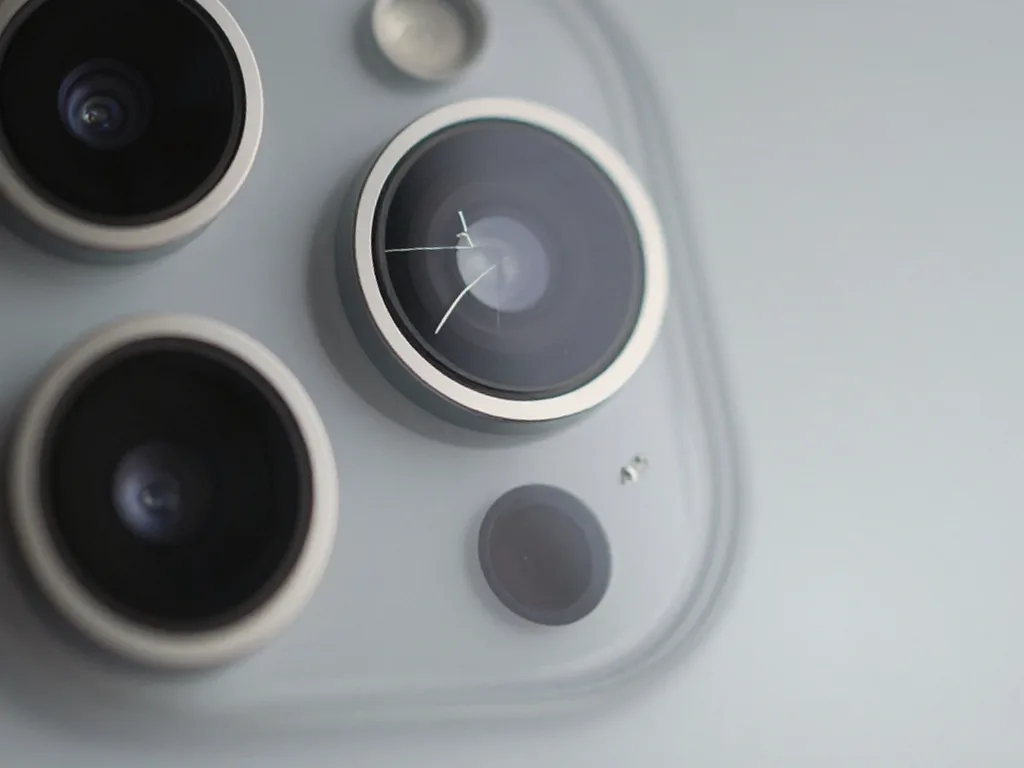
A cracked camera window looks alarming, yet in most cases the module underneath is intact. Here is how to tell a damaged glass cover from a damaged camera before you bring the phone in.
Glass or camera module, how to tell before you come in
If the camera still focuses, switches between lenses and fires the flash, the damage is almost always in the protective glass, not in the optics underneath. Open the camera app, tap to trigger autofocus on a near object, then on a far one, and watch whether the image sharpens each time. Switch to the ultra-wide and the telephoto in turn and take one shot with each. Fire the flash once in a dim room and check that the burst is even, not yellow or half-dark. A hardware fault usually shows as a permanent black patch, a shaking picture or a focus warning that never clears, so run that single test shot before you assume the worst.
What people mean by the camera eye, window or lens
- Camera eye or window: the round protective glass over the rear lens, the part that cracks first after a drop.
- Lens: technically the optical element sealed inside the assembly, though most owners mean the outer glass.
- Front camera: the selfie camera on the screen side, a separate part with its own small glass.
- Display glass: the touch surface on the front, a different service from the rear cover.
- Lens replacement: a phrase that can be quoted as a full assembly, so name the outer glass instead.
What a cracked lens cover does to your photos and iPhone camera lens glass replacement
A crack in the camera glass rarely hurts at once, but over time it works against your photos and against the camera module itself. Here is what actually happens after a drop.
Why photos turn hazy and streaky after a drop
A crack scatters light before it reaches the lens, so shots pick up haze, flare and soft focus even when the camera itself is healthy. The fracture line acts like a tiny prism: light bends at the broken edge instead of passing straight through, and the sensor records that bent light as a pale streak across the frame. Autofocus still hunts normally, which is why owners blame the module first and the glass last. The effect grows with bright scenes — a window, a street lamp, the sun low over the steppe — because more light means more scattering at the break. Indoor shots under even light can look almost clean, which hides the problem. Wipe the glass and shoot toward a light source; if the flare follows the crack line, the glass is the culprit and the module is fine.
Dust, moisture and glass shards inside the camera
- Dust under the glass: settles on the lens surface and shows up as dark specks in every shot, worst against plain skies and white walls.
- Moisture: reaches the module through the crack and can fog the optics from inside, especially after a cold night and a warm room.
- Loose shards: grind against the lens coating each time autofocus moves, so the damage deepens with ordinary daily use.
- Coating wear: scratched glass loses contrast and colour accuracy over time, and no amount of editing brings the original rendering back.
How we handle iPhone camera lens glass replacement
The work takes about 20 minutes and happens while you watch. Here is every step, from a photo on WhatsApp to the old glass handed back to you.
From a WhatsApp photo to a fixed quote
We reply to a WhatsApp photo within 5 minutes with a quote and a free time slot, and the price, part, turnaround and warranty are fixed on the receipt before work starts. The engineer names the exact item, original or aftermarket, and confirms the turnaround, usually 20 minutes for camera glass. Nothing is opened before you sign off on those four points, and the paperwork takes about 2 minutes. A photo taken straight down on the cracked glass lets the engineer confirm whether the module is intact, so the quote rarely changes at the counter. For iPhone camera lens glass replacement in Almaty, this photo check is what keeps the estimate honest. Send one square shot above the glass and one at an angle, and the estimate you get back matches what you pay.
Removing shards, cleaning the lens and fitting the new glass
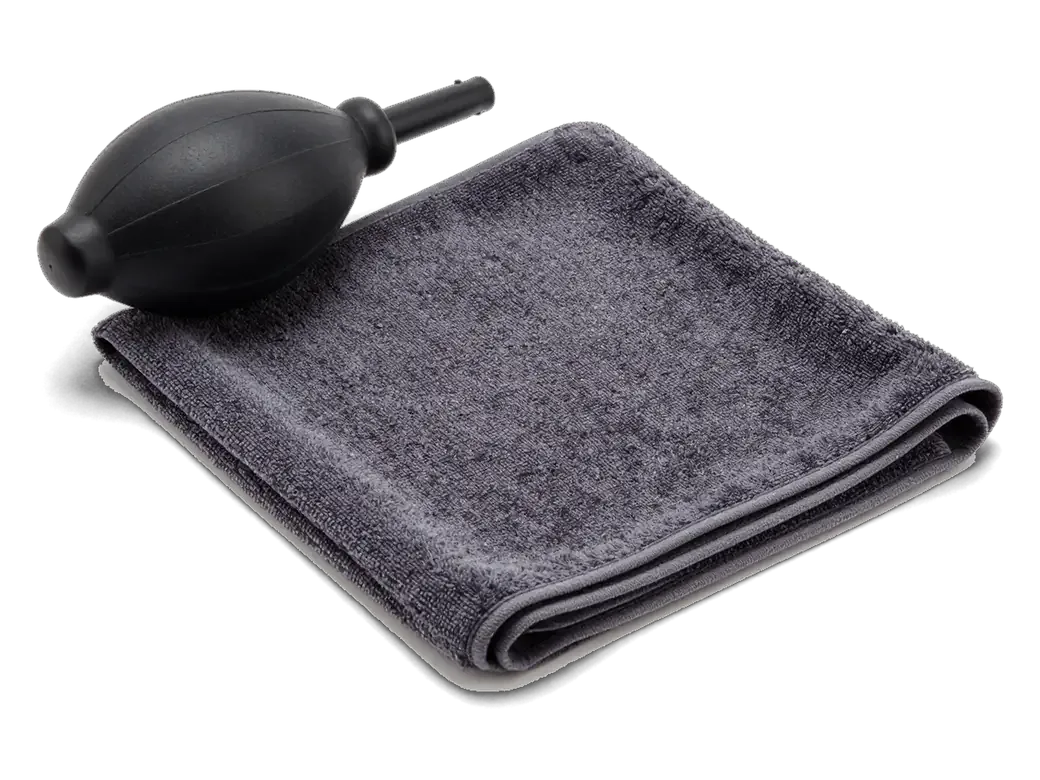
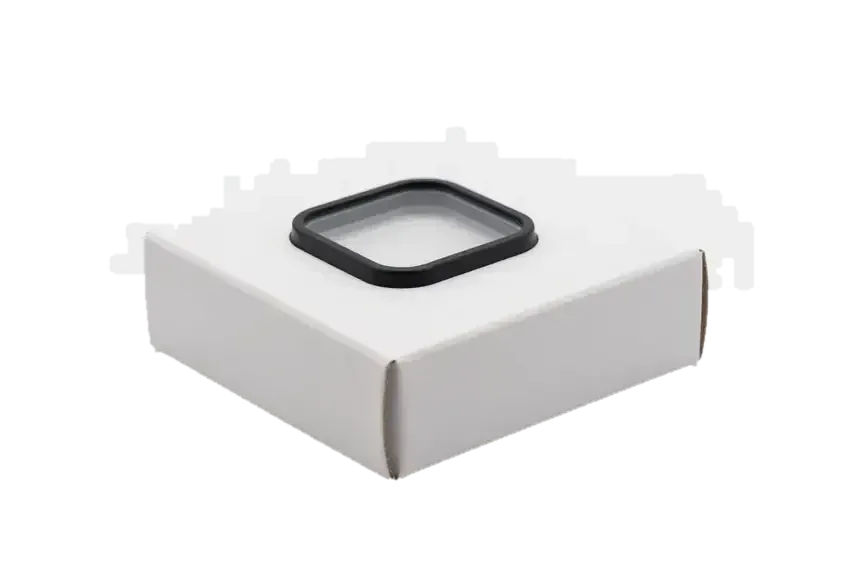
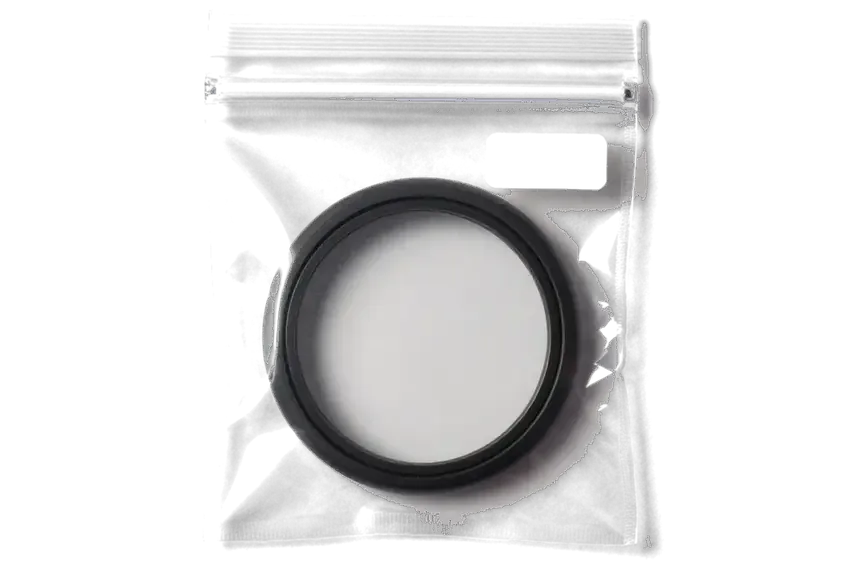
The engineer lifts out the broken glass, clears every shard from the lens, shows the new part in factory packaging and seats it without touching the working module. Shards trapped against the lens are the usual cause of a scratch across your photos, so the area is cleaned and inspected under magnification before the fresh piece goes on. The camera lens glass replacement is aligned flush with the frame, and the ring around it is checked for a tight seal. The old glass goes back to you with the paperwork, so you can see exactly what was removed and confirm the module was never swapped. Keep that old piece: comparing it to the new one is the quickest way to spot a part that sits too high.
Original glass or aftermarket, what the choice changes
Two glass options compared by surface and warranty| Part option | Surface and ring | Warranty | Best for |
|---|
| Original | Factory-matched coating | Up to 1 year | Long-term owners |
|---|
| Aftermarket | Slightly different coating | 6 months | Faster, budget-minded repairs |
|---|
| Both options | Shown in factory packaging before fitting | Up to 1 year original, 6 months aftermarket | Any owner who wants the part named on the receipt |
|---|
How Many Camera Glasses Your iPhone Has
The number of cracked windows depends on how many cameras your model carries. We count them by camera group below instead of listing every model separately.
One, two or three glass covers by camera count
- Single camera: iPhone 7, 8, XR and SE models carry one window over the lens.
- Dual camera: Plus models, X, XS and the base 11 and newer carry two side by side.
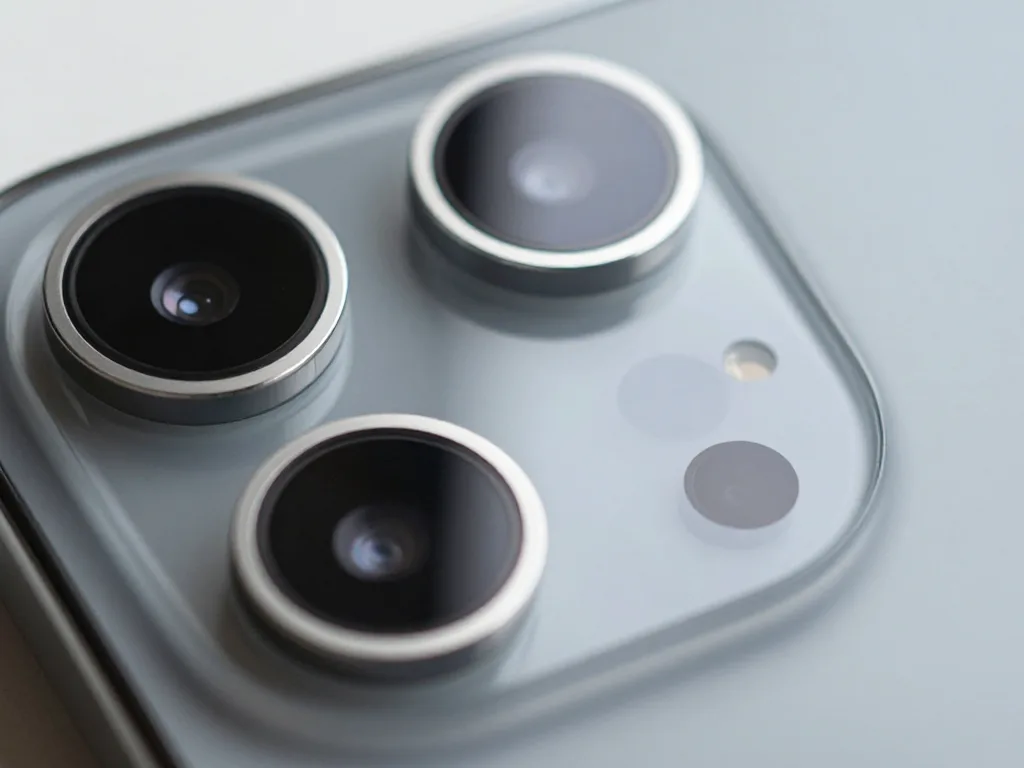
- Triple camera: Pro models from 11 Pro onward carry three, one per lens.
- Flash glass: sits apart from the camera windows and is replaced only if a crack runs through it too.
What if the whole back panel is cracked, not just the glass
When the crack runs across the rear shell rather than the camera window, we check on free diagnostics whether the glass cover alone will fix it or the back needs work too. Our engineer looks at the rear shell, the camera module and the cover under a lamp in front of you, then points to the exact spot where the damage starts and ends. A hairline that stops at the metal ring is usually a camera-glass job; a fracture that spreads toward the corner means the shell has taken the impact. Diagnostics take 15 minutes in front of you, so you see the difference between a camera-glass job and a back-panel job before agreeing to anything.
Checking the Result, Warranty and Protection After Repair
Once the new glass is on, you test the cameras together with our technician, and after pickup the warranty and a few simple habits keep the repair intact.
Testing focus, lens switching and flash together
After the repair you test the cameras with our technician, checking focus, switching between lenses, flash and video before you leave the counter. The pass runs about 10 minutes and covers 32 functions in total, not just the optics: Face ID, True Tone, microphones, speakers, charging and network go through the same check. Our specialist stays beside you and lets you shoot the frames yourself, because autofocus faults and a dead flash are easiest to spot on your own screen. The replacement glass is shown in factory packaging before installation, so you know which part sits under the window you are testing.
Turnaround, waiting area and courier across Almaty
- Camera glass: about 20 minutes at the counter.
- Waiting area: coffee and Wi-Fi while the technician works.
- Courier across Almaty: 90 minutes, free with a repair.
- Warranty: up to 1 year, with the card handed over at pickup.
Protecting the new glass after the repair
A case with a raised lip around the camera and a small stick-on lens guard are the two simplest ways to keep the new glass from cracking again. A raised lip holds the camera window off flat surfaces, which is where most cracks start when a phone is set down without a case. A stick-on guard absorbs the impact of a direct hit and is cheap enough to swap once it scuffs. Avoid sliding the phone face-down across a table: grit caught under the camera bump grinds the surface every time. A loose or cloudy guard dulls night shots, so check it every few months.
Summary: iPhone Camera Lens Glass Replacement
A cracked camera window is one of the simpler faults on an iPhone, and the signs are readable before you commit to any work. Here is what matters most.
- Glass, not module: if the camera still focuses and the flash fires, the fault is usually the protective layer rather than the camera itself.
- Waiting costs more: a crack scatters light and lets dust, moisture and shards reach the lens, turning a small job into a bigger one.
- Match the count: each rear camera has its own glass panel, and only the broken pane gets swapped.
- Fast turnaround: the swap takes about 20 minutes, and you test focus, lens switching and flash with the engineer afterwards.
- Protect the new glass: a case with a raised lip and a separate lens guard keep it intact far longer than a bare back.









 iPad
 MacBook
 iMac
 Mac mini and Studio
 Apple Watch
 AirPods
 Apple Pencil
 Apple TV
 HomePod