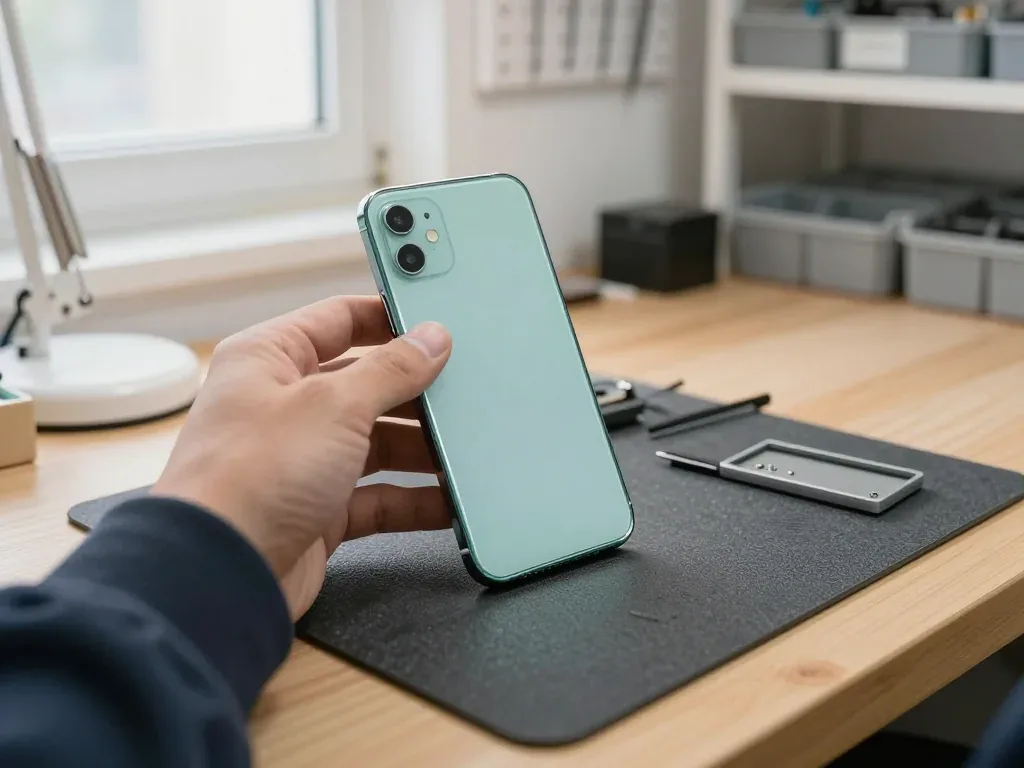
The 12 mini is a compact body wrapped around a full-size OLED panel, so drops hit the front hard and the small cell ages faster than owners expect. Here is what lands on our bench most often.
Cracks, lines and dead touch on the small OLED panel
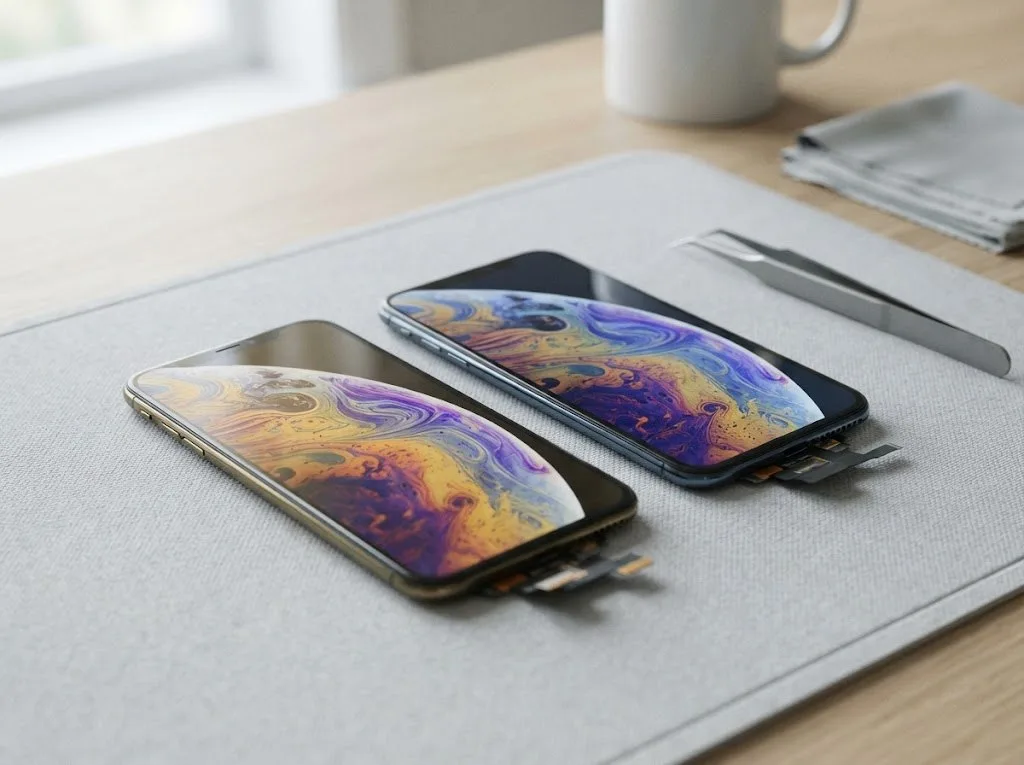
We see the 12 mini screen fail in three patterns — a shattered Ceramic Shield, green or white lines across the panel, and a touch layer that stops responding in one zone. The display on this model is a single module: the matrix and the touch layer are bonded together under the protective cover, so damage in one layer rarely stays isolated. A hairline fracture in the corner spreads across the screen within weeks as flex pressure builds at the frame edge. Lines that appear after a drop usually mean the driver took the impact even though the cover held. A drop that leaves the cover intact can still crack the panel underneath, so a screen that looks fine but flickers needs the same module check. If you are looking for iPhone 12 mini repair in Almaty, this is the most common job we take on for the model.
Why the battery drops faster than the health percentage suggests
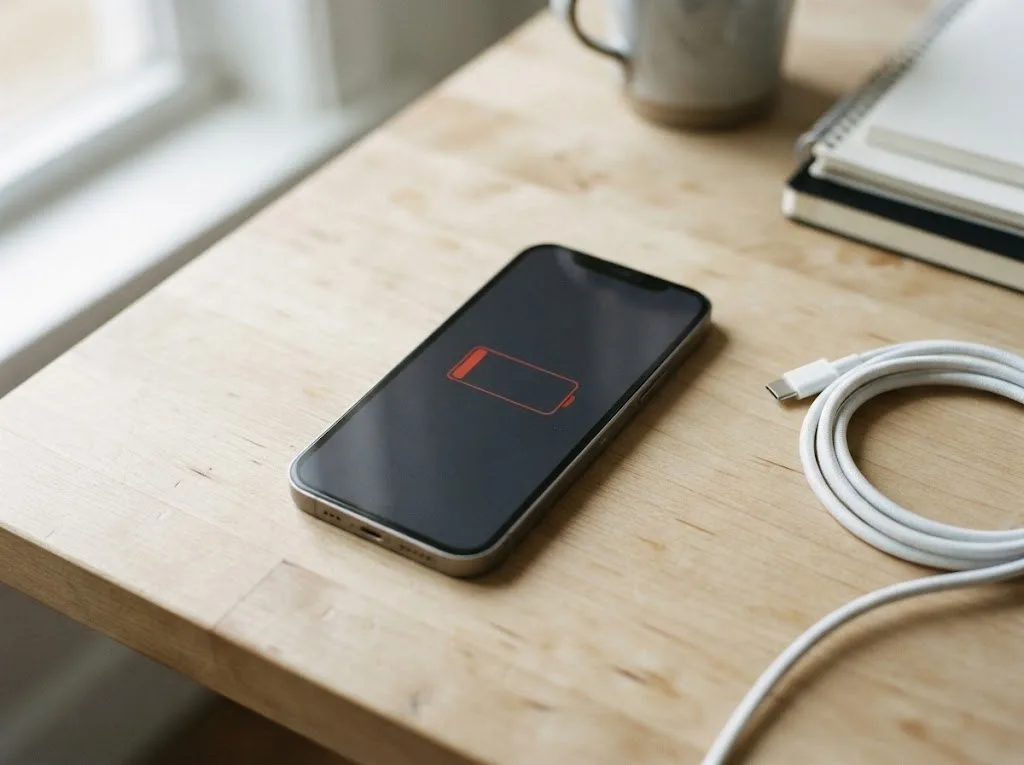
The 12 mini packs a smaller cell than its siblings, so the same wear shows up as sudden shutdowns and fast drain well before the health figure looks alarming. A 12 mini cell holds roughly 2,200 mAh against 2,800+ in the standard 12, which means every cycle eats a larger share of usable capacity. The Battery Health readout is an estimate the power controller reports, not a measurement of real runtime — a phone at 84% can still die at 25% under load. Cold Almaty mornings amplify voltage sag on an aged cell, so a phone that dies at 30% indoors is often a battery issue rather than a board fault.
Charging, camera glass and rear panel symptoms
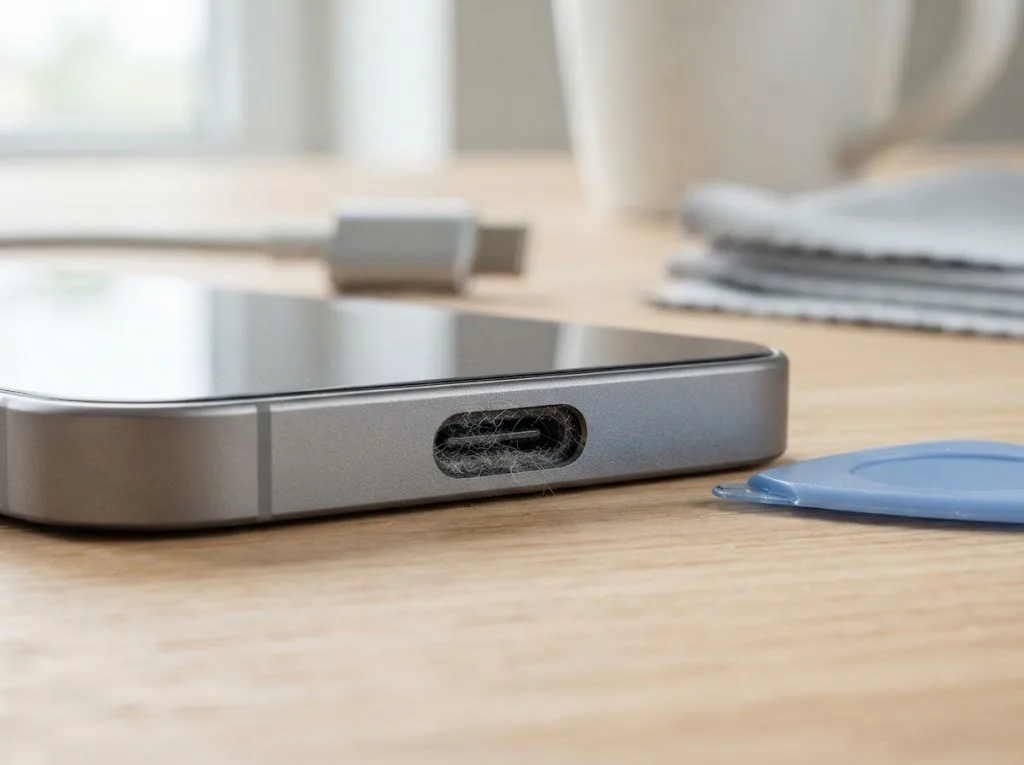
- Lint-packed Lightning port: compressed pocket debris stops the pins from seating, so the cable charges only at one angle.
- Oxidised contacts: moisture films the port pins, and the phone reports charging while the percentage barely moves.
- Torn charging flex: a drop onto the plugged-in cable tears the flex under the port, killing charging and microphone input.
- Cracked camera lens: the cover fractures on impact and hazes every photo, while the sensor underneath usually survives.
- Rear panel shatter: the back cracks around the camera bump, and an exposed edge lets dust reach the wireless coil.
- Dead zone after a fall: impact on the lower frame bends the port bracket, so the cable fits loosely and disconnects mid-charge.
Glass Only or the Whole Display Module
On the 12 mini the glass and the OLED are bonded into one unit, so the choice between a glass-only job and a full module swap depends on what actually cracked — here is how we decide.
When the glass can be replaced on its own
If the OLED still shows a clean image and the touch layer works, we can replace just the outer cover and keep your original panel. The scratch pattern tells us a lot: hairline cracks that stop at the edge and leave the picture untouched usually sit in the top layer alone, while any discoloration under the surface points deeper. A cover-only job means the technician separates the bonded layers, cleans the OLED face and re-bonds a new top layer under pressure, without heat that would distort the panel. Cover-only work costs less and preserves the factory display, but it takes longer than a module swap because the old top layer has to be separated and re-bonded without damaging the OLED.
When the full module is the honest answer
Lines, dead zones or a black patch mean the OLED or touch layer is damaged, and only a complete display module restores a reliable picture. We see this most on panels that took a corner impact: the cover looks intact, yet green or pink lines spread from the edge within days as the OLED matrix degrades. Replacing just the top layer there would leave you with a clean surface and the same faulty image, so the module goes in as a complete unit. We transfer the True Tone calibration to the new module so the display keeps its warm-to-cool balance; on some aftermarket panels that calibration cannot be carried over, which is worth knowing before you choose.
Matching the repair to the damage
Which damage pattern leads to which display repair| Damage pattern | What is affected | Repair route |
|---|
| Cracked cover, clean image | Outer layer only | Cover replacement |
|---|
| Lines or black patches | OLED panel | Full module swap |
|---|
| Touch dead in one zone | Touch layer | Full module swap |
|---|
| Flicker with intact cover | OLED underneath | Module inspection first |
|---|
Original or Aftermarket Parts and What They Keep Working
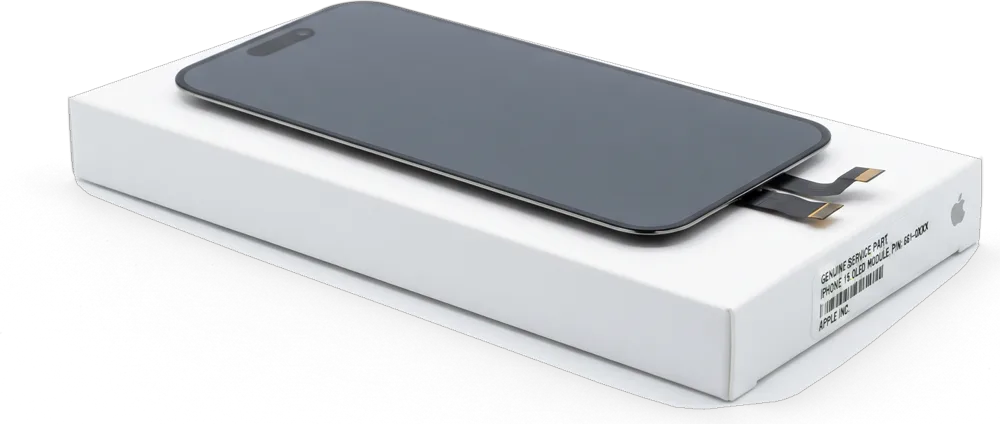
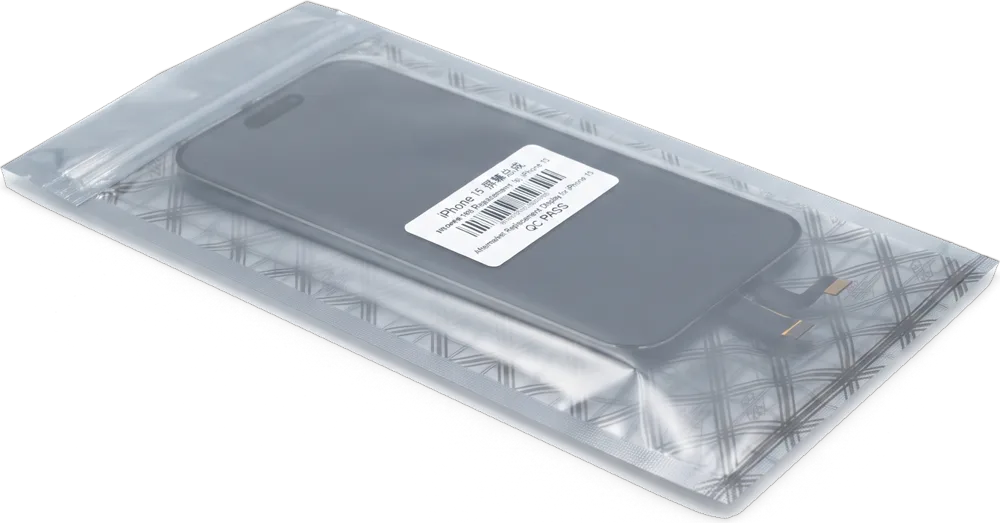
The component you pick decides which features survive the repair, so we show both options in sealed packaging and lock the choice on the receipt before any work begins.
How original and aftermarket parts differ in daily use
Original components keep every function the phone shipped with, while aftermarket ones can differ in brightness, color and how the battery reports its health. On the 12 mini's 5.4-inch OLED panel the gap is easiest to spot outdoors: a genuine display holds its full peak brightness in direct sun, whereas a compatible panel often dims and shifts toward blue at an angle. Battery modules behave the same way — an original pack reports its health percentage in Settings, an aftermarket cell may show nothing at all. Camera lenses and rear covers rarely cause a functional difference, since they carry no electronics. 64% of our customers choose an original component, and the gap shows up most on displays, where aftermarket panels may lose True Tone or peak brightness in sunlight.
Face ID, True Tone and the water resistance question
Face ID keeps working after a display repair because the TrueDepth module is a separate unit, and True Tone survives when its calibration is transferred to the new screen. The TrueDepth assembly sits above the panel and is moved across intact, so the dot projector and infrared camera never touch the replacement cover. True Tone is different: it depends on a paired ambient sensor, and a technician has to copy that pairing onto the new module with a programming tool — skip the step and the setting simply disappears from Control Center. On water resistance, the 12 mini left the assembly line rated IP68, and any opening of the chassis reduces that seal. We re-glue the frame with fresh adhesive during reassembly, but we still advise keeping the phone away from water afterward.
What each part choice keeps working
Feature-by-feature comparison of the two part types| Feature | Original part | Aftermarket part |
|---|
| Face ID | Works | Works |
|---|
| True Tone | Works | May not transfer |
|---|
| Battery health report | Accurate | May show unknown |
|---|
| Peak brightness | Factory level | Often lower |
|---|
| Water resistance | Re-sealed | Re-sealed |
|---|
From WhatsApp Photo to Pickup in Under an Hour
The whole visit is built around waiting, so most 12 mini jobs finish before you finish your coffee — here is the sequence from first message to handover.
Sending a photo and getting a quote in five minutes
Send a photo of the damage on WhatsApp and an engineer replies within 5 minutes with a price and a free time slot. The image shows the cracked panel, the swollen battery or the shattered camera lens clearly enough for us to identify the task and the component it needs. You can also ask about a courier if travelling across the city is inconvenient. A clear picture of the damaged area lets us quote accurately before you set off, so you arrive knowing the component and the turnaround instead of finding out at the counter — and if the shot is ambiguous, we ask for a second angle rather than guess.
Free diagnostics and the receipt that locks the terms
Diagnostics are free and take 15 minutes in front of you, even if you decide not to repair, and the receipt fixes price, component, turnaround and warranty in about 2 minutes. The engineer opens the device at the bench, shows you what has failed and explains whether an original or aftermarket component fits the damage. Once you agree, the terms go onto paper before any screwdriver touches the phone. Because everything is written down first, the component you approved is the one installed — we show the new item in factory packaging before fitting it. Keep that receipt: it carries the warranty of up to 1 year and the exact turnaround you were promised.
How long each 12 mini job takes
Repair times by job type and whether you can wait| Job | Typical time | Wait on site |
|---|
| Screen module | 40 minutes | Yes |
|---|
| Battery | 25 minutes | Yes |
|---|
| Camera glass | 20 minutes | Yes |
|---|
| Board repair | 1–3 days | No |
|---|
What You Get Back and Who Stands Behind the Work
A repair is only finished when the phone works as it should in your hands, so the handover is a shared check — you leave with the paperwork, the warranty card and the old part.
The 32-point check you run together with the engineer
After the repair we check 32 functions in about 10 minutes, and you test Face ID, True Tone, cameras, microphones, speakers, charging and network alongside the engineer. The list is not a formality: True Tone is the first thing that quietly disappears when a display is paired badly, and Face ID stops responding if the front module was disturbed during reassembly. Microphones and speakers get a live call test, charging is measured on the port rather than guessed from the battery icon, and the network check confirms the antennas survived the opening. Testing together means any issue surfaces before you leave the counter, not the next day when you are far from the workshop.
Backing up and switching off Find My before you hand over
- Current backup: run an iCloud or Finder backup the night before, so a rare glitch during the repair cannot cost you photos or chats.
- Find My off: sign out of iCloud and disable Activation Lock, otherwise the device stays locked to your account through the whole procedure.
- Passcode shared: tell the engineer your passcode for testing, then change it once the phone is back in your hands.
- Case and SIM out: remove the cover and the SIM tray so the frame and the port can be inspected without delay.
- Fresh backup is the habit: most repairs keep your data untouched, but a current copy turns a rare glitch into a non-event.
A direct contractor, a warranty and the old part in your hands
We are a direct contractor with our own technicians and workshop, not an aggregator, and every repair comes with a warranty up to 1 year plus your old part returned. That matters more than it sounds: when a workshop is the executor rather than a middleman, the person who quotes your job is the person who does it, and 46,000+ repairs over 11 years sit behind that bench. Payment runs through Kaspi, card or cash, and you get a receipt, a warranty card and the replaced component in a bag. A courier across Almaty takes 90 minutes and is free with a repair, so a busy day does not have to delay the fix.
Summary: iPhone 12 mini Repair
Five points cover what breaks, what each repair option keeps working and how the visit is organised from the first photo to pickup.
- Screen: the 12 mini fails most often on its OLED panel, its small battery and the Lightning port, and each has a clear repair route.
- Cover or full assembly: cover-only work preserves the original panel when the OLED is intact, while lines or dead touch call for the complete unit.
- Parts: original components keep every function, whereas aftermarket panels may lose True Tone or accurate battery reporting.
- Face ID and water resistance: the TrueDepth sensor sits apart from the display, so it survives a screen repair, but sealing drops after any opening.
- Visit flow: a photo quote, free diagnostics and a written receipt keep the trip short and the terms clear.









 iPad
 MacBook
 iMac
 Mac mini and Studio
 Apple Watch
 AirPods
 Apple Pencil
 Apple TV
 HomePod