The Series 11 keeps the thin case and the larger front crystal of the previous generation, so most damage we see is impact on the glass, a tired battery and power faults. Here is how we sort one from another.
Cracked Crystal, Dead Touch or Lines on the Screen
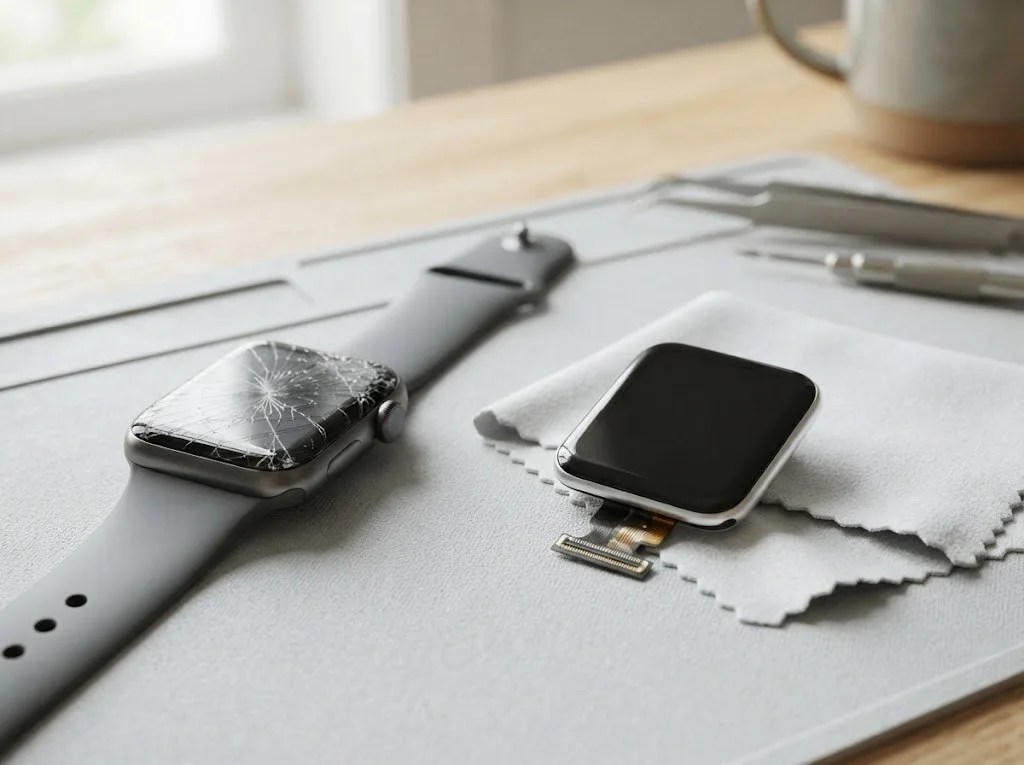
On the Series 11 the front crystal and the display are bonded together, so a crack with a clean picture is a crystal job, while lines, blotches or dead touch mean the whole display module is replaced. The touch layer sits directly on the OLED panel, which is why one broken corner can leave the image perfect but kill response across the whole surface. Ion-X covers the aluminium versions, sapphire the titanium ones, and the two crack differently under the same impact. On the bench we test touch across a grid of points before quoting, because a glass-only swap on a panel with a failing digitiser brings the watch back a week later. Ask the engineer to show you the damage under light before agreeing to anything.
A Battery That Drains Fast or Pushes the Screen Up
A swollen battery lifts the front crystal off the case, and we treat those watches as urgent — stop charging them and bring them in, because a punctured cell inside a sealed case is a real safety issue. The cell on the Series 11 fills most of the interior, so as it ages it expands against the display rather than sideways, and the first sign is usually a thin gap along the edge or a crown that suddenly feels tight. A unit that dies on cold mornings but holds charge indoors is usually worn chemistry, not a fault — a capacity check during the free diagnostic tells you whether replacement is worth it now or can wait a season.
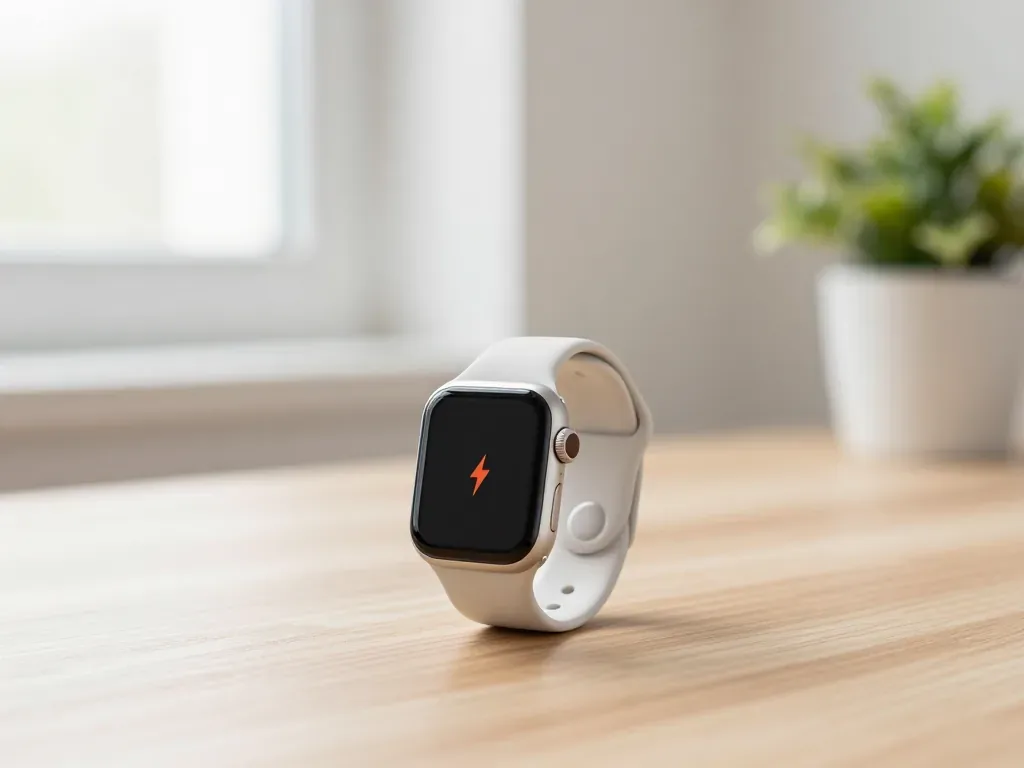
The Watch Will Not Charge or Will Not Turn On
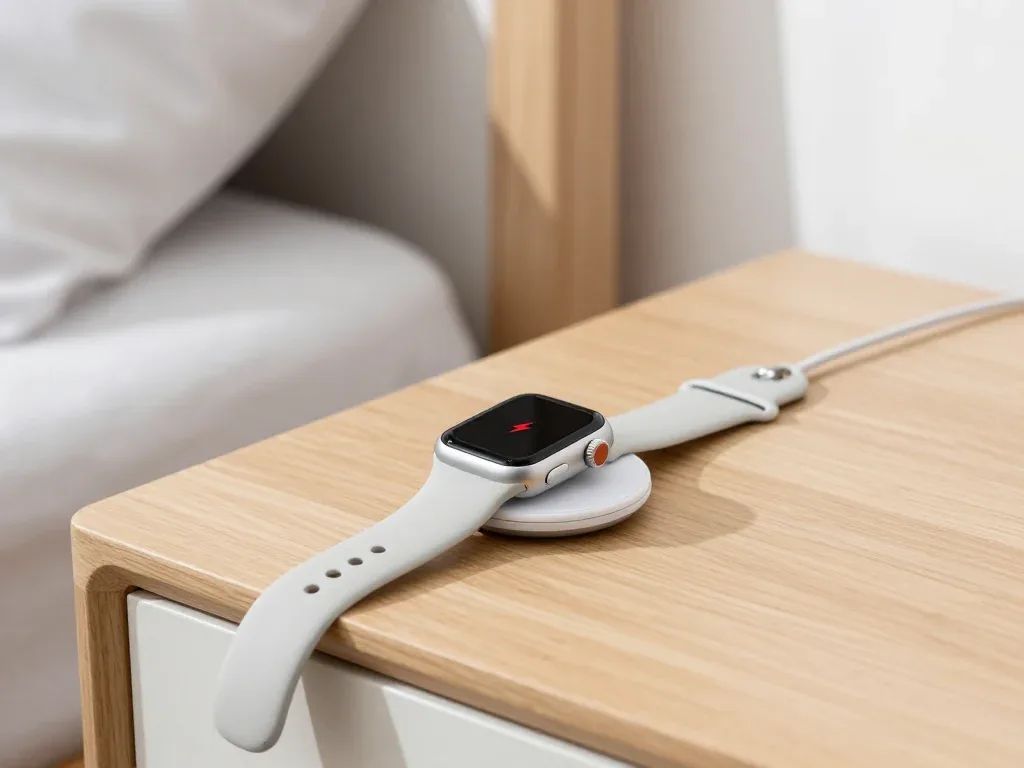
- Charger and cable: we test your puck and a known-good one side by side, since coil alignment and a frayed cable cause most no-charge complaints.
- Charging coil: the coil sits behind the back cover and can be knocked loose or corroded after sweat works its way in.
- Back cover contacts: we inspect the pins and the seal around the sensor window for corrosion that interrupts power delivery.
- Board: if power reaches the board but nothing boots, we check the circuit under a microscope before quoting a board-level job.
- Bring your own puck: many "dead" watches revive on a different charger, so testing on the accessory you use at home saves a pointless teardown.
Original Part or Aftermarket for Your Apple Watch Series 11 Repair
The Series 11 display is bright and always-on, and an aftermarket panel can behave differently in both. We lay out what each option keeps, so the choice is yours.
What an Original Part Keeps and What an Aftermarket One Changes
An original display keeps full brightness, Always-On behaviour and touch response as designed, while an aftermarket panel can dim slightly and occasionally reacts differently at the edges — 64% of our customers choose the original part. The gap shows up on the always-on dimming level and on outdoor legibility in direct sun, where a copy panel often looks washed out. Touch at the rounded corners is the second difference: a cheaper digitizer sometimes misses a swipe near the bezel. On the battery side the split is smaller, but an analog cell loses capacity faster over the first months of use. For an Apple Watch Series 11 repair in Almaty, we show both options before you decide, and the engineer explains what each one keeps in daily use.
How We Fix Your Choice on the Receipt
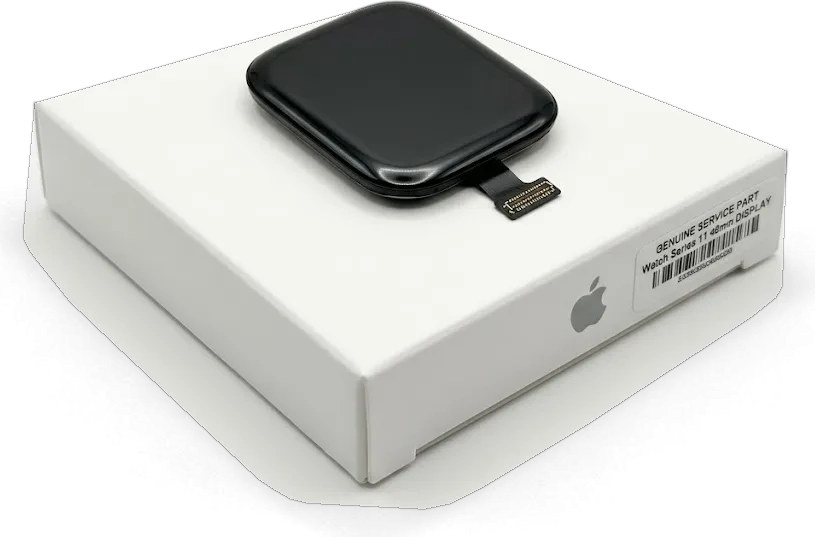
Before work starts we write the price, the part (original or aftermarket), the turnaround and the warranty up to 1 year on the receipt, and it takes about two minutes. The new component is shown to you in factory packaging before it goes anywhere near the watch, so the part on the receipt and the part in your hand are the same item. We then sign the document with you, and the turnaround we quote there is the one we hold ourselves to. Keep that receipt with the old part we hand back — the old component is your proof of what came out of the watch, and it matters if a question ever comes up later.
Comparing the Part Options Side by Side
what each part option keeps on a Series 11| Part option | Brightness and Always-On | Touch response | Warranty |
|---|
| Original display | As designed | As designed | Up to 1 year |
|---|
| Aftermarket display | Can dim slightly | Occasional edge difference | 6 months |
|---|
| Original battery | Full capacity | Not affected | Up to 1 year |
|---|
| Aftermarket battery | Close to full | Not affected | 6 months |
|---|
Water Resistance and Sealed Case After Apple Watch Series 11 Repair Service
Opening the watch always disturbs the factory seal, and no honest service can promise the original water resistance afterwards. Here is what we do to get as close as possible and what we advise you to avoid.
Why the Factory Seal Cannot Be Fully Restored
We re-glue the case with a fresh gasket after every opening, but the factory water resistance cannot be guaranteed once the watch has been opened, so we advise against swimming with it afterwards. The Series 11 leaves the factory rated WR50, and that rating depends on a compressed gasket, a precise tolerance and a pressure test run on assembly-line equipment we do not have. A new gasket restores the mechanical barrier against splashes and rain, yet the micro-fit between crystal, body and back cover is never identical to the original. That is why we never promise the factory rating back and instead tell you plainly what the watch can and cannot take after service.
What Happens When a Watch Comes In Wet
After water contact the diagnostic can take up to two days, because we clean and dry the board and only then judge whether corrosion reached the sensitive parts. Liquid rarely kills a watch on impact; it creeps under the shields and starts eating the solder joints, and that process keeps going while the unit sits in a drawer. We open the housing, lift the board out and inspect it under a microscope, then clean the affected areas and dry them in a controlled chamber. Only after that do we power the device up. Do not charge a wet watch to "see if it works" — power on a damp board is what turns a cleanable spill into a dead one, so bring it in switched off.
What We Check Before Handing the Watch Back
- Touch and display: every zone responds, no dead strips or lines, brightness behaves normally.
- Heart rate sensor: the optical reader picks up a pulse and the back cover sits flush.
- Charging: the unit takes a charge on the magnetic puck and holds the connection.
- Vibration and speaker: the haptic motor taps cleanly and sound plays without crackle.
- Microphone: voice is picked up on a call and in a voice memo without muffling.
- Network and pairing: the device pairs with your iPhone and keeps the link.
Crown, Buttons and Sensors on the Series 11
The crown, the side button and the sensor stack on the back cover are the parts people forget until they stop working. Each has its own failure pattern and its own fix.
A Sticky or Unresponsive Digital Crown
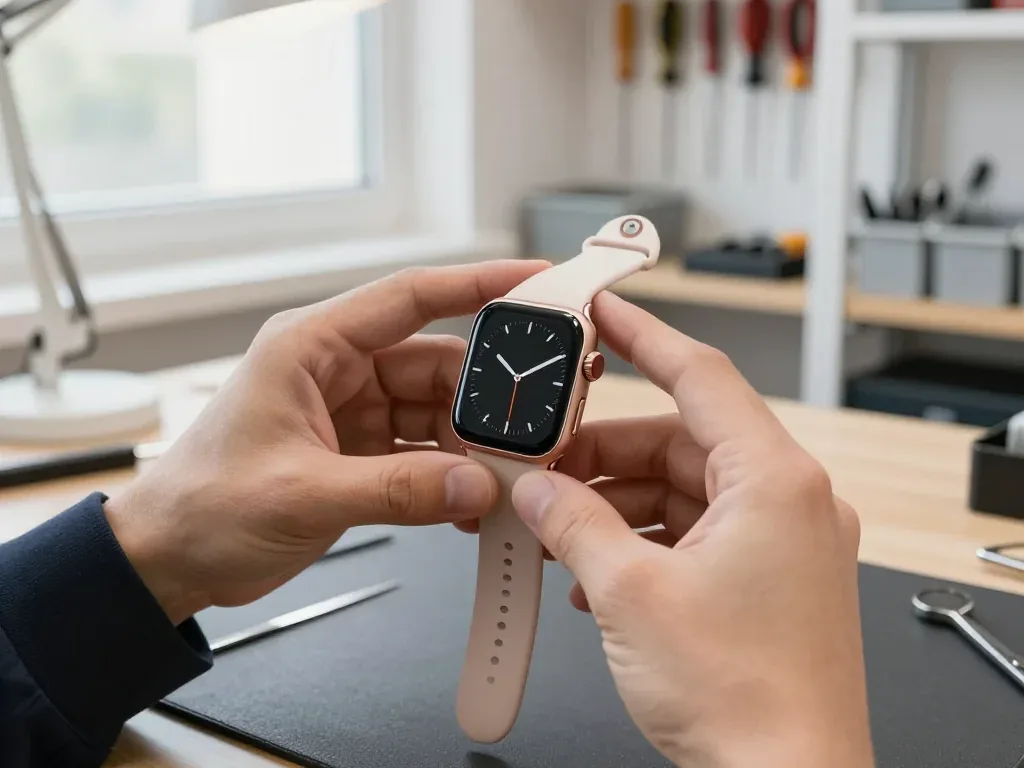
A crown that sticks or skips is usually debris or worn internals, and we clean or replace the assembly rather than the whole watch. Grit from sweat, chalk or sand works into the gap around the Digital Crown and the side button, and the optical encoder underneath starts missing clicks. We open the case, flush the mechanism, and if the encoder is worn we fit a new unit; the side button gets the same treatment because both share a sealing zone. The job runs 20 to 40 minutes while you sit in the waiting area, and 72% of repairs finish that way. Rinse the dial under warm tap water with the watch off and rotate it — the manufacturer's own guidance for a gritty crown — before assuming it needs a workshop visit.
Heart Rate, ECG and the Back Cover Sensors
The heart-rate sensor and ECG electrodes sit in the rear cover, so a reading that drops out after a knock usually points to that panel or its connection rather than the display. Four photodiodes and the electrode ring share a single flex cable that presses against the board through a connector, and a cracked rear crystal or a swollen battery pushing the panel up breaks that contact. We test the sensor against a reference reading, inspect the connector under magnification, and reseat or replace the assembly when the contact is gone. Bring the watch in and we check it in front of you, free of charge, in about 15 minutes. Clean the rear crystal and tighten the strap before booking — a loose fit or a smudge is the most common reason a healthy sensor reads nothing.
No Connection to the iPhone or Cellular
When the watch loses its iPhone or cellular link, we check the signal path and the board under the microscope, and board-level work takes one to three days. Bluetooth and Wi-Fi share a flex element along the top edge of the case, the cellular model adds an eSIM module and a second antenna, and a drop that cracks the rear glass often tears the contact without touching the screen. We run a signal test, inspect the joints under magnification, and rebuild the feed or reflow the module. An engineer replies on WhatsApp within five minutes and quotes from a photo, so a suspected fault can be triaged before you travel across the city. Re-pair the watch with the iPhone once before you bring it in — a stale pairing looks identical to a hardware fault and clears in minutes when it is software.
Booking, Turnaround and Who Stands Behind the Work
Most Series 11 jobs finish while you wait, and the whole path from first message to pickup usually takes less than an hour. Here is how to start and what to prepare.
How a WhatsApp Photo Turns into a Fixed Quote
Send a photo of the damage on WhatsApp and a specialist replies within five minutes with a quote and a free time slot, so you know the ballpark before you travel. The quote comes from the picture, then gets confirmed at the counter during a free fifteen-minute diagnostic done in front of you — even if you decide not to go ahead. Price, part, turnaround and warranty are written on the receipt within two minutes, before any work starts. The replacement goes in only after you see it in factory packaging. Photograph the watch on a plain surface in good light — a clear shot of the crack or the lifted screen lets the team quote accurately and saves a second trip.
Repair While You Wait and When We Keep the Watch
72% of our repairs finish while the customer waits in the seating area with coffee and Wi-Fi, and the whole process usually takes less than an hour. A screen swap runs about 40 minutes, a battery 25, camera glass 20 — most Series 11 repair jobs sit in the 20–40 minute band. Afterward you and the technician run through 32 functions together in roughly ten minutes: cameras, microphones, speakers, charging and network. Board-level and water-damage jobs are the exception and need the watch to stay — plan a day or two of not wearing it if the diagnostic points to the board, and up to two days of diagnostics after a water hit.
When to Repair and When to Replace
- Weigh the damage: a screen or battery fix on a Series 11 almost always makes sense, while board damage after water on an older watch is where replacement starts to win.
- Unpair first: open the Watch app on the iPhone and remove the watch — the backup stays on the phone.
- Clear activation lock: an unpaired watch reaches the bench ready for service, with no lock blocking the crew.
- Bring the charger: a charging fault is easier to confirm when the original cable and puck come along.
- Book a slot: message a photo ahead so the team holds a free window on a busy Saturday.
Summary: Apple Watch Series 11 Repair
A short recap of what decides the outcome of a repair — and what to settle before you hand the watch over.
- Cracked crystal with a clean image: a crack with a working picture is a glass job; lines or dead touch mean the display module itself.
- Swollen battery: a battery that lifts the screen is urgent, not something to wear down until it fails completely.
- Seal after service: opening the case always costs some factory water resistance, so treat a serviced watch as splash-resistant.
- Separate parts: the crown, back-cover sensors and antennas each fail in their own way and are replaced as individual components.
- Before booking: unpair the watch from the iPhone and photograph the damage, so the quote and the visit stay quick.








 iPad
 MacBook
 iMac
 Mac mini and Studio
 AirPods
 Apple Pencil
 Apple TV
 HomePod