The logic board is not a single part but dozens of separate circuits, and component-level repair targets the failed link instead of swapping the entire board. Here is how to tell a board fault from a simpler one.
Component-level repair versus replacing the whole board
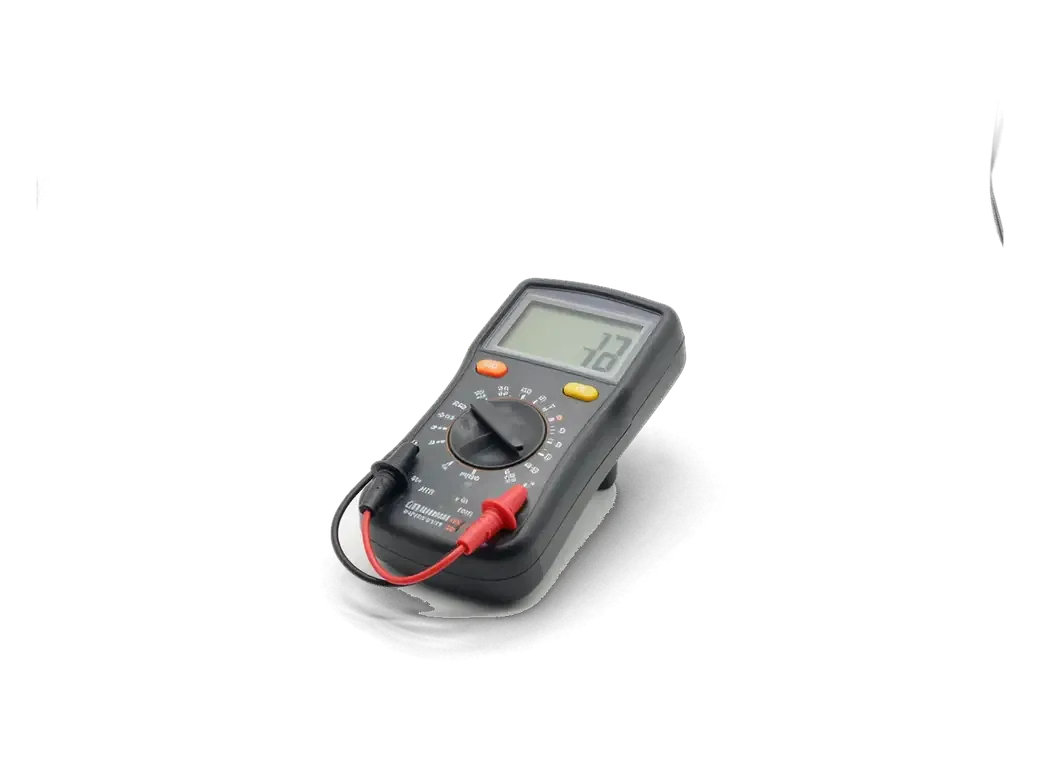
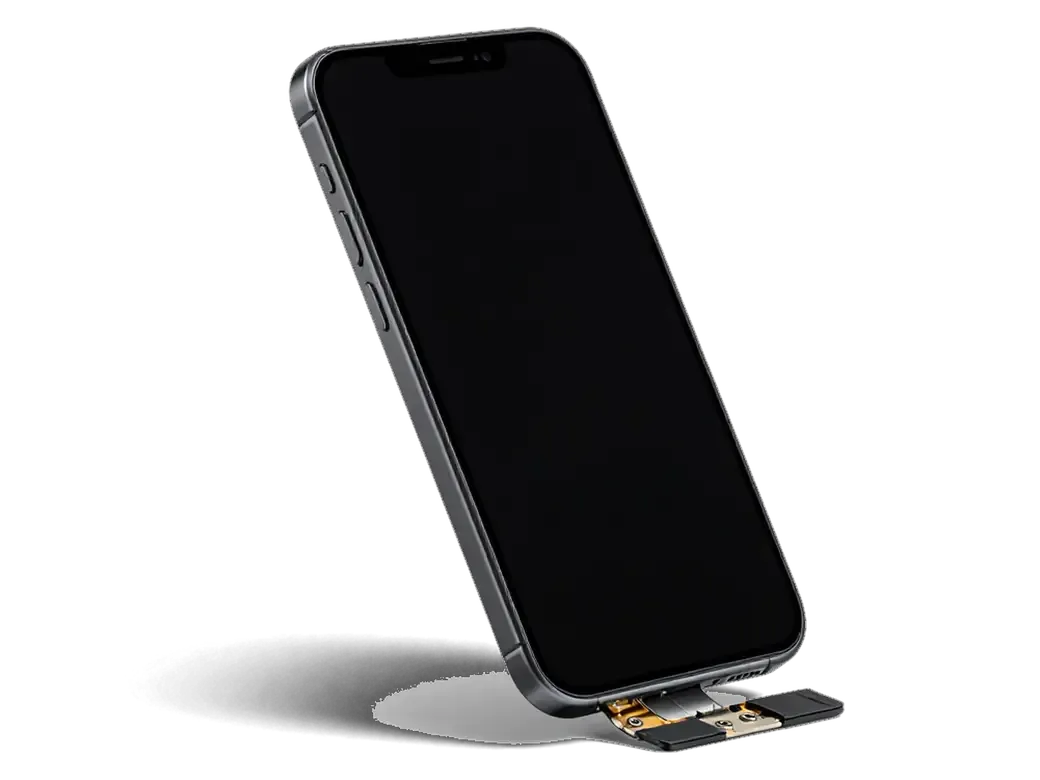
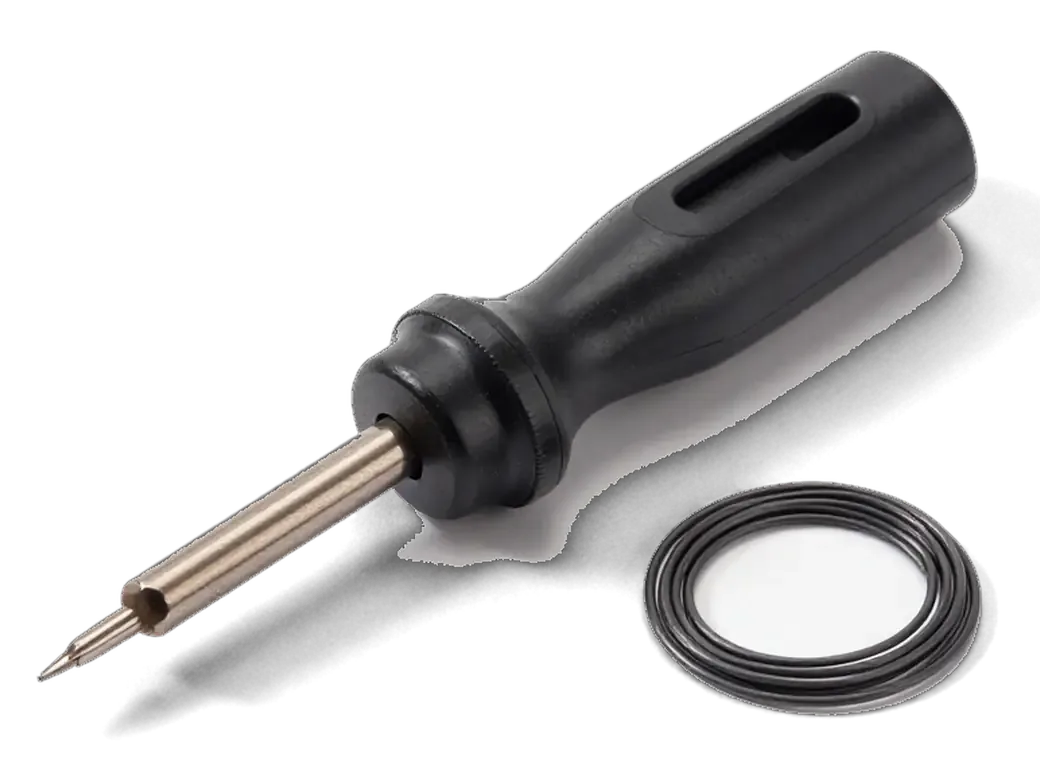
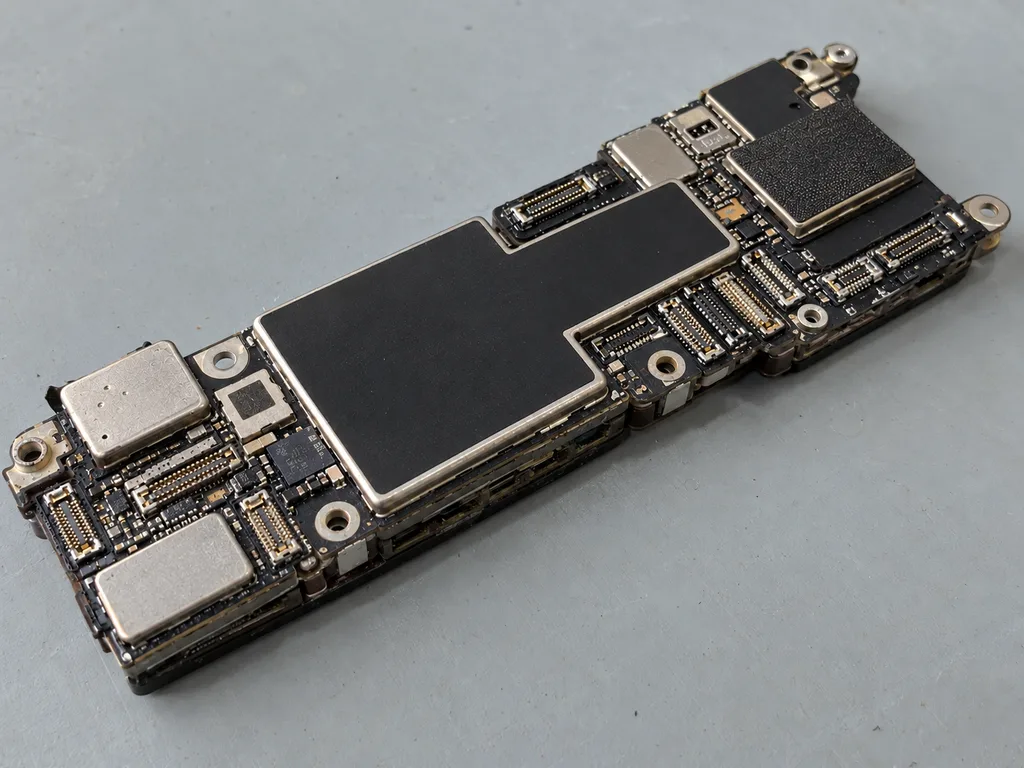
We repair the specific failed circuit on the board under a microscope rather than replacing the entire board, so the rest of your device stays untouched. Power delivery, charging control and signal paths are separate chains on the same substrate, and a technician traces which link failed before touching anything. Our workshop handles iPhone logic board repair in Almaty at component level, which keeps the original storage, calibration data and paired modules in place. A board carries dozens of independent rails and most failures sit in a single small element, which is why a targeted fix is possible at all.
Signs the fault is on the board, not the battery or a cable
- No power at all: the handset stays dark on a known-good adapter, so we measure the rails rather than swapping the cell.
- Heat while idle: the phone warms up in standby, which points to a shorted circuit drawing current nonstop.
- Fast drain on a fresh cell: a healthy battery losing power overnight suggests a problem in the charging controller.
- Face ID or True Tone gone: lost paired functions after a drop usually trace back to a signal line on the board.
- Intermittent connection: dropped network and unstable top-ups need rail measurement, not a new cable.
Why a board fault is not the same as a dead phone
A board fault rarely destroys the whole board, because delivery, charging and signal paths fail independently and can be restored one at a time. The storage chip, the paired modules and most of the circuitry usually sit outside the failed chain, so the handset still holds its data and its identity. Treating a non-booting handset as a total loss is the most common mistake we see at the counter, since a single shorted line can shut down the whole unit while everything else stays intact. Measuring the rails first tells you whether the fault is one element or a wider chain.
How iPhone logic board repair works and what happens to your data and features
This section follows your phone from a photo on WhatsApp to pickup with a function test, so you can see what happens at each stage.
The repair process step by step
- Photo on WhatsApp: an engineer replies within 5 minutes and quotes a price from the picture of the damage.
- Free diagnostics: the engineer inspects the device in front of you for 15 minutes and shows what is broken.
- Fixed receipt: price, part, turnaround and warranty are written down before work starts.
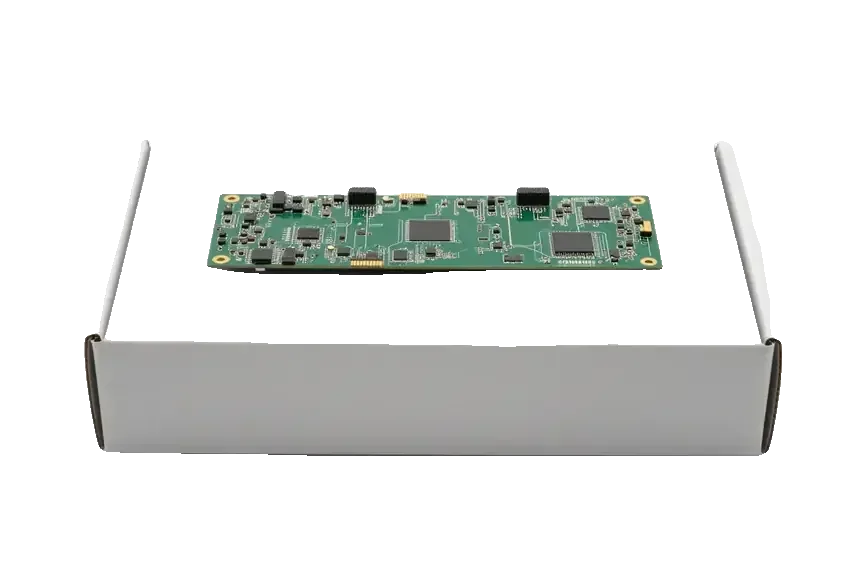
- Part in packaging: the new component is shown in factory packaging before installation.
- Microscope repair: the board is fixed under a microscope while you wait in the seating area with coffee and Wi-Fi.
- Pickup with the old part: the device comes back with the receipt, warranty card and the old component.
Which features we check after the repair
- Face ID: recognition unlocks, since it depends on paired components matched to the board.
- True Tone: display colour shift, because the screen pairing is easy to disturb during board work.
- Cameras: focus and image on each lens, as connectors sit close to the repaired area.
- Microphones: recording on all mics, since board traces feed each one.
- Speakers: earpiece and loudspeaker, because contacts run through the board.
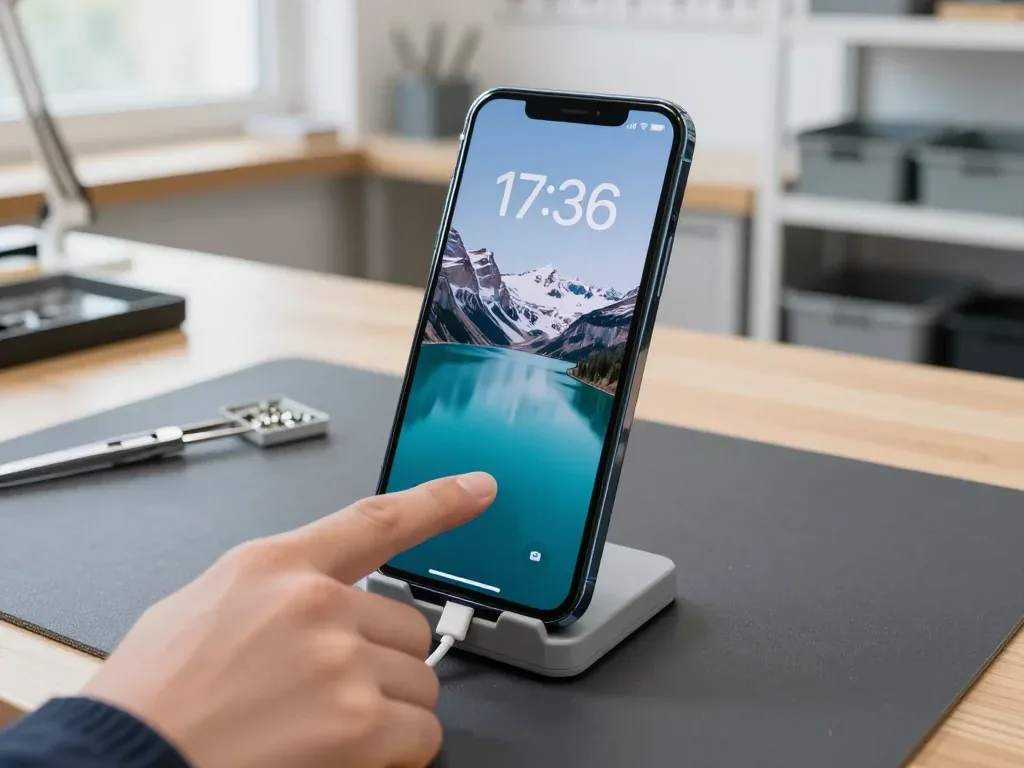
- Charging and network: cable, wireless, calls and mobile data, since the power and modem lines cross the board.
How long iPhone logic board repair takes and whether you can wait
Board repair runs on a different clock from a screen or battery swap, so it helps to know upfront which jobs finish while you sit and which need the device to stay with us.
Board work versus quick repairs by time
turnaround by job type and on-site waiting| Type of work | Turnaround | Wait on site |
|---|
| Camera glass | 20 minutes | Yes |
|---|
| Battery | 25 minutes | Yes |
|---|
| Speaker | 30 minutes | Yes |
|---|
| Screen | 40 minutes | Yes |
|---|
| Logic board repair | 1–3 days | No |
|---|
What to expect while your phone stays with us
When the board needs more than a day, we fix the agreed pickup time on the receipt, and quick jobs can be done while you wait in the waiting area with coffee and Wi-Fi. We accept devices 7 days a week, so a weekend drop-off still starts the same diagnostic clock as a weekday one. Board repair takes 1–3 days, while a screen takes 40 minutes and a battery 25 minutes; 72% of our repairs finish while the customer waits. The extra days on a board go to microscope inspection and a full function check after the fix, not to queue length. Ask for the agreed pickup time in writing on the receipt, because a board that passes the first test can still need a second check the next morning.
Water damage and iPhone logic board repair
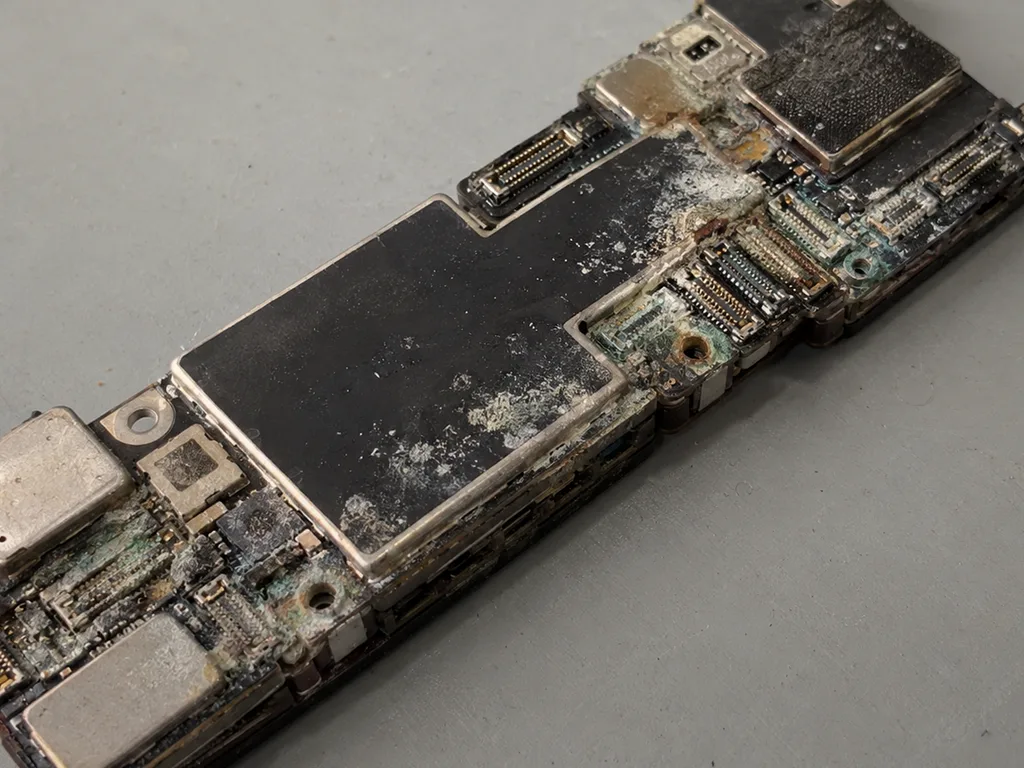
Water rarely kills a phone on the spot. It leaves mineral residue behind, and that residue surfaces days or weeks later as heat, a dead charging port or sudden restarts.
Why a wet device can work and still fail later
Liquid leaves mineral residue that eats into board contacts over days or weeks, so a handset that switches on after a spill can start overheating or losing charge later. Moisture reaches the logic board through the SIM tray, the speaker grille and the charging port, then dries on the surface while the salts stay trapped under shields and connectors. A phone that boots fine after a night in rice proves only that the short has not happened yet. Water also creeps under the power-management chip, where a thin film slowly raises resistance and turns into a charging fault or random shutdowns. Drying the outside does nothing for the board, and the damage keeps spreading until the affected contacts are cleaned and the failed components replaced.
How we diagnose a water-damaged board
- Intake check: we open the device, photograph the oxidation pattern and log which shields and connectors show residue.
- Ultrasonic cleaning: the board enters a cleaning bath to strip minerals before any measurement, since testing a dirty board gives false readings.
- Microscope inspection: we examine traces, vias and chip legs under magnification to find broken lines and lifted pads.
- Power-rail testing: we check the main rails for shorts and compare voltage drops against a known-good reference.
- Repair decision: we replace only components that failed the test, then reassemble and run the full function check.
Warranty, trust and how to hand over your device
Two things decide whether a board repair was done properly: what the technician can prove about the part, and what paperwork follows the device back to you. Here is how to check both before you hand over the phone.
How to tell real component-level repair from a board swap
- Microscope work: we diagnose and repair the board under a microscope, so a single failed component is located instead of the whole board being replaced.
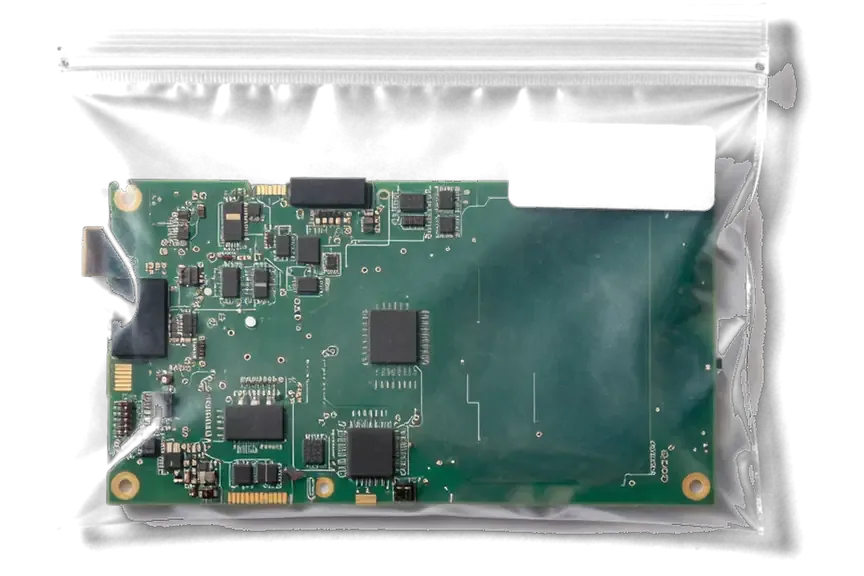
- Factory packaging: the replacement part is shown to you in its factory packaging before installation, and you confirm whether it is original or aftermarket.
- Receipt record: price, part type, turnaround and warranty are written on the receipt before the repair starts, so the component is named in writing.
- Old part returned: the device comes back with the receipt, the warranty card and the failed part in your hands.
- Named component: a technician who cannot say which component was replaced and will not hand back the old one most likely swapped the board and called it a repair.
Warranty terms and getting the device to us
Every board repair we do carries a warranty up to 1 year, and a phone that will not power on can still be collected — a courier can be called and the pickup is free with a repair. You can also bring the device in yourself, seven days a week, and pay by Kaspi, card or cash once the repair is agreed. Send a photo of the damage on WhatsApp and an engineer replies within 5 minutes with a price and a free time slot, so the visit starts with a booked slot rather than a queue. Keep the receipt, the warranty card and the old part together: the warranty claim is tied to the part recorded on the receipt at drop-off, and without that record the terms cannot be matched to your device.
Summary: iPhone Logic Board Repair
Board-level faults are rarely solved by swapping parts, and the points below are the ones worth carrying into any repair conversation.
- Component-level repair: a technician traces and fixes the specific circuit at fault, so the rest of the board keeps its factory components.
- Board symptoms: a phone that will not power on, heats up at idle or drains quickly points to the board rather than the battery.
- Liquid damage: corrosion left after a spill can stay silent for weeks, so a wet device deserves a board inspection even when it works.
- Turnaround: board work takes 1–3 days, against 20–40 minutes for a screen or battery, because each trace is tested under a microscope.
- Choosing a service: a documented function check and a warranty of up to 1 year separate real board work from a quick swap.










 iPad
 MacBook
 iMac
 Mac mini and Studio
 Apple Watch
 AirPods
 Apple Pencil
 Apple TV
 HomePod