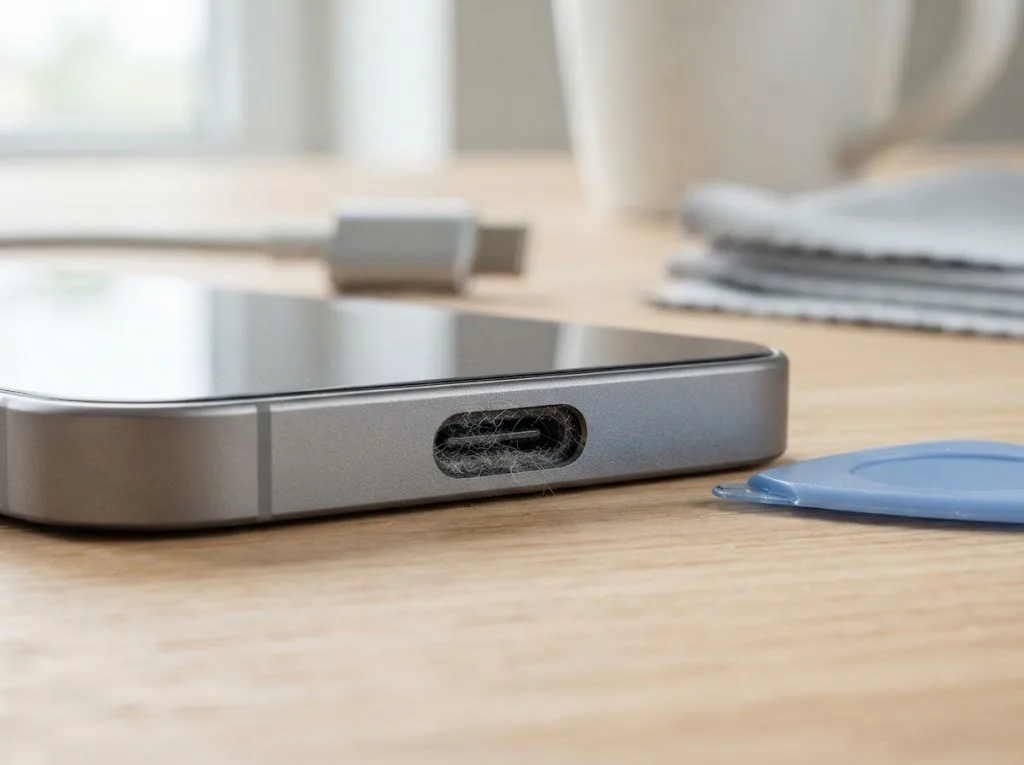
The XS has a rear shell bonded to a stainless steel frame, so the right repair depends on what broke and choosing a new rear pane or a full housing.
How to Tell Whether the Frame Is Bent or Only the Glass Is Cracked
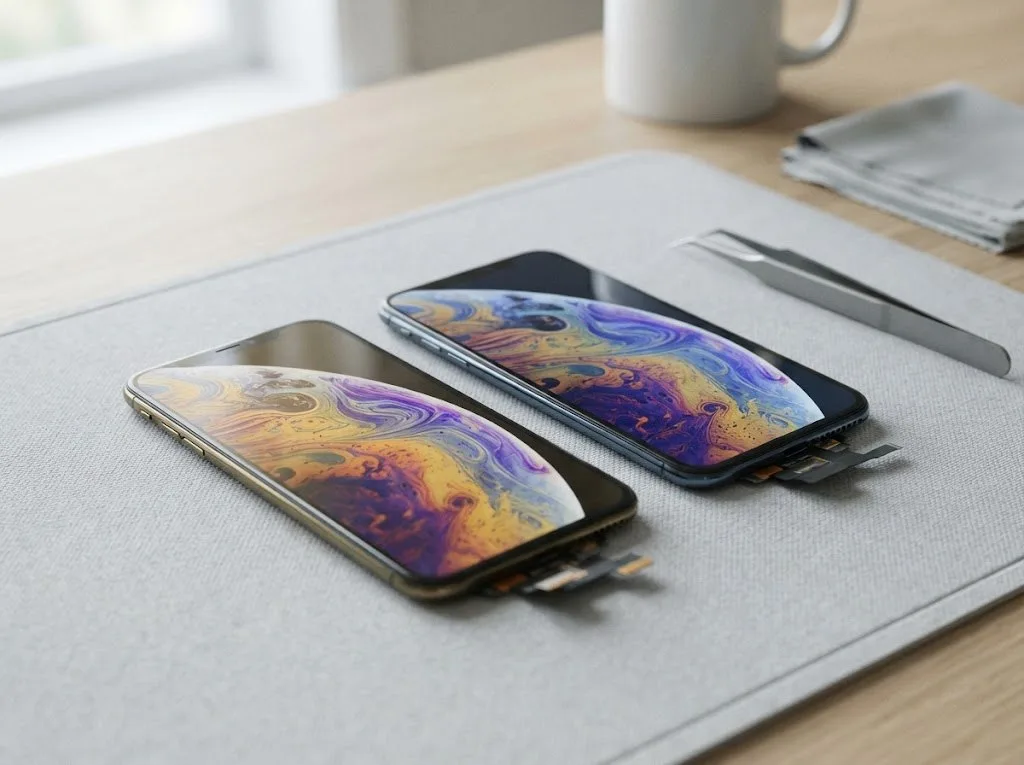
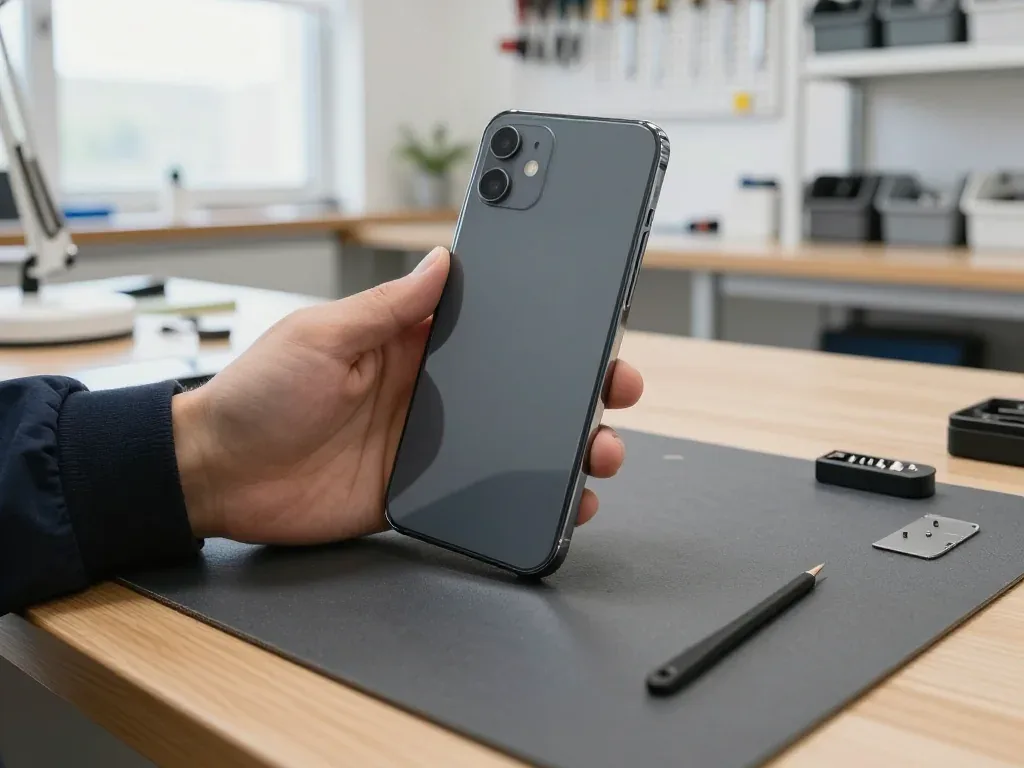
We lay the phone on a flat bench and check the frame against a straight edge, because a bent XS frame will not hold a new rear pane flush no matter how well it is glued. The stainless steel band is rigid, so a hard corner impact dents it rather than flexing it back, and the gap shows up as a sliver of daylight under a ruler. We also press a fingertip along each edge to feel for a lip where the panel sits proud of the metal, and we spin the phone on a tabletop to see whether it rocks. A handset that rocks or shows a gap at one corner has usually taken a drop that twisted the steel, and panel-only work on such a frame tends to lift again within weeks.
Glass, Full Housing or Camera Glass Alone
Three repair paths compared by damage type and retained parts| Repair option | When it fits | What carries over | What we check after |
|---|
| Rear panel only | Cracked pane, frame straight | All internals stay in place | Wireless charging, cameras |
|---|
| Full housing | Dents, bends, damaged frame | Board, battery, cameras, Face ID | Face ID, buttons, network |
|---|
| Camera lens only | Chipped lens, back panel intact | Everything else untouched | Camera focus, flash, microphone |
|---|
What Makes iPhone XS Housing Replacement Different From Older iPhones
The XS sits between the aluminium-bodied models and the newer designs, and its stainless frame plus rear panel changes how the housing is built and sealed.
Stainless Steel Frame, Glass Back and the Face ID Module
On the XS the rear panel is bonded to a polished stainless band, and the Face ID sensor stack sits right against it, so the shell has to be handled with the module in mind at every step. The same steel band appears on the X, XS Max and 11 Pro, which means the teardown sequence carries over between those generations but not to the aluminium-bodied models. We keep the adhesive contour intact around the sensor window, because the biometric module is calibrated to its opening and a bent chassis throws the projector out of alignment. Steel flexes less than aluminium but transfers impact straight into the rear pane, which is why an XS often arrives with a clean crack and a slightly sprung body rather than a deep dent.
Why Water Resistance Does Not Come Back After the Housing Is Opened
Once any iPhone housing is opened, the factory water seal is broken, and even a fresh adhesive gasket restores splash resistance only partially, never to the original rating. The gasket on the XS runs as a continuous bead around the perimeter and across the camera cutout, compressed by a factory press at a pressure no hand tool reproduces. A new bead applied by hand closes the gap against dust and light splashes, yet clamping force stays uneven along the curved corners. Treat a repaired XS as rain-safe but not swim-safe, and keep it away from steam and running taps, since the new seal is applied by hand.
How We Carry Out iPhone XS Housing Replacement in Almaty
The work is a full teardown and rebuild, and each visit is built around showing you every step rather than asking you to trust a closed door.
From a WhatsApp Photo to a Fixed Receipt
You send a photo of the damage on WhatsApp, an engineer replies within 5 minutes with a price from the photo, and before any work starts the price, part, turnaround and warranty are written on the receipt. Free diagnostics take 15 minutes at the counter, and the engineer opens the phone in front of you to show what is actually bent or cracked. The receipt takes about 2 minutes and names the part type — original or aftermarket — so nothing is left to memory. Fixing the part type and warranty on paper first means the later conversation is about the device, not what was agreed. This is how the iPhone XS housing replacement in Almaty starts, with terms fixed before the phone is opened.
The Teardown, the Transfer and the New Part in Its Packaging
We open the phone, lift the board, battery, cameras, Taptic Engine and Face ID module out of the old shell, and set them into the new housing after showing you the part in its factory packaging. The display comes off first, then the battery adhesive is released, and the Face ID module is moved as a complete unit because its alignment against the new housing decides whether unlocking still works. Cameras and the Taptic Engine follow, each seated on fresh adhesive. The old shell, panel and any removed parts are returned to you in the box. Our technicians have handled this teardown for 11 years across 46,000+ repairs.
How Long the Visit Takes and How to Hand the Phone Over
Most XS housing jobs are finished while you wait, and 72% of our repairs are completed in the waiting area, where there is coffee and Wi-Fi; a courier across the city takes 90 minutes and is free with a repair. The whole process from first contact to pickup usually runs under an hour, and the final 32-function check adds about 10 minutes. We work Mon–Fri 10:00–19:00 and Sat–Sun and holidays 11:00–18:00, with branches in Almaty and Astana. If you plan to wait, arrive before the evening rush, since a full teardown started late can push pickup to the next morning.
Checking Face ID, Cameras and Wireless Charging After Assembly
A housing swap touches almost every part of the handset, so the last stage is a function check done together with you rather than a quick power-on.
The 32-Point Check We Run With You
After the rebuild we run a 32-function check that takes about 10 minutes, and you go through Face ID, True Tone, the cameras, microphones, speakers, charging and network with the engineer as the handset leaves the bench. The list covers the parts a new housing can disturb: the sensor array behind the notch, both rear lenses, the bottom microphone, the speakers, the Lightning port and the cellular radio. Each item is tested live on your device, not read off a report — you watch the screen unlock, play a clip and plug in a cable yourself. Test biometric unlock slowly: it needs a clean scan in normal light, and a disturbed module usually fails that first attempt.
Why Wireless Charging and the Camera Island Get Their Own Test
The induction coil sits on the inside of the rear panel, so a housing that is not seated correctly will top up slowly or not at all, which is why we place the device on a pad at handover. The coil connects through contact pads that must sit flat against the logic board, and a single misaligned pad drops the current enough to turn a fast top-up into a trickle. A camera island that looks perfectly aligned can still trap a speck behind the lens, so we take a test photo against a plain wall to catch any shadow before you notice it later.
Original or Aftermarket Housing and What You Get Back
Both options are on the table, and the difference shows up in fit, colour and how the matte or glossy finish ages, so choose with the phone in hand.
How Original and Aftermarket Housings Differ in Fit and Finish
An original XS housing matches the factory gaps, button feel and pane tint, while an aftermarket one can sit a fraction tighter at the seams and read slightly cooler or warmer in daylight; 64% of our customers pick the original. We lay both options side by side so you can compare the stainless steel edge, the antenna bands and the depth of the matte finish before anything is booked. Aftermarket shells vary between batches, so the tint of one unit tells you little about the next. Button cutouts are the second tell — a shell a hair off makes the volume rocker sit proud or feel mushy. Colour is easiest to judge in daylight, so compare the new rear panel against your old housing near a window.
What the Warranty Covers and What It Does Not
Every housing job comes with a warranty up to 1 year that covers the component and our assembly, and the warranty card is handed over with the receipt and the old shell when you collect the phone. The cover applies to a housing that lifts at the edge, rear panel that separates from the frame or a button that stops responding after the transfer — faults that trace to the component or the fitting. It does not extend to a cracked shell from a later fall, liquid damage through a fresh seal or wear on the polished frame from daily pocket carry. A new drop is never a warranty case, so a case and a screen protector are worth fitting.
Summary: iPhone XS Housing Replacement
These closing points summarise what determines the result of an iPhone XS housing job, from the first crack to the final check before pickup.
- Cracked rear versus full shell — a damaged pane on a straight chassis needs only a new glass layer, while dents or a bend require full replacement.
- Stainless steel and Face ID — the XS pairs a steel body with a glass back, and its biometric module needs careful handling.
- Water resistance — the factory seal never returns after any housing is opened, even with fresh adhesive, so keep the phone dry.
- Functional check — a 32-function test after assembly confirms biometrics, cameras, wireless charging and network.
- Parts and warranty — original and aftermarket shells differ in fit and colour, and coverage applies to the component and assembly, not later drops.











 iPad
 MacBook
 iMac
 Mac mini and Studio
 Apple Watch
 AirPods
 Apple Pencil
 Apple TV
 HomePod