An aging iPad 3 fails predictably: the touch panel, battery and 30-pin port account for most cases, while board faults are rarer. Here is how each announces itself.
Cracked surface, dead touch or lines on the screen
A cracked tablet usually means a damaged touch layer, while lines, dark patches or a blank image point to the LCD panel underneath. On this generation the digitizer and the display are separate, so a shattered surface can leave the picture intact. Dead zones, ghost taps or a dead strip along one edge trace back to the digitizer, not the panel. Dark blotches, vertical lines or a white haze that grows after a fall are display symptoms and need the full module. If the outer glass is shattered but the image and touch still work, avoid pressing on the cracks — a splinter can cut into the LCD and turn a surface-only job into a full replacement.
The tablet does not turn on or shuts down on its own
A device that stays black can have a drained or swollen battery, a failed 30-pin connector or a board fault, and only a hands-on check separates them. Sudden shutdowns at 30–40% charge are the classic signature of a worn cell that can no longer hold voltage under load. A port packed with lint or worn contacts shows the opposite pattern: the tablet runs fine but refuses to charge or only charges at a certain angle. Power-controller trouble on the board behaves differently again, cutting the device off mid-task or draining a healthy battery overnight. Before assuming the worst, we charge it for at least an hour with a known-good cable and adapter.
A swollen battery pushing the screen away from the body
- Gap at the edge: the top layer sits proud of the aluminium frame on one side.
- Screen flex: pressing the display feels spongy instead of firm.
- Distorted image: pressure from below shows as blotches or lines.
- No charging: stop plugging it in and bring it in for diagnostics.
- Loose adhesive: the factory glue softens over time, so the panel only reattaches after the cell is replaced.
- Rising risk: a swollen cell keeps expanding even when the device is off, so the sooner it is removed the lower the danger to the screen and the frame.
Glass or Full Display Module iPad 3 Repair on This Generation
On the iPad 3 the touch layer and the LCD matrix are separate, so a cracked surface with a working image can be fixed by replacing the top sheet alone.
Why the top layer and the matrix are separate on an iPad 3
The iPad 2, 3 and 4 all share this split design, unlike later laminated panels where the surface and display are fused into one unit. The touch sensor sits directly under the top sheet, the LCD matrix and its backlight sit below it, and the whole stack is held in the aluminium frame by a film of adhesive. Removal needs even heat from a heating plate so the glue softens uniformly across the surface. The outer glass is glued into the aluminium frame, so removal needs even heat and steady hands — prying a cold panel is how cracks spread into the LCD and the job grows.
What carries over from the old screen
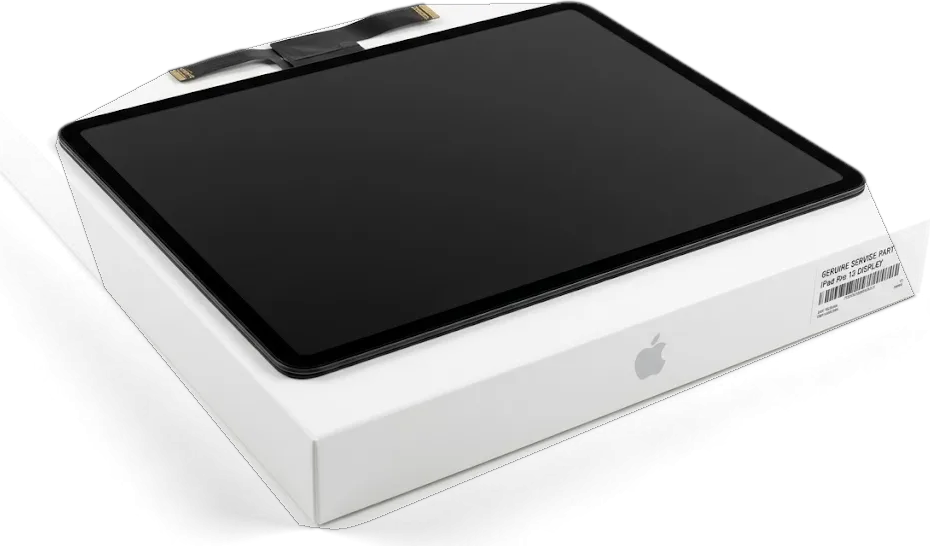
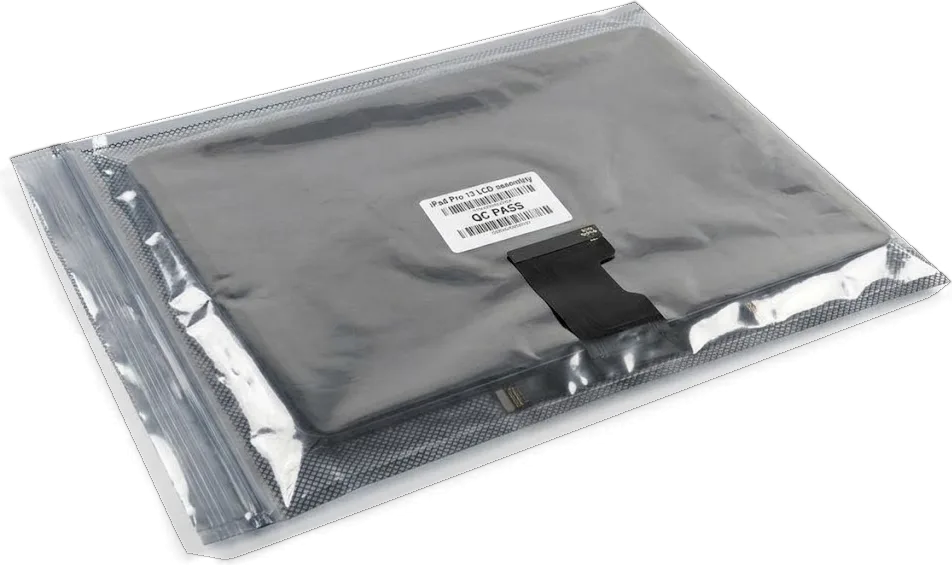
When we swap the top layer on an iPad 3, we move the original Home button and its bracket across, because that button is matched to the board and a new one would not behave the same. The iPad 3 Home button carries no Touch ID, yet the button is paired with the board it shipped with, and a mismatched one can stop responding or click unevenly. We also transfer the front camera bracket and the ambient light sensor, both seated in the old top layer and easy to lose on a careless swap. The new top layer arrives in factory packaging and we open it in front of you before fitting. We keep the old parts and hand them back — a returned Home button and frame prove nothing was quietly substituted.
Top layer versus full module at a glance
Matching the visible fault to the layer that actually failed| Symptom | What is damaged | What we replace |
|---|
| Cracks, image and touch fine | Touch layer only | Top sheet, matrix kept |
|---|
| Lines, blotches, dark zones | LCD matrix | Matrix or full module |
|---|
| No touch, image fine | Touch layer | Top sheet with digitizer |
|---|
| Blank screen, device alive | Matrix or backlight | Matrix or backlight |
|---|
How We Handle iPad 3 Repair in Almaty
Every job follows one route: a photo on WhatsApp, diagnostics in front of you, a receipt, a component in factory packaging, then the repair and a joint check.
How a WhatsApp photo becomes a fixed slot
Send a photo of the damage on WhatsApp and an engineer replies within 5 minutes with a price and a free time slot, then checks the device in front of you for 15 minutes at no charge. We ask for the photo in daylight from two angles, which lets the engineer tell a surface-only job from a matrix replacement before the visit. Diagnostics stay free even if you walk away, and the check happens with the back cover off. Our workshop has handled 46,000+ repairs over 11 years, and 72% of jobs finish while the customer waits with coffee and Wi-Fi. For iPad 3 repair in Almaty, this route keeps the price and timeline clear from the first message.
What we fix on the receipt before work begins
Before any screw turns, we write the price, the component (original or aftermarket), the turnaround and the warranty up to 1 year on the receipt, and show the new one in factory packaging. That takes 2 minutes and settles the two questions owners ask most — what exactly goes inside and how long the device stays with us. Most tablet jobs run from 1 hour to 1 day, while board work under the microscope takes 1–3 days. We return it with the receipt, the warranty card and the old component, so the failed piece stays with the owner. We keep that document — it ties a specific item and warranty period to the device.
What to do with your device before handover
- Back up first: save to iCloud or a computer and confirm the copy finished.
- Know the passcode: the engineer may need to unlock it to test touch and cameras.
- Turn off Find My iPad: activation lock can block post-service checks and stall the handover.
- Note the faults: list what misbehaves, including intermittent touch drops, so nothing is missed.
- Bring the charger: the 30-pin cable helps confirm charging behaviour after the fix.
Original Part or Aftermarket and What Warranty Covers
On an iPad 3 the component you choose shapes brightness, touch response and how long the fix lasts. We explain genuine versus copy components and what our warranty covers.
How an original screen differs from an aftermarket panel
An original display keeps its factory colour, brightness and touch response, while an aftermarket panel can differ in tint, surface hardness and how evenly it registers a finger. The display on this generation is a separate LCD matrix under a protective top sheet, so a copy may match the surface but not the matrix beneath it. We show the new component in sealed packaging before installation, and 64% of our customers pick the genuine option. On the bench the gap shows up as slightly cooler whites and a softer digitiser layer on cheaper assemblies. For a tablet this old, an aftermarket unit is often the sensible choice if the device is a secondary screen.
Battery choice and what it changes for runtime
An original battery holds its rated capacity longer, while a quality aftermarket cell restores normal runtime at a lower cost and is fine for light use. The cell is glued in behind the display, so it is only reachable after the top layer and matrix come off — which is why we quote the component and the labour together on the receipt. A genuine cell keeps its capacity curve closer to the rated figure across two or three years of daily charging, whereas a budget copy starts fading sooner under heavy video use. Runtime after any battery swap settles over the first few charge cycles.
What the warranty covers and what it leaves out
Every repair we do carries a warranty up to 1 year on the component and the workmanship, written on the receipt and the warranty card we hand over. The card names what was fitted — genuine or aftermarket — and the date the work was closed, so a claim is checked against a single document rather than a memory of the visit. Our technicians log the part number and the serial of the tablet before the device leaves the bench. The warranty covers what we fitted, not new damage such as a fresh drop or liquid — so we keep the receipt and the old part, they are what a claim is checked against.
Charging, Battery and Board Work on an Aging Tablet
On an aging iPad 3, charging and battery faults are far more common than board failures. Here is our check order, job times, and when repair still makes sense.
Why the 30-pin connector stops charging over time
On the iPad 3 a charging fault is checked in order — cable and adapter, then the 30-pin connector and its flex, then the battery, then the power controller on the mainboard. The port is the same connector the iPad 2 uses, so both share the same weak point after years of plugging a cable in at an angle. The flex tying the port to the logic board bends every time a cable goes in, and a hairline crack there cuts charging while the device still runs on a full cell. The controller is the last suspect and the rarest: it fails after a short or a bad adapter, not on its own. Lint and bent pins are common, so try a known-good cable and clean the port first.
How long each job takes on this tablet
Job types and typical turnaround for this device| Work | Typical time | Notes |
|---|
| Top layer replacement | 1 hour to 1 day | Depends on glue and matrix |
|---|
| Battery replacement | 1 hour to 1 day | Access through the screen |
|---|
| 30-pin connector | 1 hour to 1 day | Flex and port checked |
|---|
| Board repair | 1 to 3 days | Done under a microscope |
|---|
| After water | Up to 2 days diagnostics | Before a plan is set |
|---|
Is it still worth repairing an iPad 3 today
An iPad 3 is worth repairing when the fault is the top layer, the battery or the charging port and the rest works, and less so when the mainboard has failed. A connector or a cell is a straightforward swap that returns a working screen, a full day of standby and a unit that charges overnight again. A board fault is a different decision: the work runs 1 to 3 days, needs a microscope, and the tablet still has its shipped limits. What it does for the owner and whether the screen and body are otherwise sound decide it. A cracked surface on a dead board turns a simple job into two.
A kitchen screen and a daily driver age at different rates
We weigh what the device still does for the owner — a kitchen recipe screen or a child's video player rarely needs a board-level fix, while a unit relied on daily may justify the deeper work. A connector repair on a tablet that lives on a stand near the stove brings it back for years of one job, and that is where the swap pays for itself. When the same iPad is your main reader, mail and video device, a board fault leaves you with a slow chip and an old system no matter what we do underneath. We ask what breaks the owner's day if it stops — that points to the right repair.
Summary: iPad 3 repair
Three details decide most iPad 3 outcomes: the split glass-and-matrix screen, the 30-pin charging path and a quietly swelling battery. These details matter before and after the work.
- Separate layers: a cracked top sheet over a working image can be replaced alone; a clear picture means only the surface needs attention.
- Charging order: test the cable, then the 30-pin port and flex, then the battery, and finally the board.
- Swollen battery: stop charging at once and bring the tablet in before pressure damages the matrix.
- Back up first: a current copy plus the Apple ID password protect the data if the board needs work.
- Verify the result: check touch, image, charging and sound before leaving; ask for the old part and receipt.














 MacBook
 iMac
 Mac mini and Studio
 Apple Watch
 AirPods
 Apple Pencil
 Apple TV
 HomePod