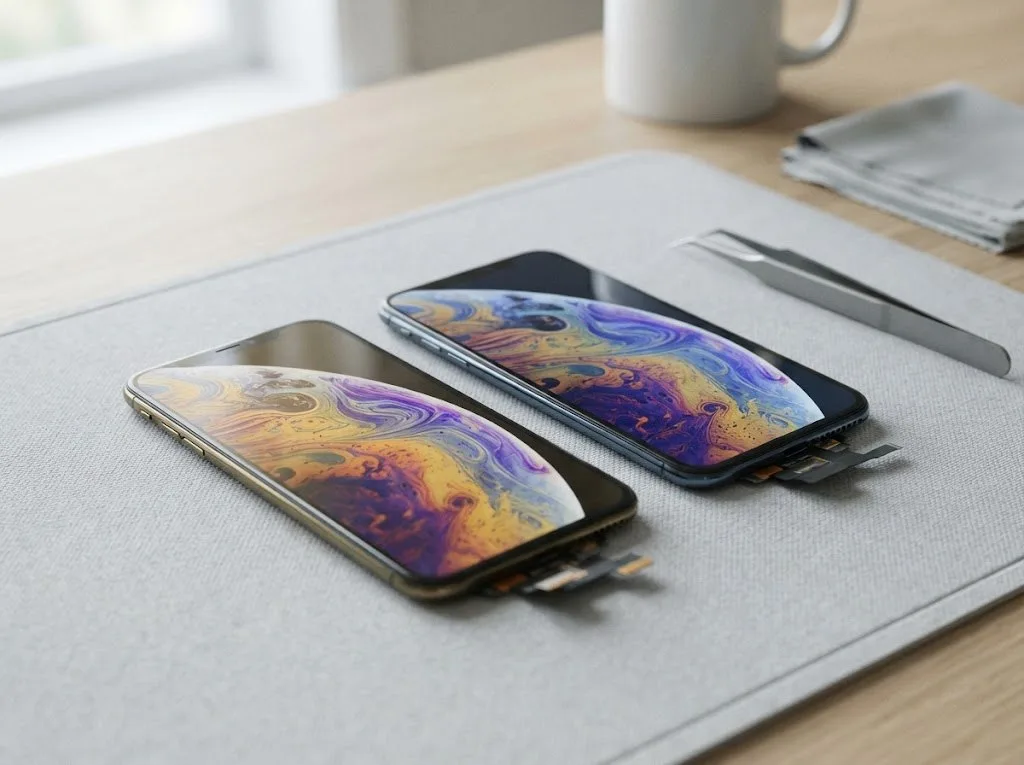
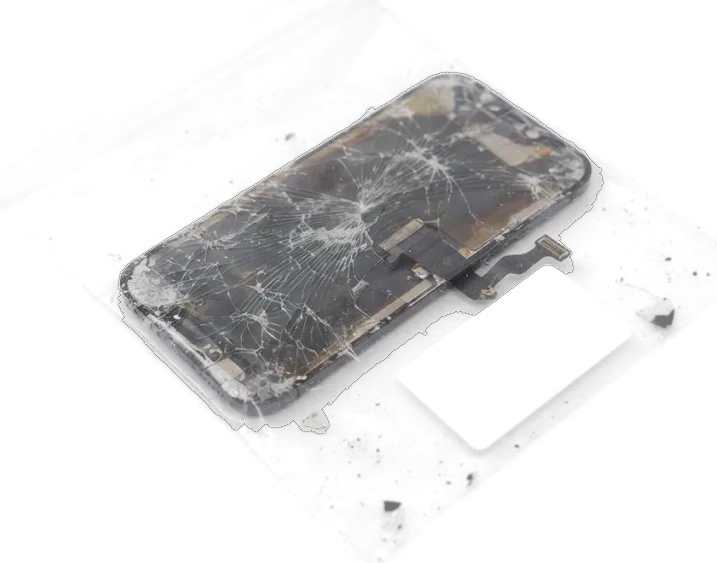
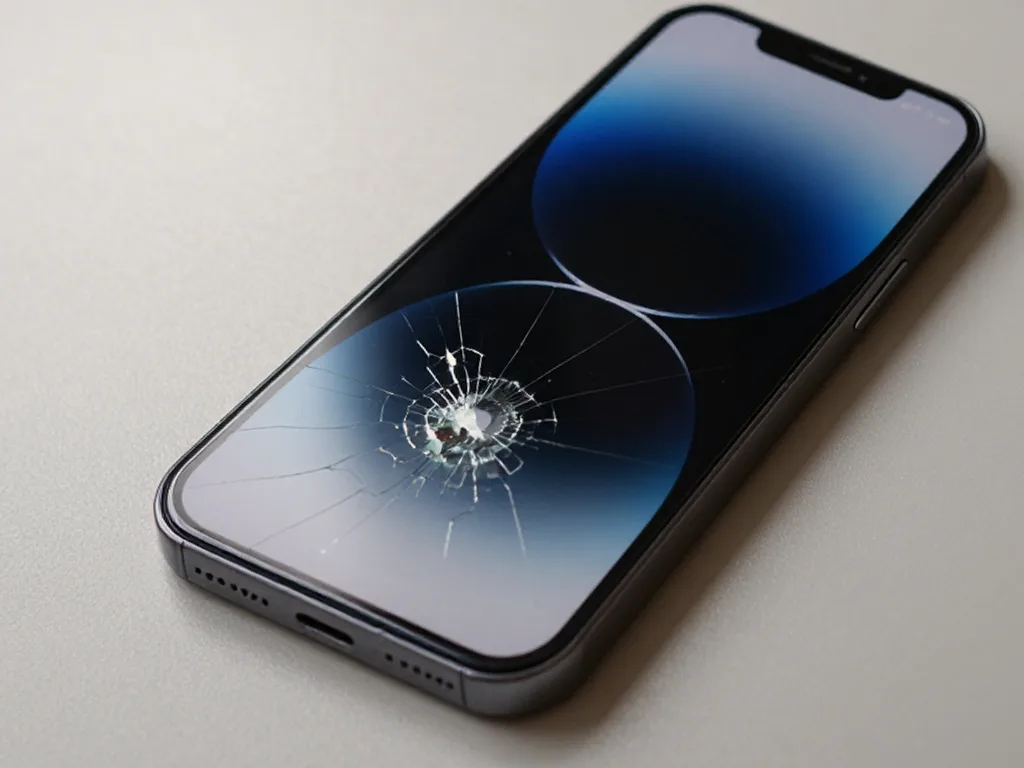
The glass is cracked but the picture still looks right, so what decides the job? We explain what the engineer checks during diagnostics and why the verdict never comes from a photo.
Signs your matrix and touch layer are still fine
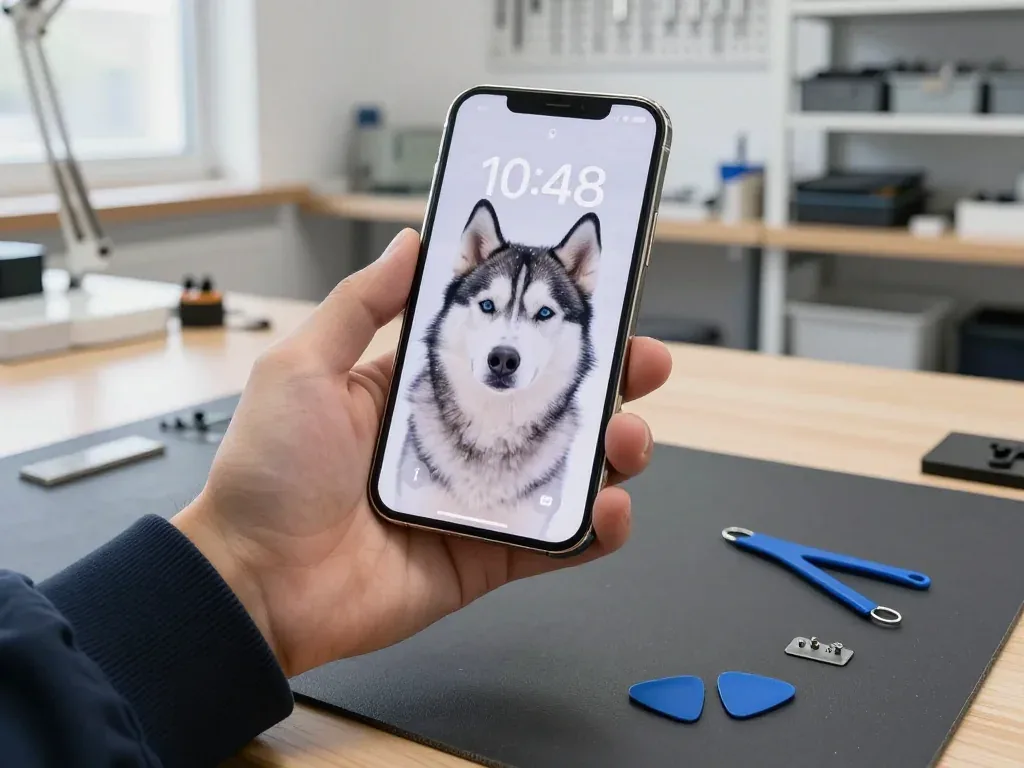
- Even image: the picture stays uniform across the whole screen, with no darker patches or corner halos.
- True colours: whites remain white, with no green or purple tint spreading from the crack.
- Full response: every zone reacts to your finger, including edges and the area beside the break.
- Surface cracks only: fracture lines sit on top, with no dark shadow or bleeding underneath.
- No ghost input: the phone does not open apps or type on its own while you hold it still.
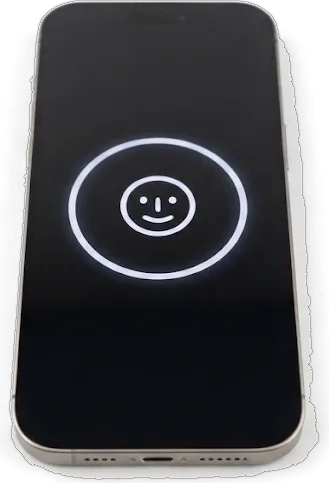
- Sensors intact: Face ID unlocks and the front camera focuses exactly as before.
Spots, lines and dead touch mean the module
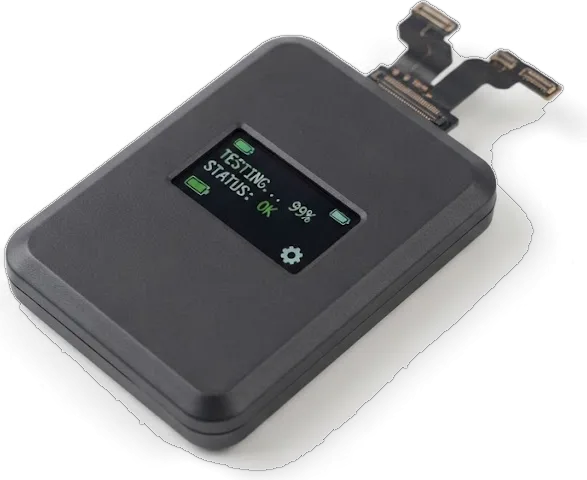
We recommend a full display module when the screen shows dark spots, coloured lines or dead zones, because those come from the matrix itself, not the glass on top. A black patch that grows after a drop, a bright vertical stripe or a band that ignores your finger mean the liquid crystal layer or the sensing grid is damaged, and new glass over a broken panel would only hide the fault for weeks. We test the display during free diagnostics: the engineer runs the grid, checks the image on solid colours and shows which pixels have failed. The final call comes after that check, not from a photo, and the receipt names the part before work starts.
Glass, module and the two neighbouring jobs people confuse
Which part actually needs replacing| Part or job | What it covers | When it is the right call |
|---|
| Front glass | The outer layer over the panel | Matrix and touch are intact |
|---|
| Display module | Glass plus the panel as one unit | Spots, lines or dead zones |
|---|
| Back glass | The rear cover of the phone | Cracks on the back only |
|---|
| Camera glass | The small lens cover | Blurry or cracked lens cover |
|---|
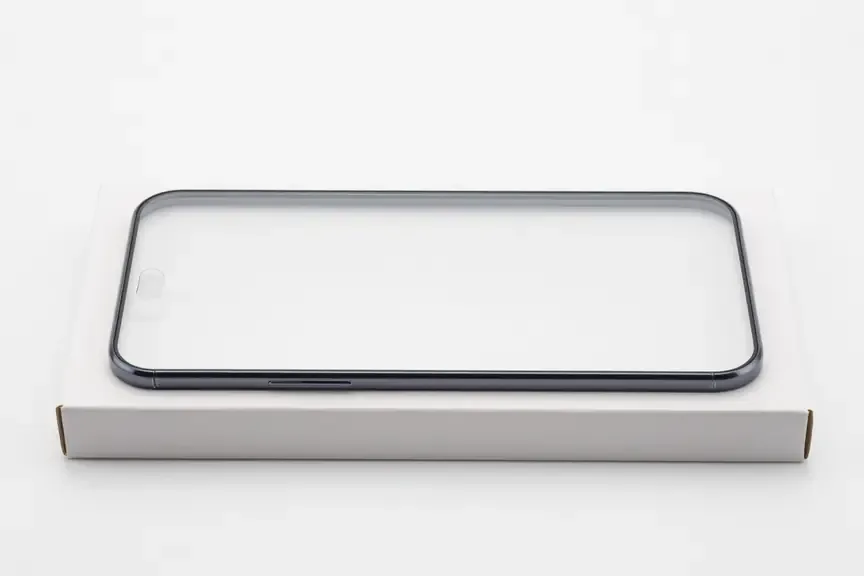
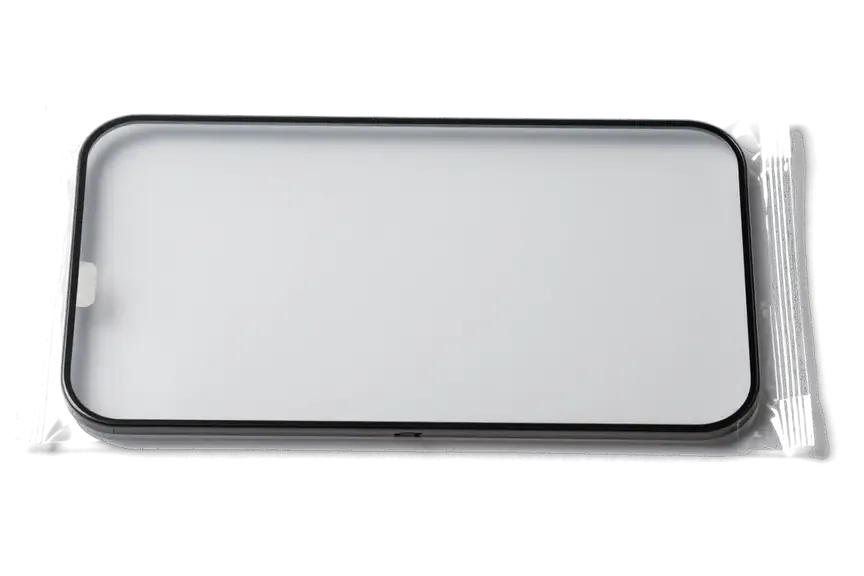
| Screen protector | A stick-on film or tempered sheet | Prevention, not a repair |
|---|
How iPhone glass replacement needs change with LCD and OLED panels
How hard it is to lift the glass depends on the panel underneath, so the same crack can call for different approaches. The matrix decides how much heat and force the job tolerates.
Why OLED needs a steadier hand than LCD
LCD panels on handsets like the iPhone XR and iPhone 11 separate from the glass far more forgivingly, while OLED panels on the X, XS, 11 Pro and newer are thinner and less tolerant of heat and pressure. The organic layer sits closer to the surface, so a hot wire run a fraction too long can leave a dark blotch or a green tint that no re-lamination fixes. On LCD the backlight diffuser absorbs far more abuse, which is why a first-time crack on an XR often goes smoothly. That is why the same damage can be a routine glass swap on one device and a slower, gentler job on another.
What stays untouched on Face ID and Touch ID hardware
- Top flex on Face ID hardware: TrueDepth assembly and ribbon stay seated, so unlocking works as before.
- Home button on Touch ID hardware: the button never leaves the housing, keeping logic board pairing intact.
- True Tone: ambient sensor response is checked on the spot and recalibrated if tint drifts.
- 3D Touch: on handsets that carry it, pressure-sensitive layers are tested before return.
How the iPhone glass replacement is done in our workshop
From the first message to the moment you walk out, every step stays visible to you. Below is the order of work and what you see at each stage.
From a WhatsApp photo to a fixed receipt
Send a photo of the damage on WhatsApp and an engineer replies within 5 minutes with a price, then fixes the price, the part, the turnaround and the warranty on the receipt before any work starts. The quote comes from the photo alone, so you know the figure before travelling, and a free diagnostics slot is booked in the same message. At the workshop the technician checks the handset in front of you and shows what is broken, which takes about 15 minutes even if you decide not to repair. The receipt is written in roughly 2 minutes and protects both sides, so nothing shifts mid-job — not the part, not the timeline, not the warranty, which runs up to 1 year. This is how iPhone glass replacement in Almaty works at iServices: transparent from the first message to the fixed receipt.
Separating the glass, laminating and reassembly
- Assessment: the technician inspects the panel under magnification and confirms the touch layer and image are intact.
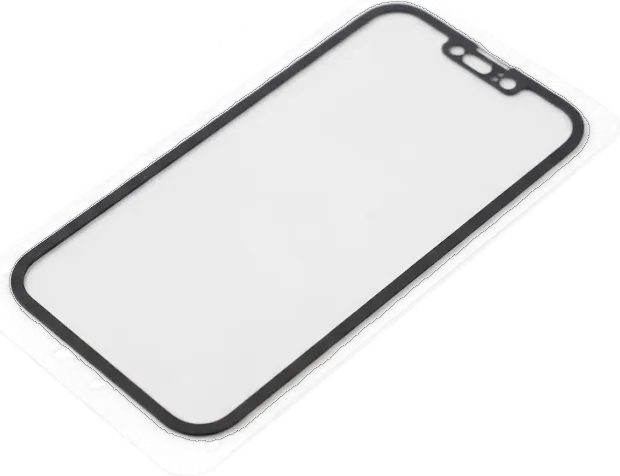
- Separation: the cracked glass is lifted with heat and a thin wire, leaving the original OLED or LCD untouched.
- Cleaning: residual adhesive is removed, since trapped dust shows as a bubble later.
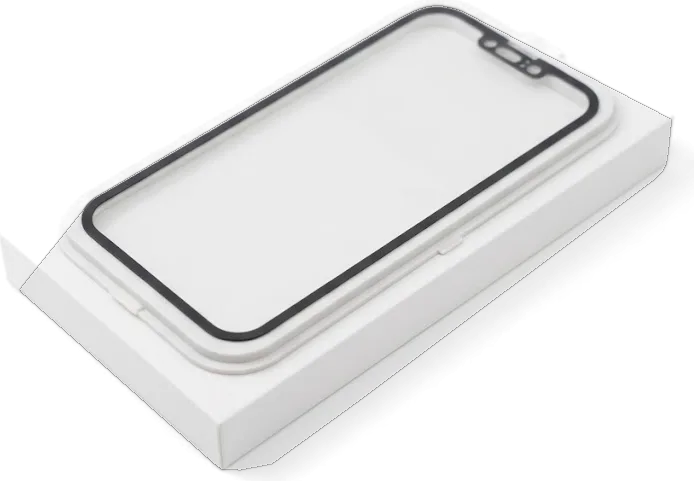
- Lamination: the replacement bonds to the panel through OCA adhesive and is cured under pressure, leaving no air pockets.
- Reassembly: the display returns to the frame, seals are refitted and the handset boots for the first test.
Turnaround, waiting and courier across the city
Most glass jobs are quick enough to wait through, but timing depends on the device and your schedule. Here is what each repair takes, where to wait, and how pickup works if you cannot come in.
Most jobs finish while you wait
Most repairs take 20 to 40 minutes while you wait, and 72% are finished while the customer sits in the waiting area with coffee and Wi-Fi. A screen replacement is the longest common job at about 40 minutes, a battery runs 25 minutes and camera glass around 20. The engineer confirms the slot from your WhatsApp photo, so the bench is ready before you arrive. Larger devices sit outside that window — a MacBook or iPad runs from an hour to a full day, and board work under the microscope takes one to three days. The whole process from first contact to pickup usually takes less than an hour, so plan for one visit rather than two.
Courier pickup in 90 minutes
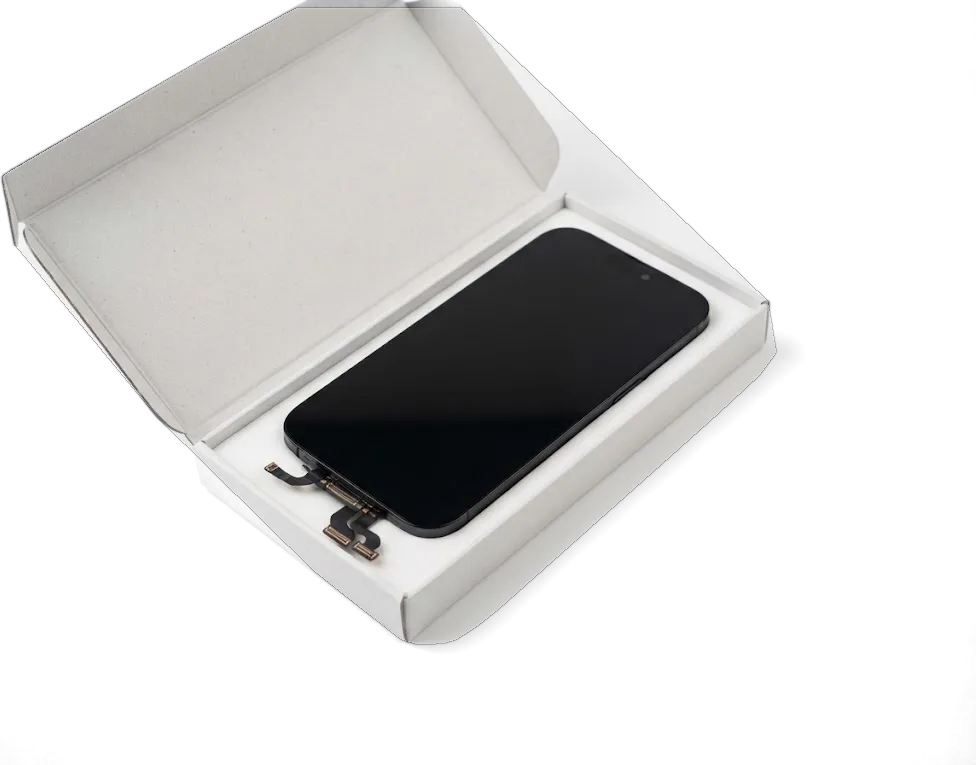
A courier can be called and reaches you across Almaty within 90 minutes, free with a repair, so the phone can be collected and returned without you leaving home. The engineer replies on WhatsApp within five minutes and quotes from a photo, which means the job is scoped before the device ever moves. Price, part, turnaround and warranty are fixed on the receipt in about two minutes, and the new part travels in its factory packaging. Courier pickup works best when the photo already confirmed the job, because the price and part are settled before the device leaves your hands.
What each repair takes and what you can do meanwhile
Repair times by device and pickup option| Job | Typical time | Where you can be |
|---|
| iPhone screen | About 40 minutes | Waiting area |
|---|
| Battery | About 25 minutes | Waiting area |
|---|
| Camera glass | About 20 minutes | Waiting area |
|---|
| MacBook or iPad | 1 hour to 1 day | Drop-off or courier |
|---|
| Board repair | 1 to 3 days | Drop-off or courier |
|---|
Checking the work and what the warranty covers
Accepting the finished job is a short but useful step: you see the device working before you leave and take away the paperwork that keeps the repair covered afterwards.
The 32-point check you do together with the engineer
- Face ID and True Tone: unlock the phone and watch the tint shift — both must behave as before.
- Cameras and microphones: open the camera, record a voice note and play it back; dust near the lens shows here first.
- Speakers and charging: play audio at full volume and plug in the cable to confirm sound and power.
- Network: check signal bars, make a call and load a page on mobile data to rule out antenna damage.
- Bubbles: tilt the screen under light — trapped air reads as a faint cloudy patch.
- Dust and edges: run a fingertip along the frame; specks under glass and a lifting border are faults worth raising.
- Touch across the panel: drag an icon to every corner and type on the keyboard; dead zones sit where the digitizer was pressed hardest.
Receipt, warranty card and your old part
The device comes back with the receipt, a warranty card up to 1 year and the old part, so you keep proof of what was done and what was replaced. The receipt is not a formality: it names the part fitted, the turnaround and the coverage term, all fixed before work started and unchanged at pickup. Our coverage runs up to 1 year, and across 46,000+ repairs the paperwork is what a claim is checked against, not a memory of the conversation. Take the old glass with you as well — it confirms the swap and shows the condition the panel arrived in.
Summary: iPhone Glass Replacement
A quick recap of what decides the outcome when you hand the phone over, so the visit ends with a working device and no surprises.
- Glass only when the matrix is sound: replacing the front layer makes sense only if the display shows no spots or lines and touch responds.
- Display type sets the difficulty: OLED demands a steadier hand than LCD; confirm which one your phone carries.
- Written terms upfront: price, part, turnaround and warranty go on the receipt before any work.
- Joint acceptance check: Face ID, True Tone, cameras, microphones, speakers, charging and network are verified with the engineer.
- A single trip suffices: a courier across the city or waiting on site keeps the job inside one visit.










 iPad
 MacBook
 iMac
 Mac mini and Studio
 Apple Watch
 AirPods
 Apple Pencil
 Apple TV
 HomePod