Face ID is not one sensor but a small system, so the exact wording on screen already narrows down which part stopped responding. Read it before assuming the worst.
Reading the Three Messages iOS Shows You
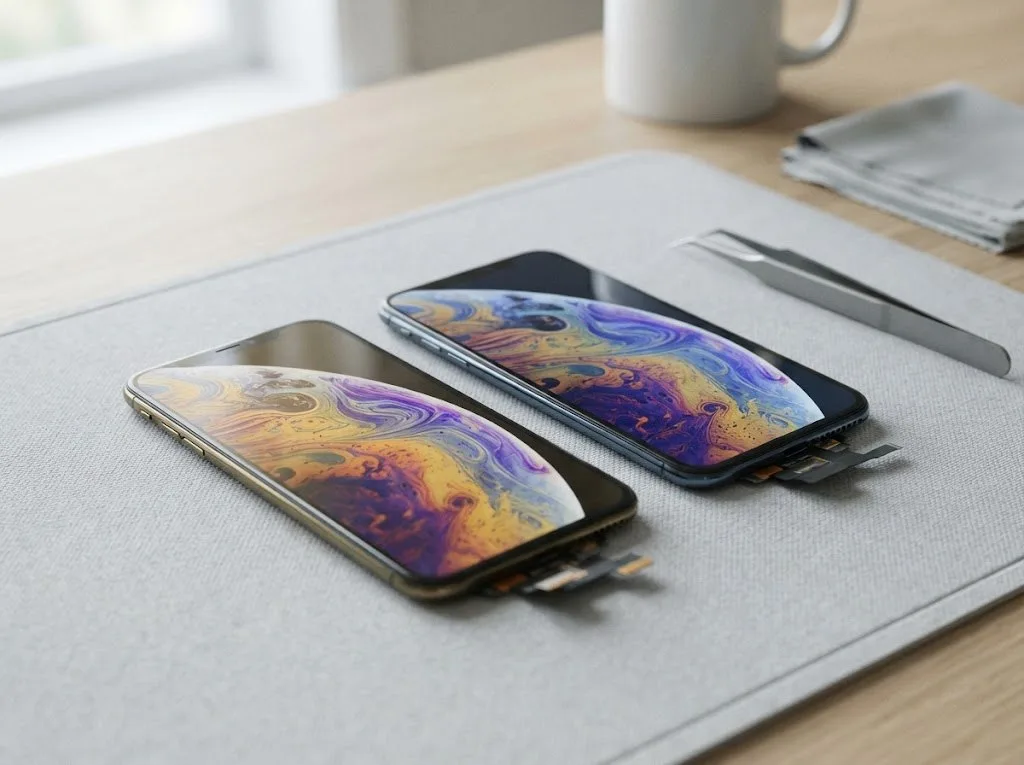
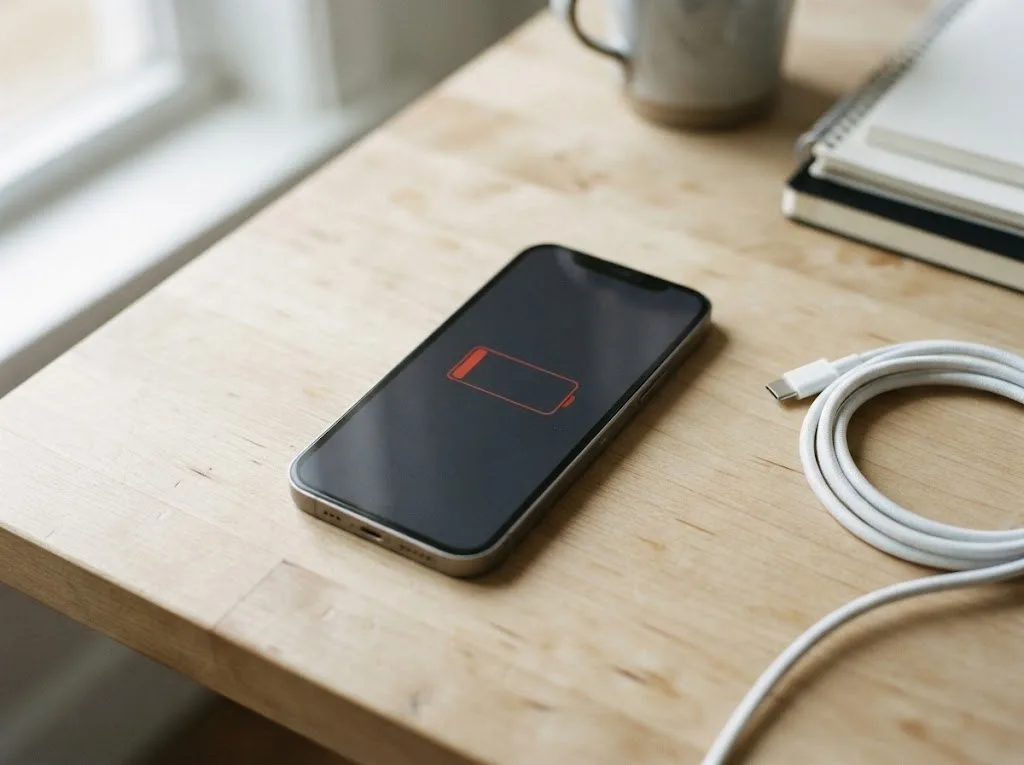
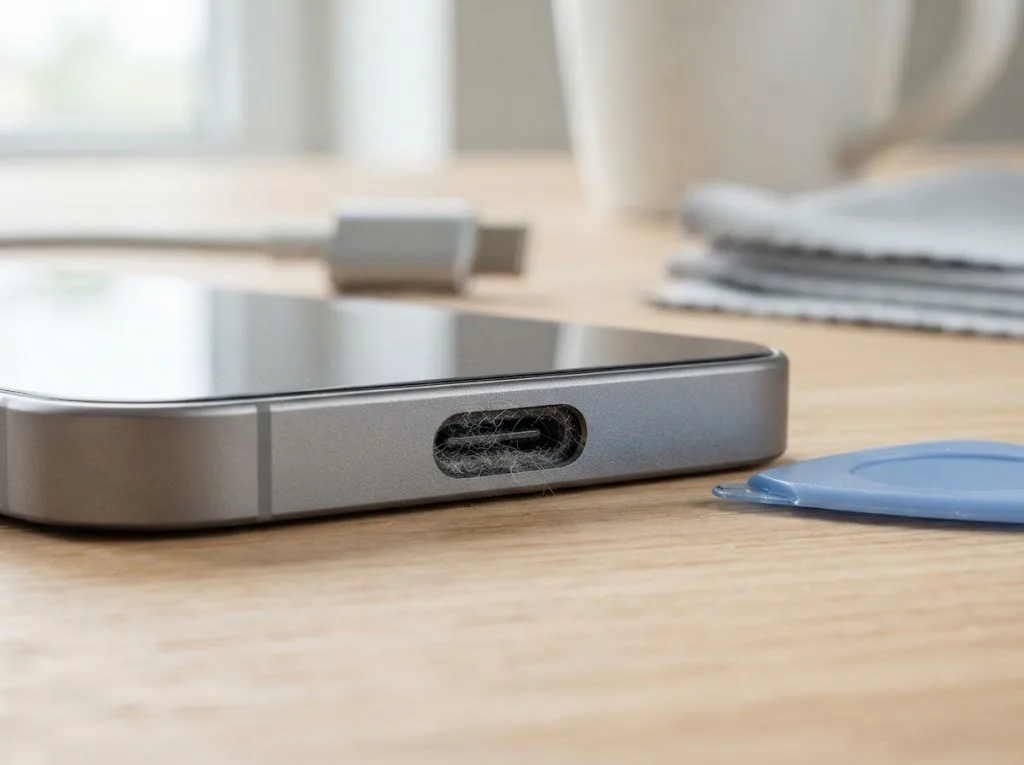
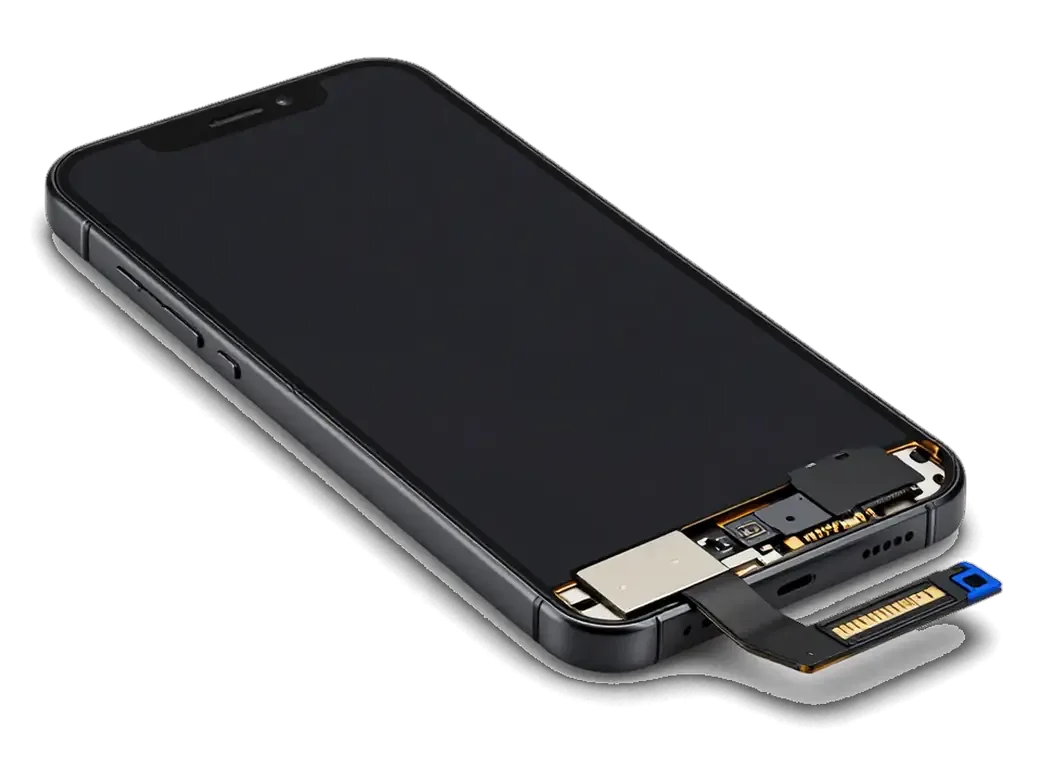
The phrasing matters, because "Face ID Is Not Available" points to a hardware fault in the TrueDepth module, while "Unable to Activate Face ID" usually appears after a repair or a part swap that broke the pairing with the board. A third prompt, asking you to move the phone lower or higher, is the mildest case: the dot projector and infrared camera still answer, but the flood illuminator is too weak to map your face in low light. This assembly is a stack of four components, all fed through the upper ribbon that also carries the front lens. When that ribbon is pinched or torn, iOS loses several of them at once and reports the whole assembly as unavailable. If the warning appeared right after a screen replacement elsewhere, the upper ribbon was likely damaged during reassembly — that is repairable.
Which Symptom Points to Which TrueDepth Part
Symptom patterns mapped to the TrueDepth part behind them| What you notice | Likely part | What it means |
|---|
| No face setup at all, message on screen | Dot projector | Module fault, needs bench work |
|---|
| Face not recognised in the dark only | Flood illuminator | IR light weak or dead |
|---|
| Screen stays on at your ear | Proximity sensor | Upper ribbon damaged |
|---|
| Front lens black, Face ID dead | IR camera or ribbon | Often one shared ribbon |
|---|
| Works, then drops after a drop | Projector shifted | Physical displacement |
|---|
Why Nobody Can Simply Install a New Face ID Module
The most common request we hear is to order a fresh Face ID unit and fit it. That is not how this hardware works, and understanding why saves people from a pointless purchase.
The Module Is Married to the Logic Board
Every TrueDepth unit is paired with the Secure Enclave of one specific logic board, so a part taken from another device will physically fit but never unlock anything. During manufacture it gets a cryptographic key that only the matching board can read, and iOS checks that handshake at every unlock attempt. Swap in a donor unit and the sensor reports an error instead of a face. People still buy these parts online after reading that the swap is "just a cable." It is not — the pairing lives in silicon, not in the connector. A cheap donor part ends up as dead stock in a drawer, so the honest path is repairing the original unit.
What We Actually Repair Inside the Module
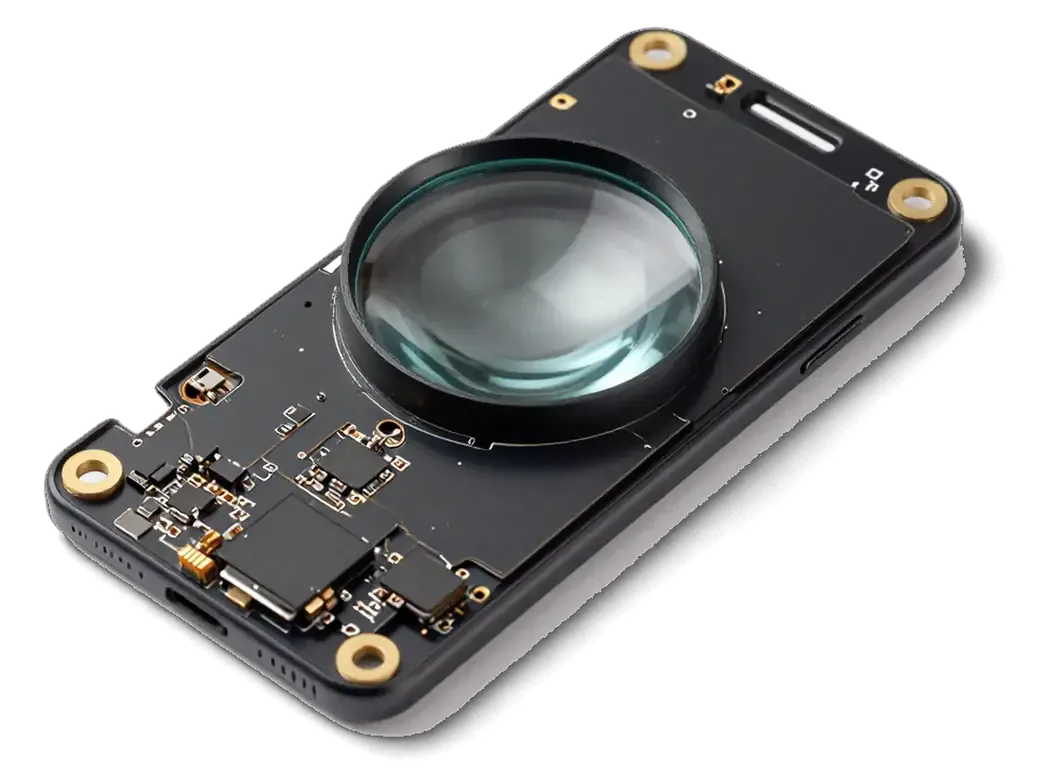
We work on the original components, restoring the flex, the dot projector or the connector on the board, and we do board-level work under a microscope. The flex cable that feeds the dot projector cracks after drops and bends; a torn trace is re-run with micro-jumper wire thinner than a hair. Liquid damage usually hits the connector pads, which we clean and re-solder rather than replace. Our engineers handle the board itself under a microscope, because the projector's contacts sit within fractions of a millimetre of neighbouring traces. A repaired original module keeps its pairing, so Apple Pay, Animoji and the portrait front camera come back together with the unlock, not one at a time.
What Usually Breaks Face ID on iPhone X
On the iPhone X the same three scenarios come up again and again, and one of them is created by repair work itself rather than by the owner.
Drops, Water and Repairs Done Elsewhere
A drop shifts or cracks the dot projector, water leaves oxidation on the flex and connector, and a careless earlier repair damages the upper flex that carries the proximity sensor. The TrueDepth stack sits at the top edge of the screen, so a fall onto a corner lands almost directly on it. Liquid is slower: it seeps under the shield, dries, and eats the contacts for weeks before the first error appears. Work done elsewhere is the third path — a battery job where that same upper strip was bent, torn or left unclipped, and Face ID stopped working the same day. After liquid contact the diagnostic itself can take up to two days, because oxidation keeps spreading and a component that tests fine on day one may fail on day two.
Keeping Face ID Alive During a Screen Replacement
When we replace a screen on an iPhone X, we move the original upper flex with its sensors onto the new panel, which is exactly what keeps Face ID working afterwards. The infrared camera, dot projector and flood illuminator are matched to the logic board, so they travel with the phone, never with the new glass. In our workshop the transfer is done under magnification, and the sensor strip is seated and clipped before the panel goes back on the frame. The choice between an original and an aftermarket screen affects brightness and True Tone behaviour, but the sensor transfer is what decides whether Face ID survives at all. Ask any technician to confirm in writing that your original sensors stay in the phone before they open it.
How We Handle iPhone X Face ID Repair in Astana
The workflow is built so that you know the part, the turnaround and the warranty before anyone opens the phone, and so that you watch the result being tested.
From a WhatsApp Photo to a Fixed Receipt
You send a photo of the damage on WhatsApp, an engineer replies within five minutes with a price, and the price, part, turnaround and warranty are fixed on the receipt in about two minutes before work starts. If travelling across the city is inconvenient, a courier can be called to collect the device. We work with original and aftermarket parts, and 64% of customers choose an original one; whichever you pick is written on the paper alongside the promised completion time. Fixing those four points on paper turns a verbal estimate into something you can hold the workshop to. For iPhone X Face ID repair in Astana, this same sequence applies from the first message to the fixed receipt.
What Happens While You Wait
Diagnostics take 15 minutes in front of you and stay free even if you decide not to repair, and 72% of our repairs are finished while the customer waits in the seating area with coffee and Wi-Fi. The engineer opens the device at the bench rather than behind a closed door, so you see the TrueDepth assembly and the surrounding components before anything is touched. Most jobs of this type take 20 to 40 minutes, and the whole process from first contact to pickup usually comes in under an hour. Watching the engineer open the device and show the new component in its factory packaging is the simplest way to confirm that what is on the receipt is what goes in.
The Final Check Before You Leave
After the repair we run a 32-function check of about ten minutes, and you go through Face ID, True Tone, cameras, microphones, speakers, charging and network together with the engineer. The device comes back with the receipt, the warranty card and the old component in your hands, so nothing about the swap stays hidden. Our technicians have handled more than 46,000 repairs over 11 years, and the warranty runs up to 1 year. Testing Face ID in bright light and in a dim room catches a weak flood illuminator that a single unlock attempt in the workshop would miss.
After the Repair and What Comes With It
Once the phone leaves the bench, a few practical details decide how smoothly the next weeks go, from the paperwork in the box to the settings worth checking at home.
Documents, Warranty and the Old Part
The device comes back with the receipt, a warranty card covering the work up to 1 year, and the replaced component itself, so nothing about the job disappears once you walk out. Our engineers fill the paperwork before the phone is closed up, and the figures on it match what was agreed on WhatsApp: the component fitted, the time spent and the warranty term. We hand over the swapped-out unit in a small bag rather than keeping it in a drawer, and 64% of customers here choose an original component, which the receipt names explicitly. Keep that used unit: it is the physical proof of what was changed if a question comes up months later.
What to Check at Home and What Still Works Without Face ID
- Passcode first: unlocking, apps and settings all keep working through the code while the sensor is down.
- Backup before the visit: one iCloud backup removes any worry about data during the work.
- Apple Pay: confirmations need the sensor, so carry a card until it is back.
- Front camera test: open the camera app and switch to the front lens to see if it is black.
- Proximity check: call someone and watch whether the screen goes dark at your ear.
Summary: iPhone X Face ID Repair
A short recap of what decides the outcome of an iPhone X Face ID repair, whether the sensor can be saved at all, and which guarantees are worth asking for before you hand the phone over.
- Read the message first: the on-screen warning already narrows down which TrueDepth part failed, so diagnosis starts before any screwdriver comes out.
- The module stays with its board: a Face ID unit from another phone will never work, which makes repairing the original assembly the only real route.
- Three usual causes: drops, liquid contact and careless display swaps account for most dead sensors on this model.
- Panel work needs care: moving the original upper flex onto a new panel is what keeps Face ID alive during a replacement.
- Paper matters: a written receipt, a warranty and a joint function check are the details worth insisting on anywhere in the city.







 iPad
 MacBook
 iMac
 Mac mini and Studio
 Apple Watch
 AirPods
 Apple Pencil
 Apple TV
 HomePod