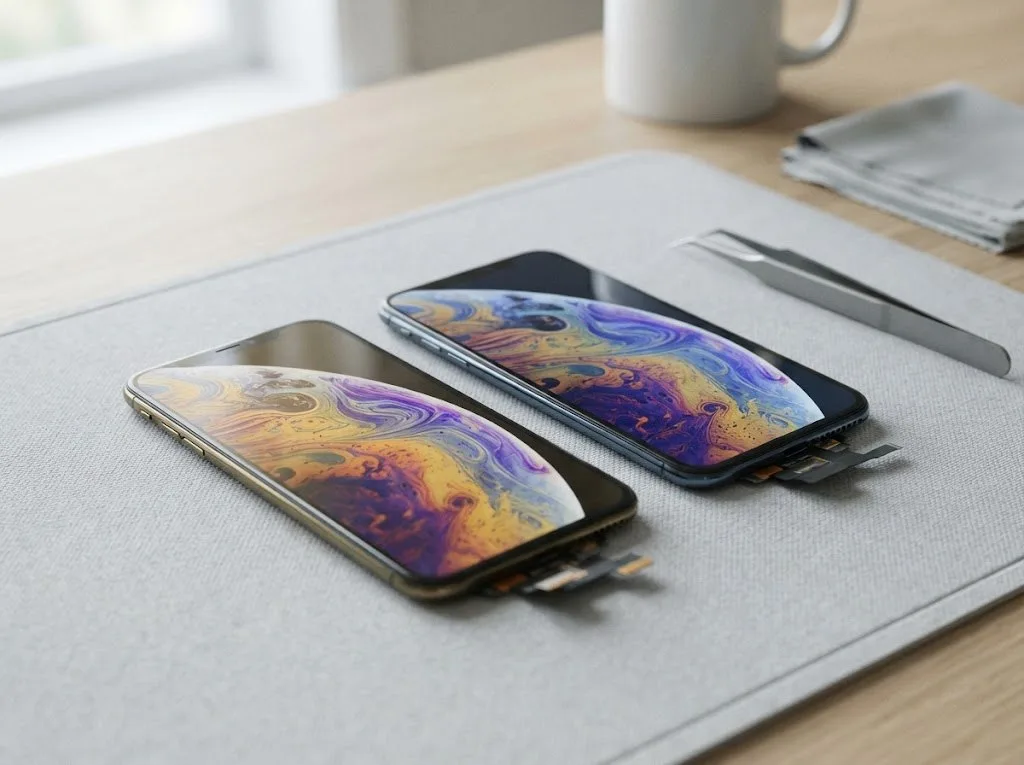
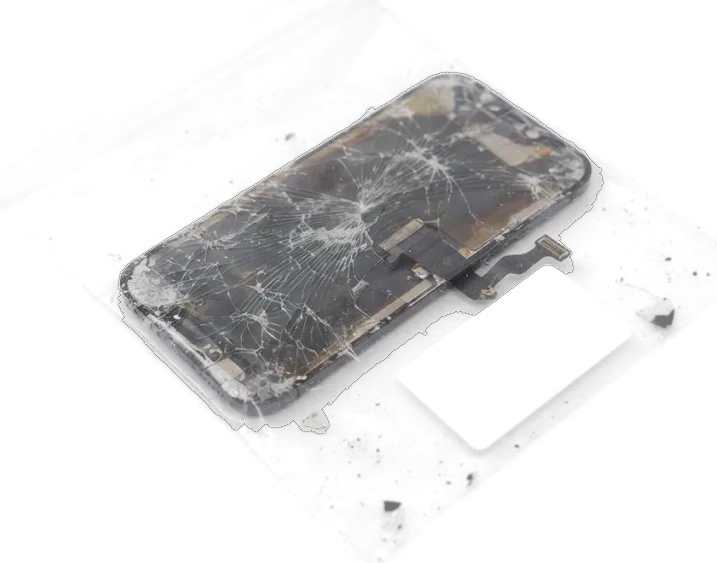
A cracked front with a perfect picture and working touch is the typical iPhone 6s case, and iPhone 6s glass replacement Astana fixes it without swapping the whole module. The free counter check decides the route, not the crack.
Signs the Matrix and Touch Sensor Are Still Fine
- Even picture: no dark spots, bright lines or colour shifts on a white background.
- Full input coverage: every icon registers in corners and edges, where cracks usually begin.
- Spider-web pattern: many fine cracks from one point usually stay in the top layer.
- Single chip or hairline: a local impact mark with clean image underneath is the most common re-glass candidate.
- No ghost taps: the phone does not open apps or type on its own while held.
When Only a Full Display Module Will Do
- Spots and stripes: dark blotches or vertical lines under the crack mean the LCD is damaged, not just the cover.
- Dead input zone: a strip ignoring your finger points to a failed digitizer new glass cannot restore.
- Bent or separated frame: a warped housing means the assembly no longer sits flat, so fresh glass would lift at the edges.
- Liquid marks: residue between layers after a spill means swapping the whole assembly rather than re-laminating it.
Screen Protector or the Front Glass Itself
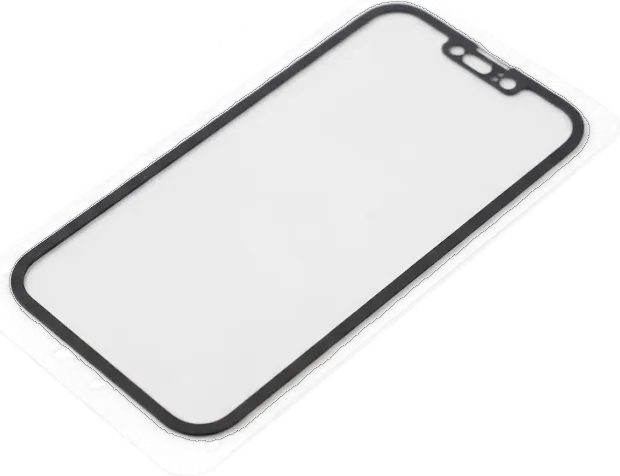
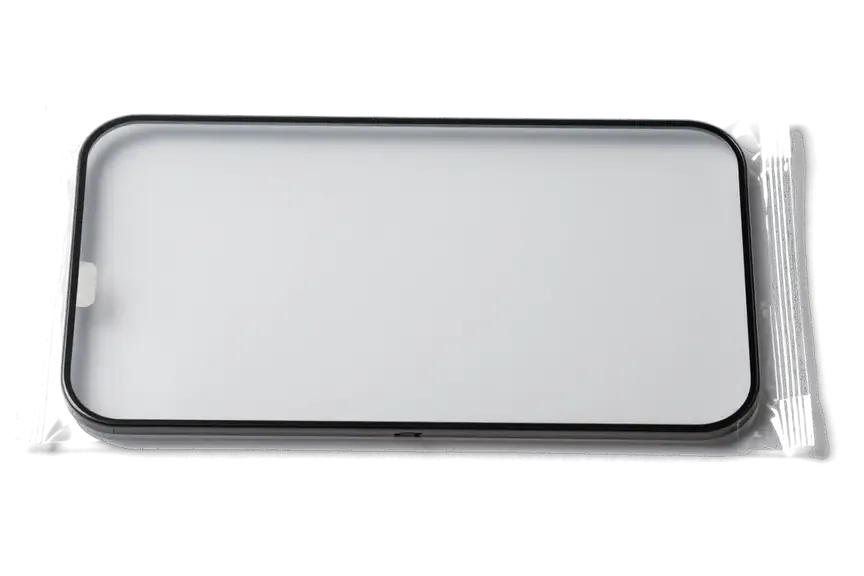
- Screen protector: a stick-on film or tempered overlay on the panel that peels off by hand.
- Cover glass: the layer bonded to the matrix with optical adhesive (OCA), needing heat and a vacuum press to separate.
- Diagnosis at home: lift a corner of the film — if the crack stays underneath, the bonded glass is broken.
How We Separate Broken Glass During iPhone 6s Glass Replacement
Re-glassing is work with layers, not swapping a block. Below we show the sequence and explain why the 6s, with its pressure-sensing layer, demands a careful hand at every stage.
From Heated Separation to Vacuum Lamination
- Module removal: we open the phone, disconnect the battery and lift the display out on its flex cables.
- Heated separation: a controlled plate softens the adhesive, and a thin wire frees the shattered glass.
- Adhesive clean-up: we scrape old OCA residue off the polarizer and wipe the panel clean.
- New glass bonding: fresh glass goes onto optical clear adhesive, aligned to the frame before pressing.
- Vacuum lamination: the stack is pressed in a vacuum chamber so no air stays trapped.
- Final assembly: we reconnect the flexes and confirm the panel responds before closing the phone.
Why the 6s LCD Is a Friendlier Job Than an OLED
- LCD matrix: the 6s panel is a liquid-crystal stack tolerating moderate warmth during separation.
- OLED matrix: the X and XS family use thinner OLED layers reacting more sharply to heat.
- Pressure layer: on the 6s it sits directly under the glass, keeping separation warmth low and even.
- Polarizer: the film under the LCD scratches easily, so scraping is done at a shallow angle.
- Cold force risk: forcing glass off a cold panel leaves marks showing as bright patches on grey.
- Even warming: the plate warms the whole module uniformly, keeping stress off one corner.
How Long You Wait and Where
Most jobs are finished while you wait, and 72% of our repairs are completed in the waiting area with coffee and Wi-Fi. The exact turnaround for your 6s is written on the receipt before work starts. Sending a photo of the damage on WhatsApp first means the engineer replies within 5 minutes with a price and a free slot, so you arrive to a prepared bench rather than a queue. If the damage turns out to be more than glass, we say so at the counter before any work begins, and you decide whether to go ahead. Payment is accepted via Kaspi, by card or in cash.
What Stays Original After the Work
The main worry for a 6s owner is losing the fingerprint reader or the pressure-sensitive press. Here is what physically stays inside the phone after a glass-only job, and what a full module swap would change.
Fingerprint Reader and Pressure Layer Stay Untouched
The Home button with the fingerprint reader is a separate part that is never removed during a glass swap, and the pressure-sensing layer stays bonded to the original LCD, so both keep working as before. The reader sits on its own flex cable, and the front glass lies above it — separating the broken sheet does not require lifting it. The pressure-sensitive film is part of the stack, so a re-glass job leaves it laminated in place and responsive as before. Because the reader is paired to the logic board at the factory, leaving the button alone is not a shortcut — it is the way to keep fingerprint unlock alive.
What Changes and What Does Not
Glass-only work against a full panel replacement| What | Glass-only replacement | Full module replacement |
|---|
| Front glass | New | New |
|---|
| LCD matrix | Original kept | New |
|---|
| 3D Touch layer | Original kept | New |
|---|
| Touch ID button | Untouched | Untouched |
|---|
| Colour and auto-brightness | Unchanged | Re-calibrated |
|---|
| Best when | Image and touch are fine | Spots, lines or dead touch |
|---|
Living With a Crack Until Your Appointment
- Spread: every drop widens the crack, and a web of lines can reach the matrix within days.
- Dust and moisture: an open break lets particles and humidity settle on the panel, causing bright spots.
- Input glitches: a loose shard can press on the digitizer and register taps you never made.
- Cheap film: a temporary protector over the break holds splinters together and slows the spread.
Checking the Result Before You Leave
Acceptance is part of the job here, not a formality at the counter. You run every check together with the engineer, ahead of payment, while the phone is still on the bench.
The 32-Point Check We Run Together
- Touch sensitivity: press several points across the screen; a partly detached layer can feel normal in the centre.
- Input at the edges: drag an icon along all four borders and into the corners, where dead zones appear first.
- Front and rear cameras: open both, shoot a frame and check focus, flash and clarity.
- Microphones and speakers: record a voice note, play it back, then take a speaker call.
- Charging and network: plug in the cable, watch the percentage climb, then confirm the carrier signal.
- Brightness: move the slider from minimum to maximum and watch the level change smoothly rather than jump.
Bubbles, Dust and Uneven Backlight
- Trapped air: tilting the screen under a lamp reveals faint bubbles that straight-on light hides.
- Dust specks: any grain under the glass is visible against a plain white background at full brightness.
- Backlight evenness: a uniform white field shows no brighter patches along the edges or corners.
- Edge seating: run a fingernail around the frame — the new glass should sit flush, with no lip or gap.
Receipt, Warranty and Getting the Phone to Us
With iPhone 6s glass replacement Astana, a repair is only as clear as the paperwork behind it. Here is what we hand you at each stage, and the two ways to get the device to us.
What the Receipt Locks In Before Work Starts
- Price and part: before the job starts, we write the price, glass type (original or aftermarket) and turnaround on the receipt in about 2 minutes.
- Warranty terms: the same document states how long the work is covered, so conditions sit on paper before opening.
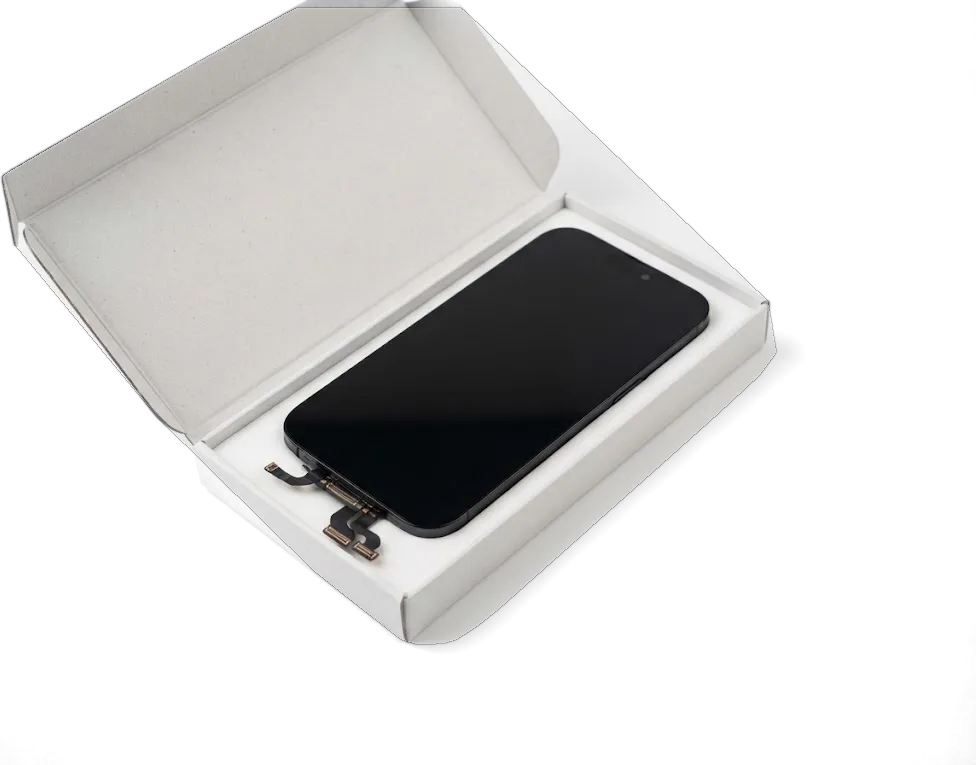
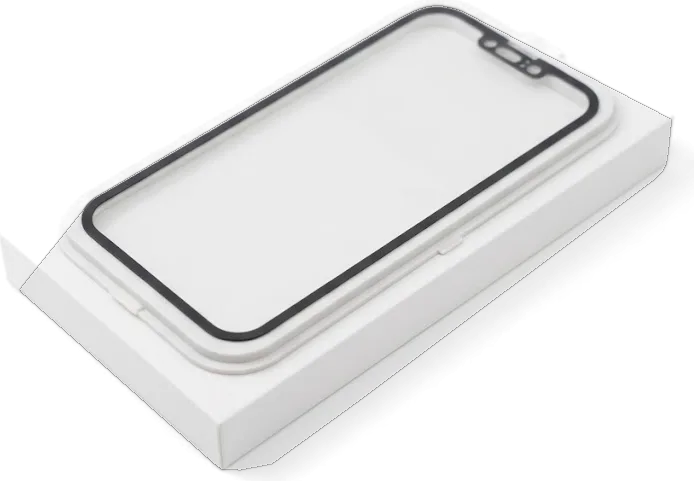
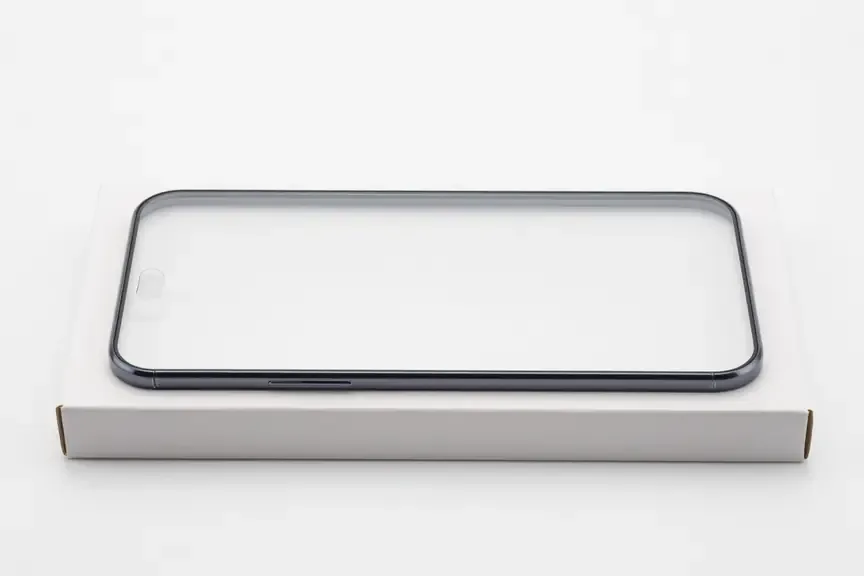
- Factory packaging: we show the new glass in its factory packaging before installation, so you see what goes onto your 6s.
- Verifiable choice: original and aftermarket glass differ in scratch resistance and edge fit, and the written selection makes that checkable later.
Warranty, Old Part and Ways to Pay
- Warranty card: you leave with the device, receipt and a card covering the work for 1 year.
- Old glass: the removed glass goes back to you the same visit, not into a bin.
- Payment: Kaspi, card or cash — whichever suits you at the counter.
- Proof for later: keep the old glass until warranty ends; it is the simplest proof of which part came off your handset if a claim arises.
Courier or a Visit to the Astana Branch
You can bring the 6s to our branch during opening hours or call a courier, and a photo on WhatsApp first gets you a quote and a free slot within 5 minutes. An engineer replies in that window and prices from the picture, so the trip is planned around a confirmed time rather than a queue. Branches run Mon–Fri 10:00–19:00 and 11:00–18:00 at weekends and holidays, which puts a weekend drop-off inside most work schedules. For anyone in the outlying districts, the courier option removes the drive entirely, so the handover takes minutes and the rest of the day stays free. Booking the slot before sending the photo keeps the reply and the visit on the same day.
Summary: iPhone 6s Glass Replacement
The decision comes down to whether the panel itself still works. A short recap of what keeps a glass-only repair honest, and what to verify before you hand over the phone.
- Glass-only fits a sound panel: re-glassing works when the picture is even and touch responds across the whole screen without spots or lines.
- Fingerprint reader stays safe: the sensor sits in the Home button and is never removed during a front glass swap.
- A protector is not the glass: a protector is film, so replacing it fixes cosmetic chips alone, not a cracked front layer.
- Clean lamination is visible: no bubbles, no dust under the surface and even backlight at full brightness mark a proper job.
- Paperwork protects you: a written receipt and warranty card, with part and turnaround fixed in advance, are what you rely on later.







 iPad
 MacBook
 iMac
 Mac mini and Studio
 Apple Watch
 AirPods
 Apple Pencil
 Apple TV
 HomePod