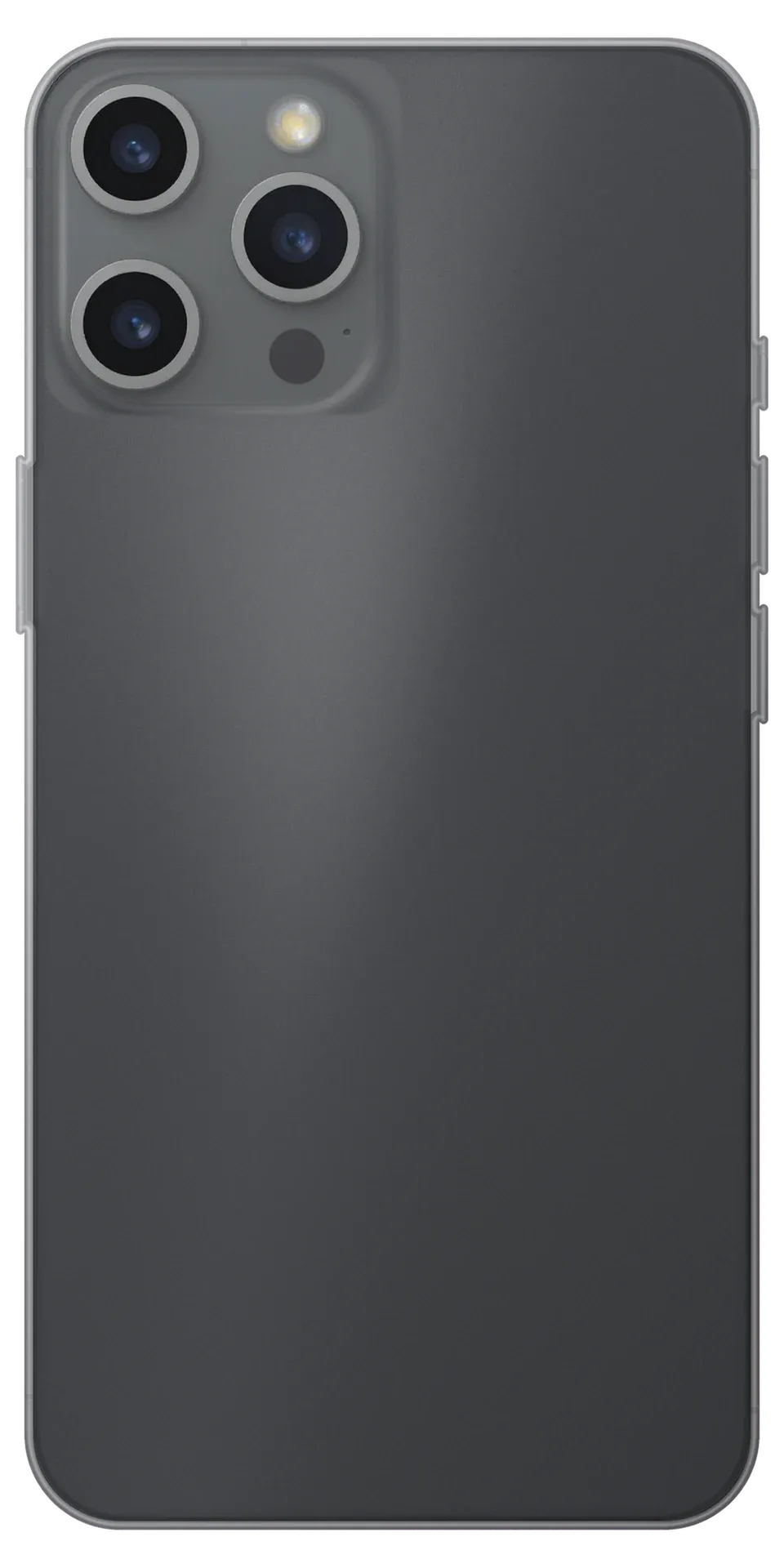
The iPhone 11 Pro Max has three rear cameras, each behind its own thin protective cover. Before anything is swapped, an engineer separates a cracked cover from a healthy module — here is how to tell them apart.
What the camera glass actually is
The camera glass is a thin protective pane bonded over each lens, and it is not the camera itself — the module with the sensor, autofocus and stabilisation sits underneath it. On the triple-lens block of this model there are three such covers, one per opening, each glued into the metal housing. The outer layer takes scratches, chips and impact so the optics underneath do not, which makes it the cheapest part of the whole camera assembly to renew. Owners often call this part the eye or the window of the camera, so when a technician says the glass is cracked, they mean the outer cover, not the lens optics sitting behind it.
Signs the glass is broken and the module is fine
- Sharp photos through the crack: a crisp, in-focus image means light still reaches the sensor cleanly and the camera is working.
- Fast autofocus: the lens locks onto a subject in under a second, so the focus mechanism is intact.
- No black frame in the Camera app: every lens shows a live picture when you switch, so the sensor is alive.
- No purple flare or haze: a clean image without glow around bright lights suggests the optics are unscratched beneath.
- Blur or noise with no visible crack: this points toward the module, so the free 15-minute check we run in front of you settles which part is at fault before work starts.
Why an iPhone 11 Pro Max Camera Glass Replacement Should Not Wait
A crack over the camera glass rarely stops you shooting at once, so it gets postponed. Here is what happens to the cover, the module and the frame while the repair is on hold.
What a crack does to your photos and the module
A cracked cover scatters light into glare and haze, and the open gap lets dust and moisture reach the optics, while loose shards can scratch the glass beneath. A hairline split bends incoming light before it hits the sensor, so frames shot against the sun pick up a soft white veil and street lamps bloom into long streaks after dark. Grit trapped under a lifted shard acts like sandpaper every time the phone slides into a pocket, and condensation from a cold morning outdoors settles on the exposed surface. The damage is cumulative — a chip that only adds flare today can turn into a scratched optic after a few weeks in a pocket, and a scratched optic means a module repair rather than a glass swap.
Can you keep shooting with a cracked cover
You can keep taking photos for a short while if the images are still clean, but we advise booking the swap early rather than waiting for the first blurry shot. Most owners notice the crack only when night shots start to smear, and by then dust has usually worked its way under the cover. A strip of tape over the crack limits shard loss and dust for a day or two, yet it also softens every frame, so treat it as a stopgap until the 20-minute replacement, not a fix. Send us a photo of the damage on WhatsApp — an engineer replies within five minutes and quotes a price from the picture.
How We Do an iPhone 11 Pro Max Camera Glass Replacement on the Triple-Lens Block
The 11 Pro Max holds three lenses in one square block, each sealed under its own glass. We show how that geometry shapes the work and how the camera glass replacement is carried out in Astana.
Three lenses, three separate glass covers
The iPhone 11 Pro Max carries three rear cameras in one square block, and each lens sits under its own protective glass, so a single impact can crack one cover and leave the other two intact. The wide, ultra-wide and telephoto optics are grouped inside that raised housing, with a thin bonded layer over every opening instead of a shared sheet. A fall on a corner usually damages the pane nearest the impact, while the metal frame and the neighbouring optics absorb the rest. Because the covers are separate, only the damaged pane is replaced — the untouched two stay sealed, which keeps dust out of the cameras that were never hit. When you need an iPhone 11 Pro Max camera glass replacement in Astana, this separate-cover design is what lets us restore just the cracked pane.
Step by step through the swap
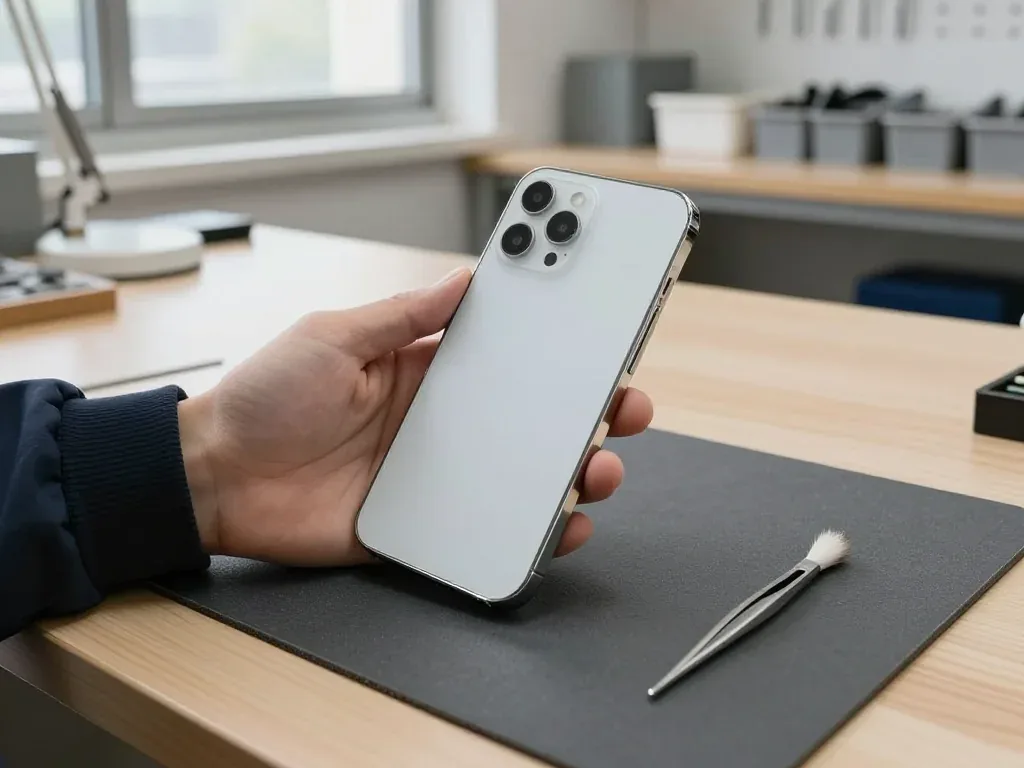
- Heat and lift: we warm the adhesive under the broken cover so it releases without pressure on the optic beneath.
- Shard removal: every fragment is lifted out with tweezers, and the seat is checked for pieces pressed into the frame.
- Deep clean: the recess is cleared of adhesive residue and glass dust before any new part goes near the camera.
- Module check: we lift the camera itself only when shards have slipped underneath, and that call is made on the bench.
- Bonding: the new glass is seated, pressed evenly and cured, then the block is wiped and inspected for gaps.
Original or Aftermarket Glass and What the Receipt Locks In
Camera glass is either an original cover or an aftermarket one, and the difference does not always show at a glance. Here is how to choose, and what gets recorded before the iPhone 11 pro max camera glass replacement starts.
Comparing the glass options
Side-by-side of the two lens covers we install| Property | Original glass | Aftermarket glass |
|---|
| Coating | Factory anti-reflective layer | Standard clear layer |
|---|
| Fit to the frame | Flush seat, tight edge | Close tolerance, minor gap |
|---|
| Look in bright light | Neutral, no halo | Occasional faint flare |
|---|
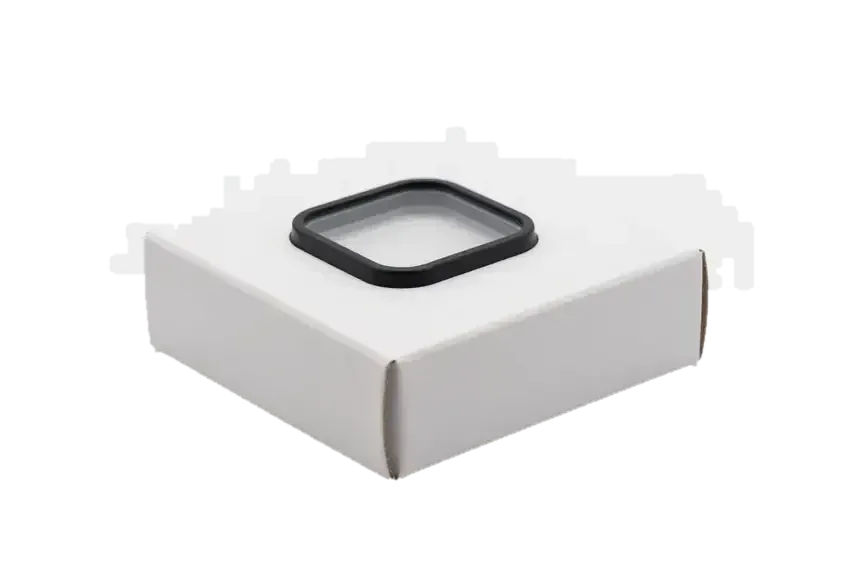
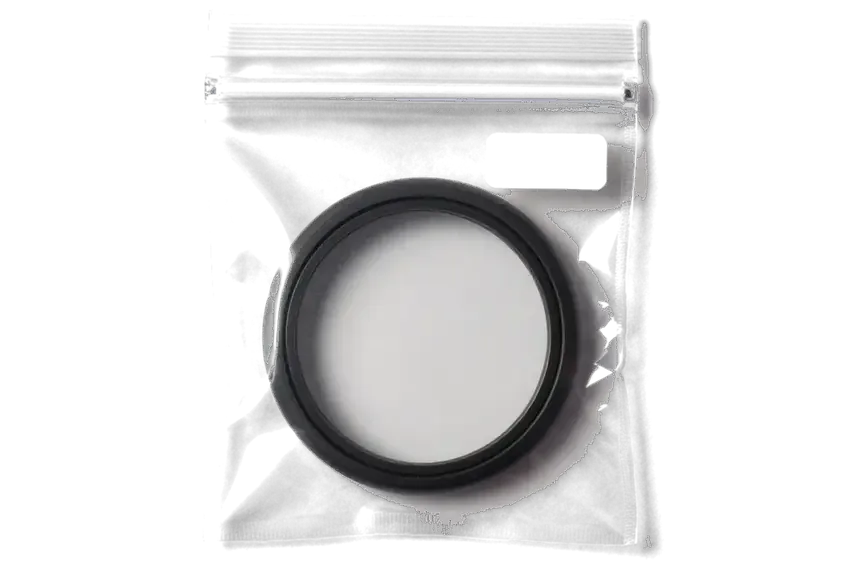
| What we show first | Sealed factory packaging | Sealed packaging |
|---|
What the document and warranty card confirm
Ahead of any work we write the price, the part, the turnaround and the warranty up to 1 year onto the document, and you leave with that paper, a warranty card and the old glass. Both options are logged the same way, so the record names the specific cover that was fitted rather than a general description. The card travels with the phone, and the removed piece stays yours. Keeping the removed part matters — it is your proof of what was actually swapped, and it lets a future technician see the very component that came off the phone. The paperwork takes two minutes to complete, and it is signed before any tool touches the frame.
Checking the Result and How Long You Wait
Once the new glass is seated, the work is not finished until every camera behaves as it did before. Here is what the two of us check together and how much time the whole visit takes.
Testing all three cameras with the engineer
After the swap you test the phone with the engineer — you switch between all three cameras, shoot a photo and a short video, check autofocus and fire the flash, all inside the 32-function check. The ultra-wide, wide and telephoto lenses each get their own pass, so a soft frame on the 2x zoom cannot hide behind a sharp one on the main sensor. You also record a few seconds of video with sound to confirm the microphone beside the lens still picks up cleanly. We run the same sequence ourselves first, then hand you the device. Testing the cameras yourself, not just watching, is the point — you see the same frames the phone will produce in your hand, so any flare or softness shows up before you leave the waiting area.
Twenty minutes at the bench, under an hour door to door
The camera glass swap itself takes about 20 minutes, and the whole path from first contact to pickup usually stays under an hour, so most people wait on site. You send a photo of the damage on WhatsApp, an engineer replies within 5 minutes with a price and a free slot, and the free diagnostics in front of you takes 15 minutes. The waiting area has coffee and Wi-Fi, and 72% of repairs finish while the customer sits there rather than on a later visit. If the shards have reached the module, the bench time grows, and the engineer tells you the new estimate before continuing — worth knowing when you plan the trip across the city.
Summary: iPhone 11 Pro Max Camera Glass Replacement
A damaged lens cover is a contained problem, and the right response keeps it that way. Here is what matters most when you decide how to handle it.
- Glass, not camera: a cracked shield over one optic stays a glass issue while focus and image remain clean in your shots.
- No delay: shards, dust and moisture reach the optics over time, turning a small swap into a full module repair.
- One element at a time: on the triple-lens block each optic carries its own glass, so only the damaged cover comes off.
- Part matters: original and aftermarket versions differ in coating and fit, and the chosen piece is shown before fitting.
- Confirm the result: all three cameras, autofocus and flash are tested together before you take the device back.







 iPad
 MacBook
 iMac
 Mac mini and Studio
 Apple Watch
 AirPods
 Apple Pencil
 Apple TV
 HomePod