The 8 Plus uses a single LCD assembly where glass, digitizer and matrix are glued together, so the symptom tells you how deep the damage goes.
Cracked glass with a working picture
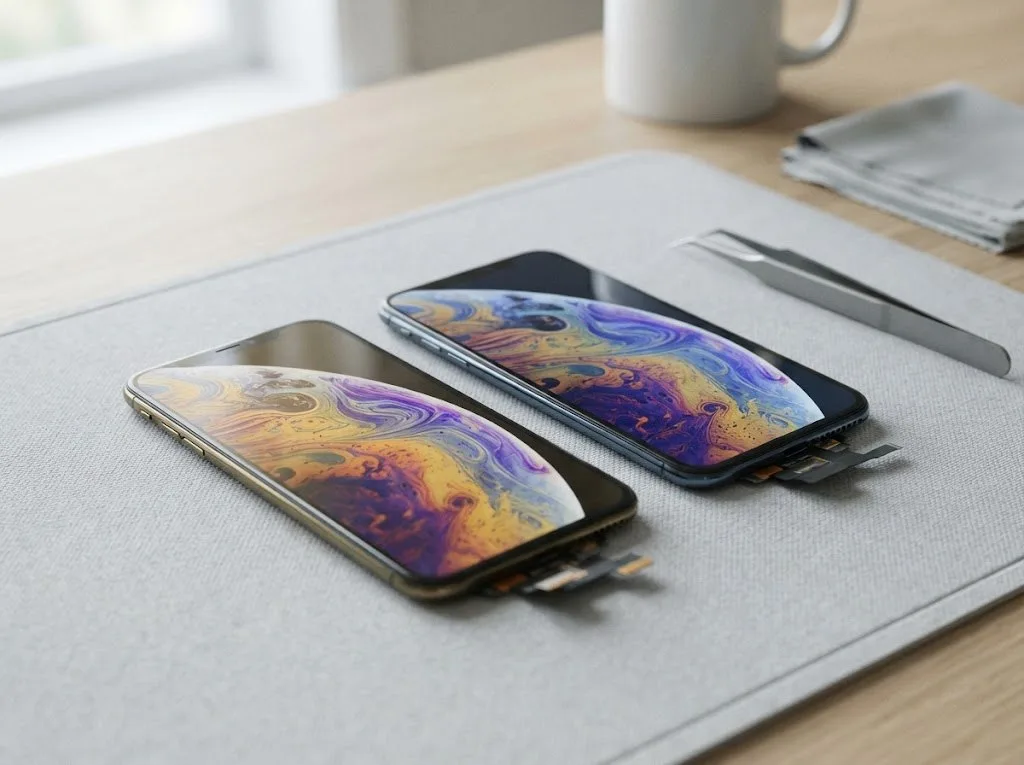
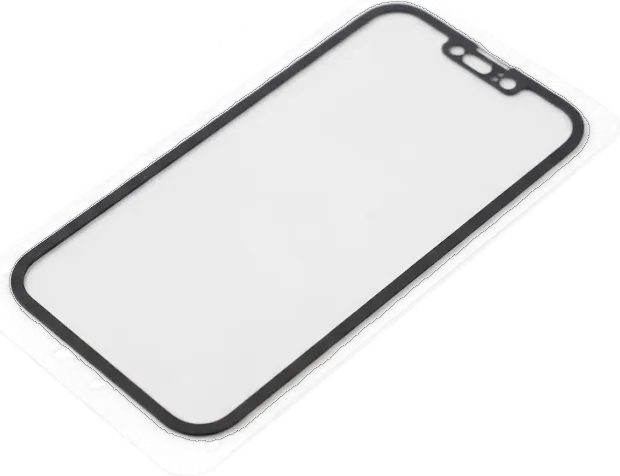
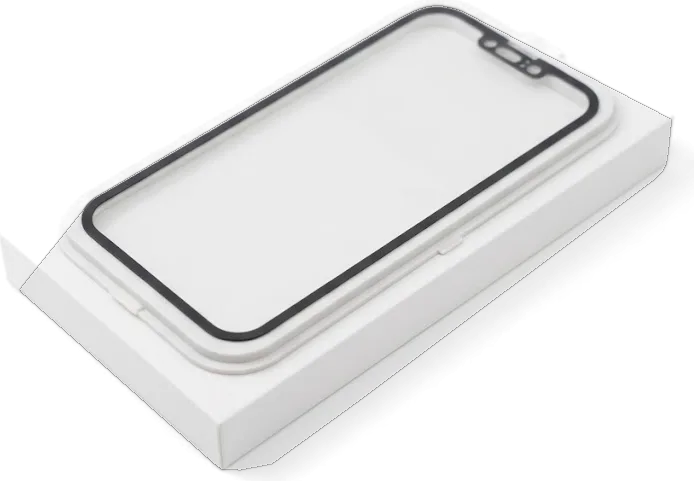
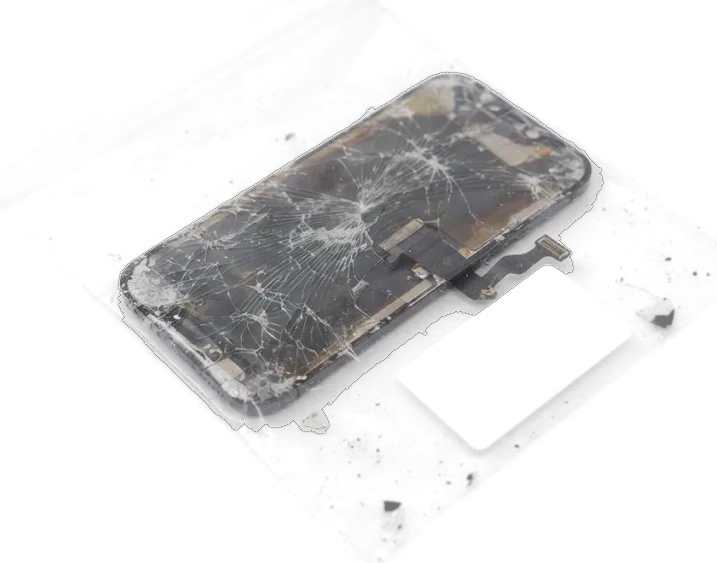
On the 8 Plus a cracked top glass almost always means the whole assembly is replaced, because glass, digitizer and LCD are bonded into one part. We see this daily: the picture is sharp, taps register, and only the surface is shattered into a spiderweb. There is nothing to glue back — a separate cover glass is not a serviceable item on this model. Most owners wait because the phone still works, and that is the risky part: a crack lets dust and moisture reach the digitizer, so a display that still works today can start registering phantom taps within weeks.
Lines, spots and a black screen
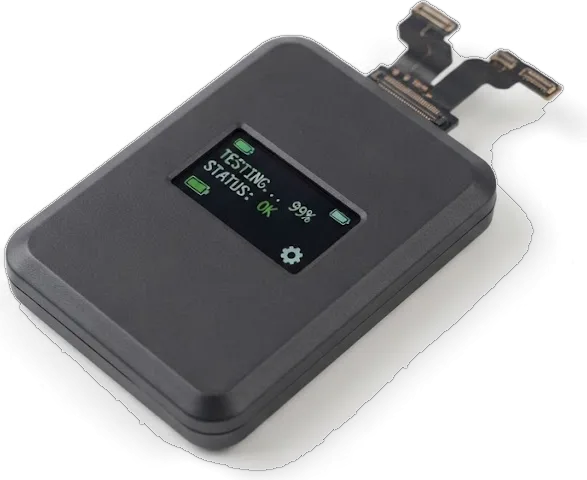
Vertical lines, dark patches or a completely black screen point at the LCD matrix or its backlight rather than the glass. A bright band along one edge usually means the backlight is failing, while green or purple streaks across the whole picture come from a damaged matrix after pressure or a drop. Liquid leaves cloudy spots that grow over time. Lines appearing only after a drop or liquid contact can also come from the display flex, so the panel is tested before ordering a part. A bench test with a known-good module shows whether the fault sits in the screen or deeper in the phone, and it costs nothing on a check-in.
When the glass is intact but touch fails
- Phantom taps: the display reacts on its own or opens untouched apps, usually pointing to the digitizer or display flex.
- Dead zones: one strip ignores presses while the rest works, a pattern we map during a free check.
- No touch at all: the picture is fine but the display does not respond, so flex and board are tested first.
- Liquid history: if the phone was wet, diagnostics can take up to two days; swapping a healthy panel would hide the cause.
- Board fault: corrosion or a broken connector can mimic a dead display, and engineers confirm this before quoting.
Original or Aftermarket Panel for Your iPhone 8 Plus
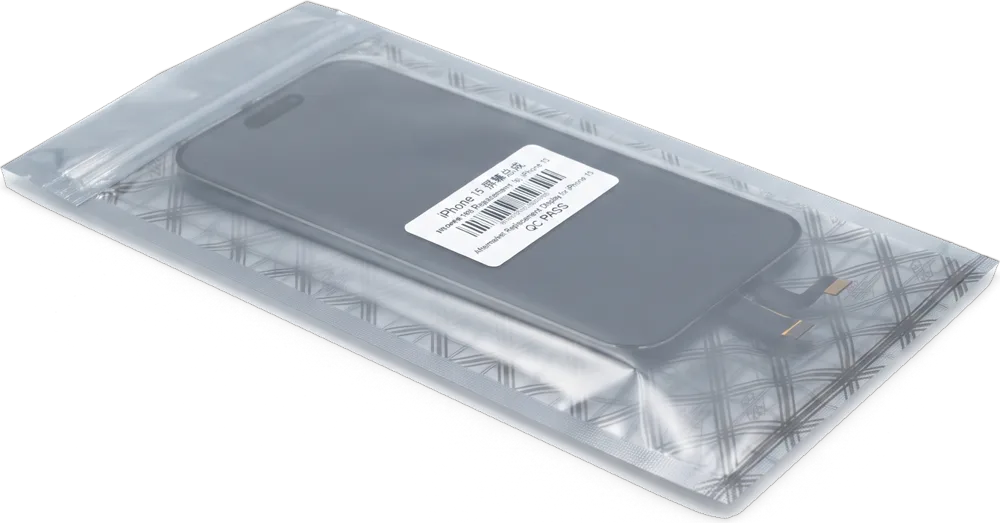
The 8 Plus is an LCD phone, so both options are LCD panels; the difference is in brightness, colour, glass quality and how the digitizer behaves.
Two panel options side by side
Original against aftermarket panel properties compared| Property | Original module | Aftermarket module |
|---|
| Panel type | LCD, factory spec | LCD, third-party |
|---|
| Brightness | Matches the original | Slightly dimmer outdoors |
|---|
| Colour | Neutral, as designed | Can look cooler or warmer |
|---|
| Glass | Original hardness | Good, sometimes softer |
|---|
| Digitizer | Native response | Native, occasional sensitivity difference |
|---|
| True Tone | Works after data transfer | Works after data transfer |
|---|
How we quote before you commit
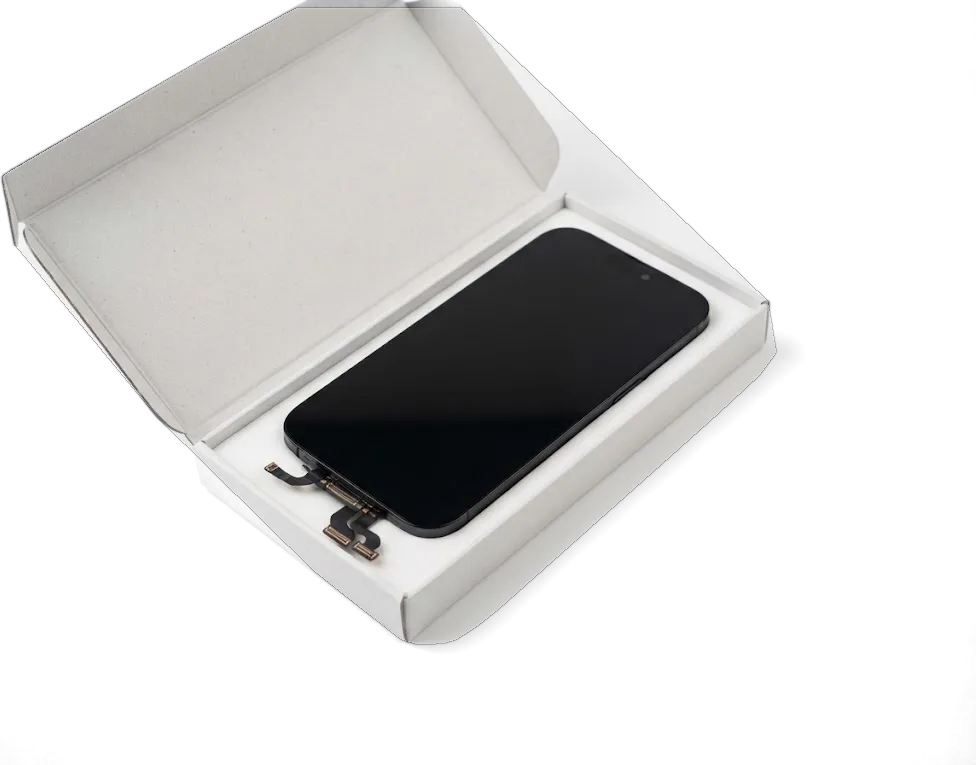
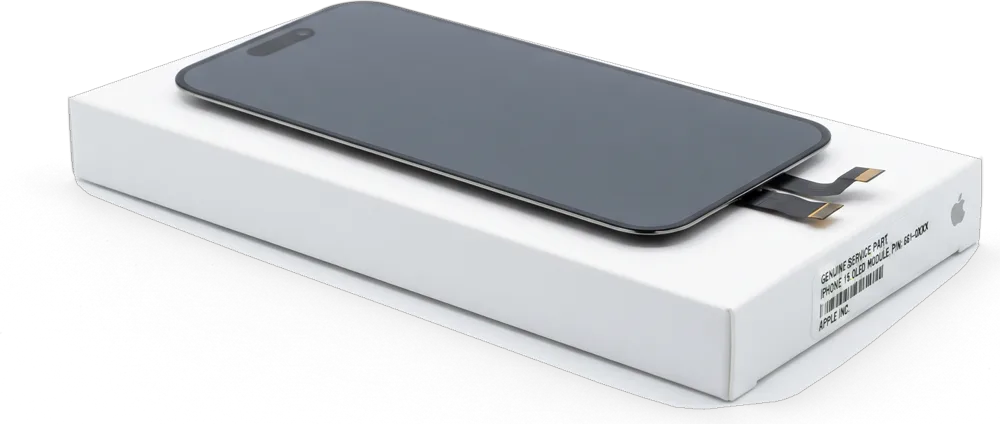
Send a photo of the damage on WhatsApp and an engineer replies within 5 minutes with a price for either option. We name the figure for the original module and for the aftermarket one in the same message, so the gap between them is visible before you decide. The part, turnaround and warranty are then fixed on the receipt in about 2 minutes, and the new screen is shown in factory packaging before installation. Payment runs through Kaspi, card or cash once the phone is checked with you. The quote you get in chat is the number written on the receipt, so the choice between original and aftermarket is made on a known figure.
What Survives the Swap on a Touch ID Model
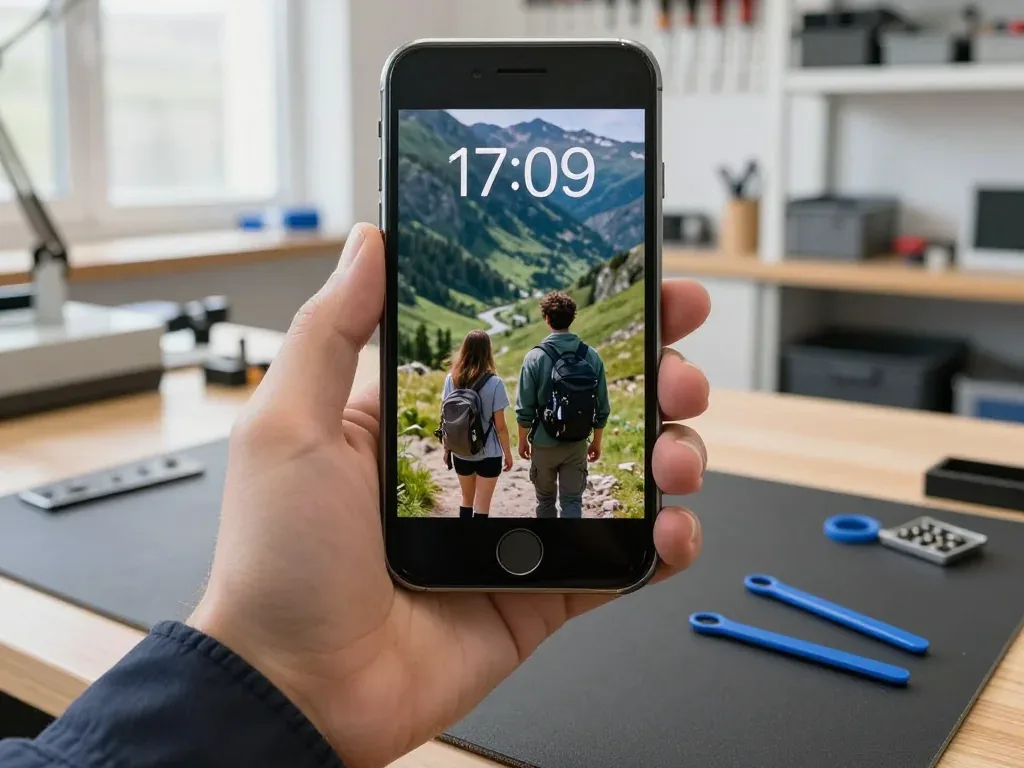
The 8 Plus lacks Face ID but has a Home button with Touch ID and a True Tone sensor, both depending on parts carried over from the old module.
The Home button stays yours
The original Home button is moved onto the new assembly every time, because its Touch ID scanner is paired with the logic board and a replacement button would not unlock the phone. During the swap we keep your button attached to its flex cable, seat it in the new assembly and test the fingerprint reader before the frame is closed. A button pulled from another 8 Plus fits mechanically and still refuses to register a print, since the pairing lives in the board, not in the part. That is why the button is never swapped between two units of the same model, even of the same colour, and why a repair offering a "new button" is a warning sign.
True Tone, 3D Touch and the iOS notice
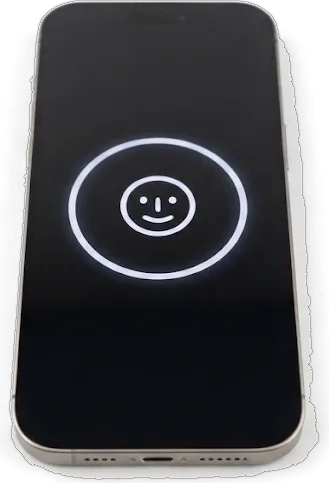
- True Tone: works only if display data from the original panel is transferred; we check it with 3D Touch and auto-brightness after installation.
- 3D Touch: pressure-sensitive shortcuts on the home screen and in apps are tested at several points.
- Auto-brightness: the ambient light sensor in the top bezel is verified under changing light before pickup.
- iOS parts notice: on the 8 Plus it is rare versus newer models, but the panel is shown in factory packaging before fitting.
- Waiting-area check: 72% of repairs finish while the customer waits, so you can confirm every function yourself.
How the iPhone 8 Plus Display Replacement Runs in Astana
The work is done at the counter in front of you, and most of the time goes into transferring small parts rather than into the module itself.
From diagnostics to a sealed frame
We run free diagnostics in front of you for 15 minutes, then disconnect the battery, lift the old panel, move the Home button and upper flex across, fit the new assembly and reseal the frame. That upper flex carries the earpiece speaker and proximity sensor, so it must be lifted without creasing — a torn flex kills calls and turns off the display during conversations. Experienced technicians handle the transfer, and the new part comes out of factory packaging in front of you. This is how the iPhone 8 Plus display replacement in Astana goes from first check to a sealed frame. Resealing matters because the adhesive gasket is the only barrier left once the frame is opened.
Forty minutes and a place to wait
An iPhone 8 Plus display takes about 40 minutes, and the whole path from first contact to pickup usually fits into less than an hour. Send a photo of the damage on WhatsApp and an engineer replies within 5 minutes with a price and a free slot; a courier can be called if you would rather not travel across the city. While the panel is swapped you can wait in the lounge with coffee and Wi-Fi, and the shop is open Mon–Fri 10:00–19:00, Sat–Sun and holidays 11:00–18:00. 72% of our repairs finish while the customer waits, so booking through WhatsApp is mainly about avoiding a queue.
Repair times at a glance
Expected turnaround by job type, shortest to longest| Job | Typical time |
|---|
| iPhone 8 Plus screen | 40 minutes |
|---|
| Battery | 25 minutes |
|---|
| Camera glass | 20 minutes |
|---|
| iPad or MacBook | 1 hour to 1 day |
|---|
| Board repair | 1 to 3 days |
|---|
Checking the Phone and What You Take Home
The handover is a joint check rather than a signature, and everything agreed before the work stays on paper afterwards.
The 32-point check you do with us
After fitting we check 32 functions in roughly 10 minutes, and you stand at the counter while Touch ID, True Tone, cameras, microphones, speakers, charging and network get tested. The engineer also confirms the proximity sensor dims the screen during a call, the earpiece plays at full volume, both lenses focus, and the frame sits flush with no light leaking at the edges. A display can look perfect on a bench and still fail a five-second call test, which is why the owner holds the unit here. Testing Touch ID and True Tone in front of you catches a badly seated flex immediately, while the handset is still open and can be reseated.
Receipt, warranty card and the old panel
The device comes back with a receipt, a warranty card covering the work up to 1 year, and the previous panel in your hands. The receipt repeats exactly what we agreed before the screwdrivers came out: the part fitted, whether it is original or aftermarket, the turnaround, and the warranty terms. Writing it up takes about two minutes and you keep a copy. The removed panel leaves in a small bag rather than going into a drawer, so the chain of what came off your handset stays visible. Keeping that module proves which component got removed and settles any later question about what actually got replaced. If you cannot collect the item yourself, a courier can be called and the paperwork travels with it.
Summary: iPhone 8 Plus Display Replacement
Five points decide how a display repair on this model ends — the component, the Home button, True Tone, the real fault and the paperwork.
- Module, not just the front layer: the 8 Plus bonds cover, touch sensor and LCD into one unit, so a cracked display means a full assembly swap.
- Your Home button travels: the Touch ID scanner is paired with the logic board, so the original is always carried over.
- True Tone needs the data: the feature survives only when original display data is transferred, confirmed right after installation.
- An intact screen can still fail: a display ignoring touches needs diagnostics first, as the flex cable or board may be faulty.
- The receipt settles it: component, turnaround and warranty written down before work starts make the repair known.








 iPad
 MacBook
 iMac
 Mac mini and Studio
 Apple Watch
 AirPods
 Apple Pencil
 Apple TV
 HomePod