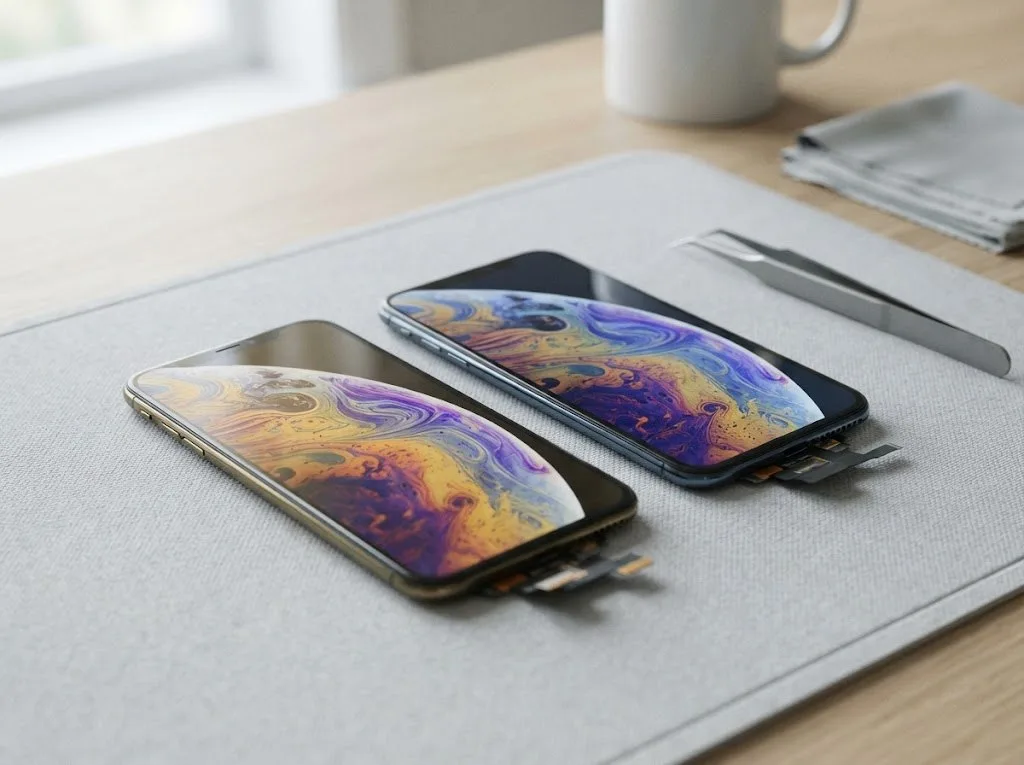
Cracked front glass over a working image and a responsive sensor suits a glass-only job. Spots, lines or a dead sensor push the decision toward a full module, confirmed by diagnostics.
Signs the LCD and Touch Layer Are Still Fine
We check the panel during a free 15-minute diagnostic and show what is broken, so the choice between glass and module rests on the screen, not crack size. A healthy matrix keeps a uniform picture at full brightness, with no dark blotches, bright spots or vertical lines along the edges, and the digitizer registers a finger in every corner and the center. We run a finger along all four edges and the middle, then tilt the phone under the lamp to look for pressure marks. On the 8 Plus the panel sits flat, so these marks are easy to read. A crack across a working panel is only a glass problem, but one dark blotch means the LCD layer is gone and no glass swap brings the picture back.
Damage Types and Why a Crack Keeps Spreading
- Edge chip: a small bezel break leaves a sharp open line, letting pressure travel inward on every drop.
- Hairline crack: one thin surface line looks harmless until daily pocket flexing widens it.
- Spiderweb: several cracks radiate from one impact point, typical after a corner hit on a hard floor.
- Delamination: a milky border where glass lifts off the OCA layer and dust settles in the gap within weeks.
Glass or Full Module, Side by Side
Three repair routes compared by parts and fit| Option | What is replaced | What stays original | When it fits |
|---|
| Glass swap | Glass and OCA layer | LCD matrix, sensor, chassis | Image and touch work |
|---|
| Full module | Whole display assembly | Chassis and body only | Spots, lines, dead digitizer |
|---|
| Glass plus chassis work | Glass, OCA, bent chassis | LCD matrix, sensor | Bent or chipped chassis |
|---|
How we perform iPhone 8 Plus glass replacement step by step
Each job follows one route: the module comes off, broken glass is separated from the matrix, old adhesive is cleaned, new front glass goes on optical OCA, the stack is laminated and the phone reassembled.
From WhatsApp Photo to Finished Glass
- Send a photo: message the damage on WhatsApp; an engineer replies within 5 minutes with a price and a free slot.
- Free diagnostics: the engineer opens the device in front of you, takes 15 minutes and shows what is broken.
- Separation: the cracked glass is lifted off the LCD matrix, and old adhesive is cleaned from the panel.
- Lamination: new front glass is bonded to the matrix on optical OCA under vacuum, so no air pockets remain.
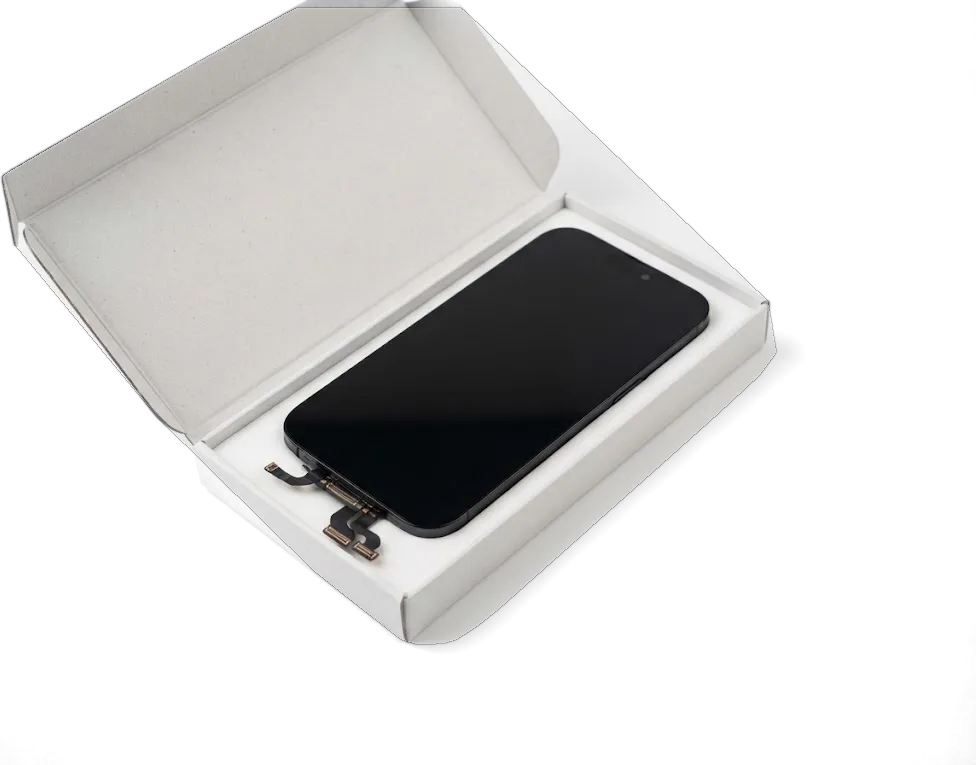
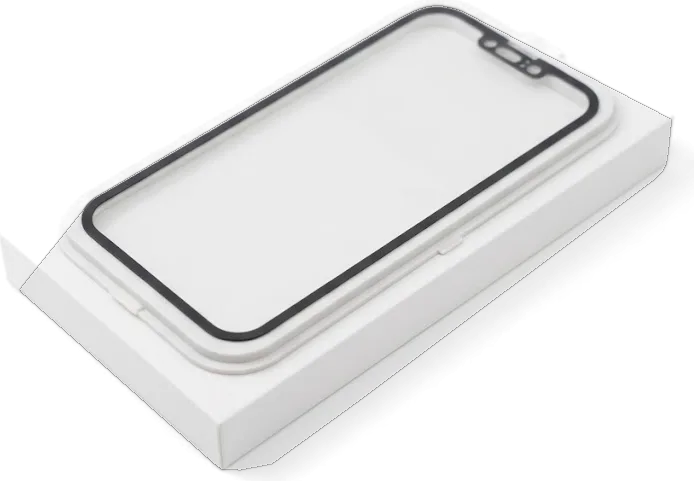
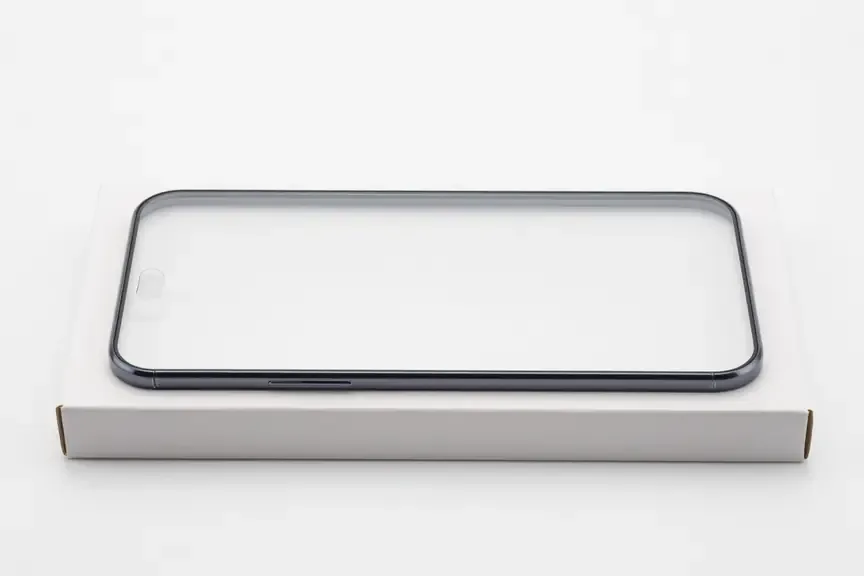
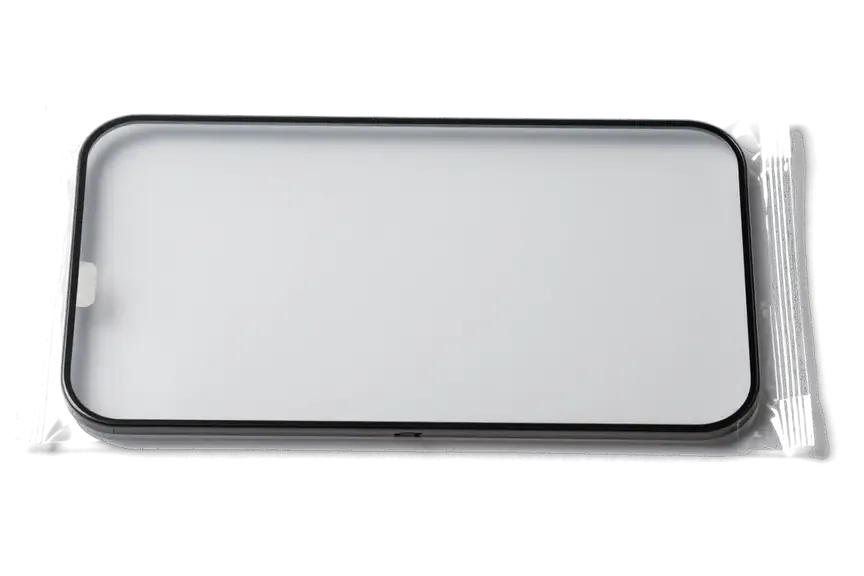
- Handover: the new part is shown in factory packaging before installation, so you see the glass going onto your phone.
How Long It Takes and Where You Wait
The whole process from first contact to pickup usually takes less than an hour, and 72% of repairs are finished while the customer waits in the waiting area with coffee and Wi-Fi. A screen job on the 8 Plus itself runs about 40 minutes, and the paperwork that locks the part, turnaround and warranty on the receipt takes 2 minutes. We quote from a photo first, so you know the figure before you travel across the city. For iPhone 8 Plus glass replacement in Astana, the visit is planned around a short wait, and a courier can be called if you would rather not come in at all.
Why the LCD Panel of the 8 Plus Is Easier to Work With
The 8 Plus carries an LCD panel, and separating glass from an LCD layer is more forgiving than the same operation on the thinner OLED matrix of the X and XS. LCD panels stack a backlight unit and a liquid-crystal layer under the cover glass, and that sandwich tolerates local heat and gentle prying better than an OLED sheet, which is thinner and less tolerant of pressure points. The Plus body gives the technician more room around the module, which matters when the frame is bent and the glass has to sit flat after lamination. On a used 8 Plus, check the frame before the glass goes on — a bent chassis pushes the new panel up within weeks.
What Stays Original After the Glass Swap
A glass-only repair keeps the original matrix in place, and the Home button with Touch ID and the 3D Touch layer stay untouched, since the work involves the glass only.
Touch ID, 3D Touch and True Tone Stay in Place
The Home button with Touch ID stays untouched, the 3D Touch layer sits under the glass and is not replaced, and True Tone keeps working because the original panel and sensors are reused. We lift only the broken outer glass, bonded to the matrix with optical adhesive, and the LCD is not swapped for a copy. That is why the pressure-sensitive layer still reads force the same way and the ambient light sensor keeps its colour reference. 64% of customers choose an original part, and on a glass-only job the display you look at afterwards is the one the phone shipped with. After the repair you check True Tone, cameras, microphones, speakers, charging and network with the engineer, so any function that behaves differently is caught before you leave.
Screen Protector Versus the Front Glass of the Module
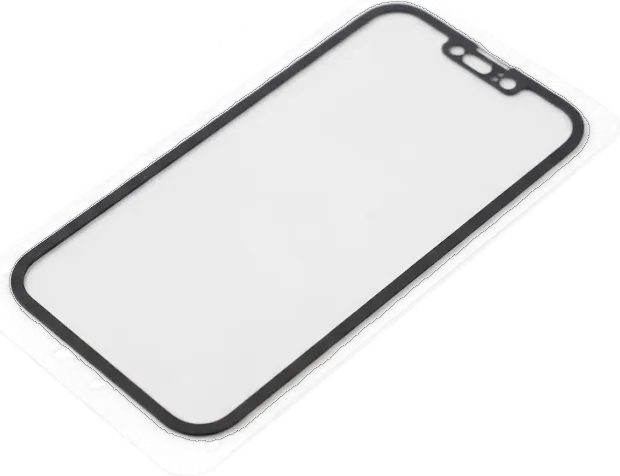
- What it is: a thin film or tempered sheet on top of the display; the front glass is the module's outer layer.
- How it is fixed: the protector holds by silicone or thin adhesive and peels off by hand; the front glass is bonded with optical adhesive and needs heat and a blade.
- What a crack means: a cracked protector needs a new sheet, not glass replacement; a technician tells them apart in seconds during the free check.
Checking the Result Before You Leave
The engineer stays beside you: drag a finger along every edge, check for bubbles and dust, confirm even backlight and daily functions — all before the device leaves with a receipt.
What to Look At on the Finished Screen
- Edge response: drag a finger along all four borders and corners; the sensor should answer evenly, with no dead strip.
- Bubbles: tilt the screen under a lamp and look for trapped air between glass and matrix, especially at the centre.
- Dust: a single grain sealed beneath the glass stays permanently and means redoing the lamination immediately.
- Backlight: open a plain white image and scan for bright spots, dark patches or greyish haze.
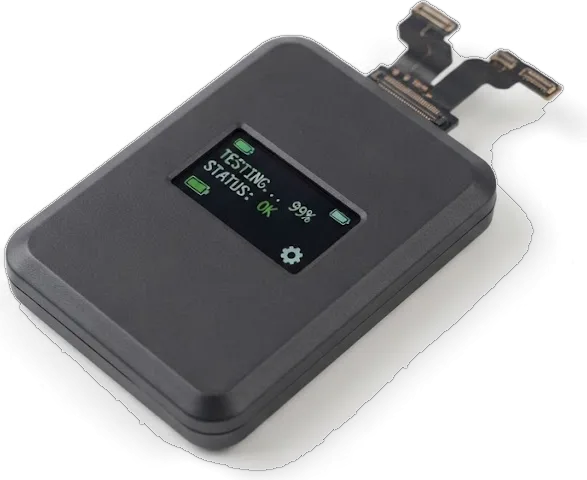
- Function test: we run the 32-function check in about 10 minutes; you repeat the visible part.
If the Matrix Turns Out to Be Damaged
If the free diagnostic shows the LCD layer is already damaged beneath the crack, we say so before any work starts and the options are fixed on the receipt, so nothing shifts mid-repair. The engineer inspects the device in front of you for 15 minutes, even if you decide not to repair it, and shows exactly which layer failed — the glass, the matrix or both. From there the choice is yours: a full display module or leaving the phone as it is. The honest moment is the diagnostic, not the pickup — a customer who knows the panel is gone decides without pressure.
Paperwork, Payment and Warranty
The part, turnaround and warranty go on the receipt before work begins; on pickup the device returns with the receipt, warranty card and old glass.
What the Receipt Locks In
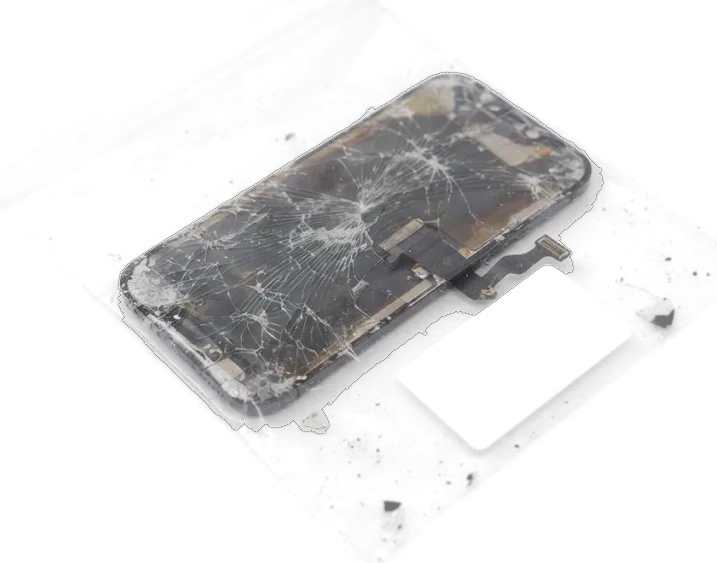
Price, part, turnaround and warranty are fixed on the receipt in about 2 minutes before work starts, and the device comes back with the receipt, the warranty card and the old part. The receipt names the exact component — original or aftermarket — so there is no gap between what was agreed on WhatsApp and what sits under the new glass. We show the replacement in its factory packaging before installation, and the engineer hands back the removed front glass in a bag. Keeping the old glass matters if a dispute comes up, because the removed part shows the original panel was intact and the swap was glass only — not a full module sold as a repair.
Warranty Terms and Ways to Pay
The work is covered by a warranty up to 1 year, and payment is accepted by Kaspi, card or cash once you have checked the screen and functions yourself. That check is the same 32-function pass the engineer runs with you at the counter, so paying means you have already confirmed True Tone, cameras, microphones, speakers, charging and network. A warranty that long only makes sense on a glass job done with proper OCA lamination, because a poorly bonded layer would show bubbles or lifting long before the term ends. Ask for the warranty card to be filled in on the spot, since an unwritten promise is worth nothing a year later.
Summary: iPhone 8 Plus Glass Replacement
Five checks decide whether a cracked iPhone 8 Plus leaves the bench with its original display intact, each confirmed before the device goes back to its owner.
- Glass versus module: cracked front glass with working picture and responsive input means glass-only; spots, lines or a dead sensor mean full replacement.
- Parts that stay: original LCD, Home button with Touch ID, 3D Touch layer and True Tone remain when only glass is swapped.
- Screen protector: a separate sheet on top of the display, never the same component as the front glass.
- Acceptance: visual and functional check at once; bubbles, dust, uneven backlight and edge responsiveness are inspected before handover.
- Paperwork: part, turnaround and warranty belong on the receipt; keep the old glass.







 iPad
 MacBook
 iMac
 Mac mini and Studio
 Apple Watch
 AirPods
 Apple Pencil
 Apple TV
 HomePod