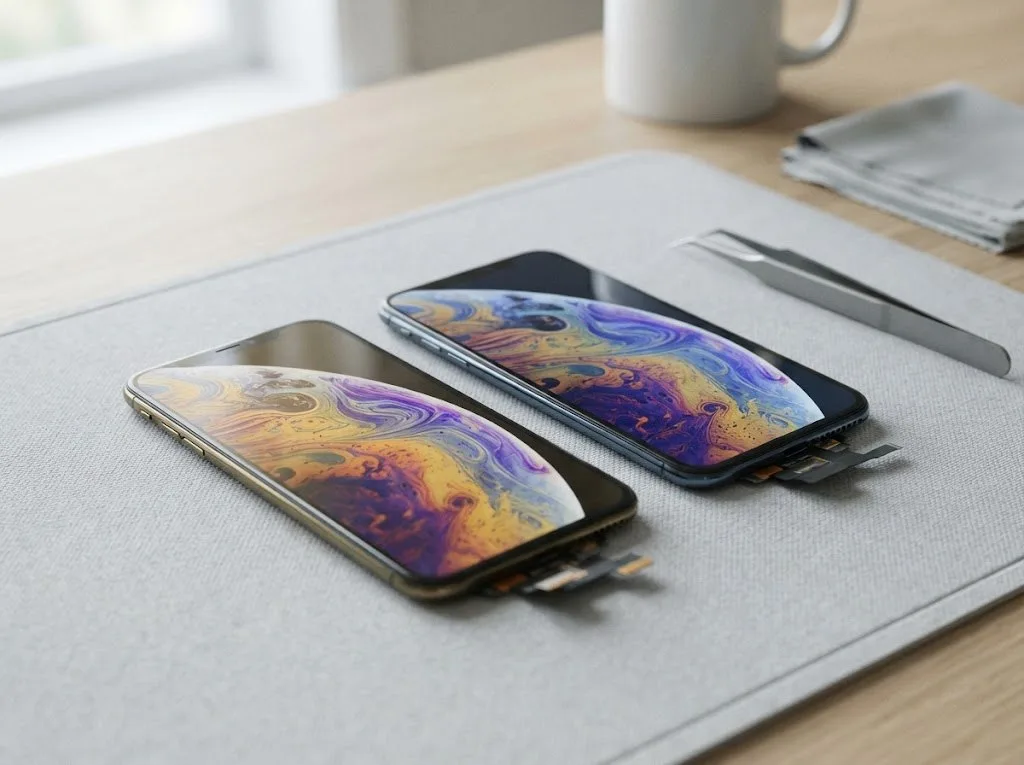
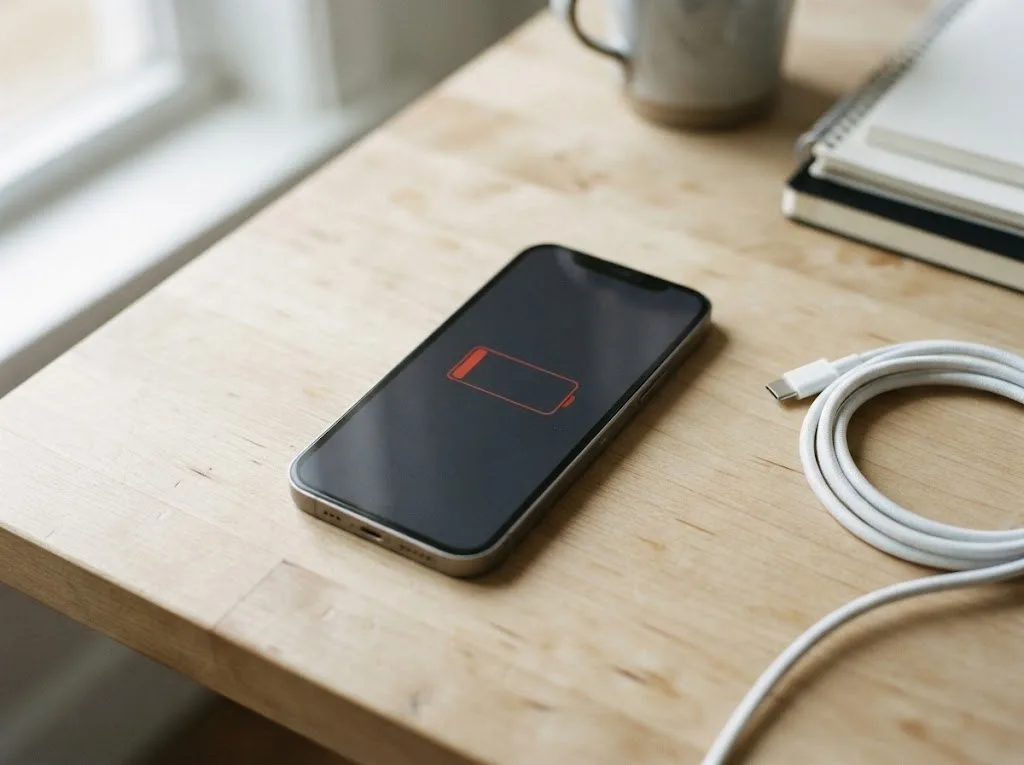
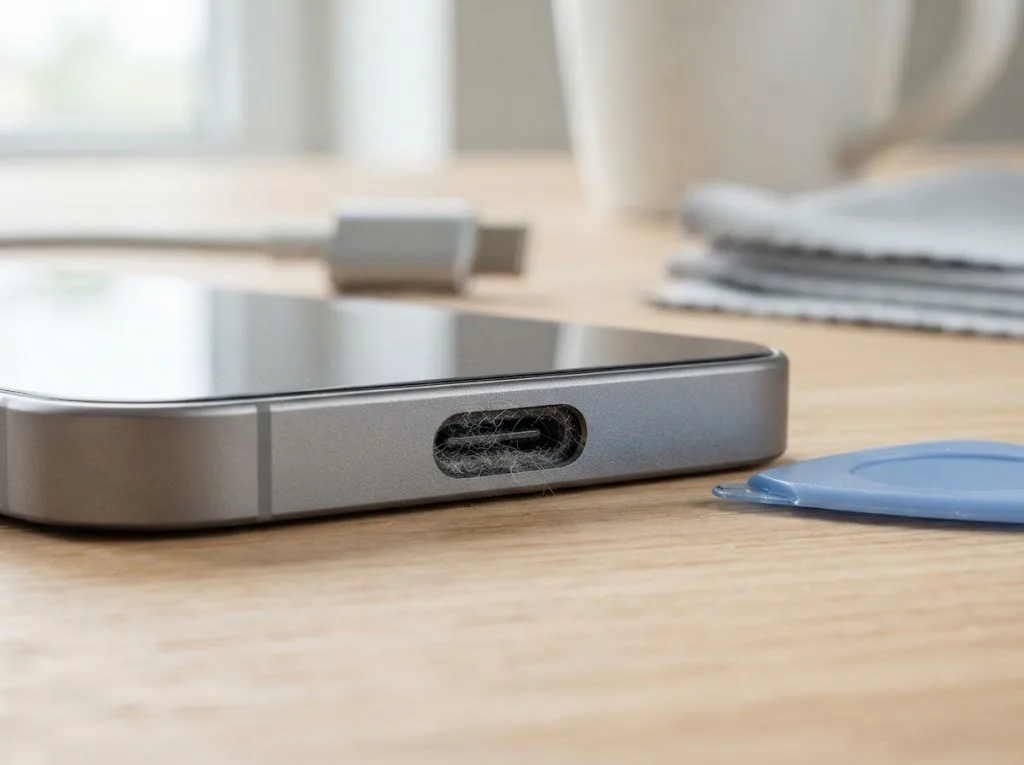
A break in the outer pane on the large 6 Plus display does not automatically mean the display underneath is gone. Here is what actually fails, why the damage spreads, and why waiting rarely saves the phone.
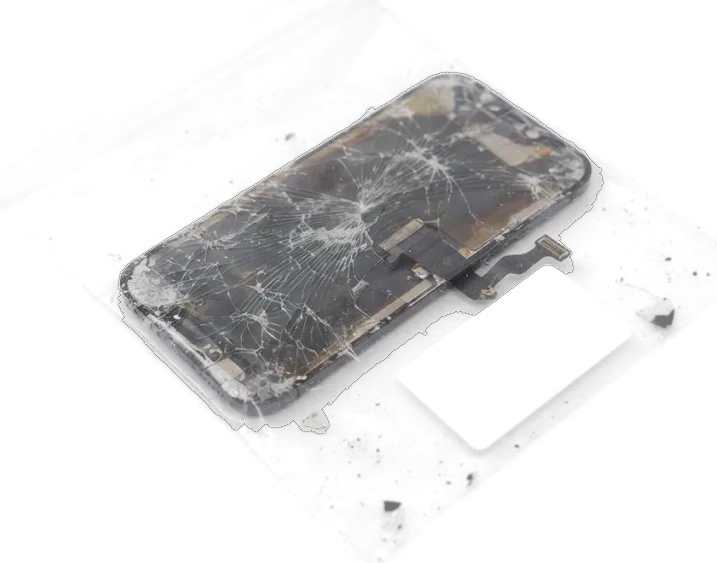
Cracks, chips and spiderwebbing and how each behaves
- Hairline split: a single thin line that usually starts at a corner and stays invisible until light hits it at an angle.
- Chipped corner: a small piece of glass missing at the frame, common after a short drop onto a hard floor.
- Spiderwebbing: a web of lines radiating from one impact point, where the top layer has lost its tension across a wide area.
- Bezel split: a fracture running along the frame that opens a direct path for dust and damp toward the panel underneath.
Why you should not keep using a cracked 6 Plus
A cracked 6 Plus still boots and scrolls, but every swipe pushes glass fragments against the digitizer and the screen beneath, and damp finds the same path. The digitizer sits directly under the outer pane, so loose shards grind against its grid with each swipe and press. Fragments trapped near the earpiece work their way into the camera opening, and pressure from a tight pocket bends the weakened display further. False touches and dead spots near the fracture usually appear before the image does — by the time the picture flickers, the repair has grown from glass to a full module.
iPhone 6 Plus Glass Replacement Choosing Glass or Full Module
The first question most 6 Plus owners ask is whether the glass alone can be swapped. The answer depends on what the impact did underneath it, and we check that before quoting any work.
Signs the LCD and touch layer are still fine
We confirm the display and sensor are intact when the image is even with no dark patches or lines and taps register across the whole screen, corners included. On the 6 Plus the cover glass sits directly on the display and the digitizer runs edge to edge, so a clean screen means the cheaper re-glass route is genuinely open. We run free diagnostics in front of you, and the engineer shows the digitizer test lighting up under each finger. A clean sweep plus an even backlight is exactly what we look for, and the corners are where we check first. Test the edges yourself before you come in — a dead strip along one side is the most common hidden sign that the touch layer, not just the glass, took the impact.
When only a full module will fix it
If free diagnostics in front of you show spots, coloured lines or a dead digitizer zone, we tell you straight that new glass alone is pointless and a full module is the honest fix. A bruised LCD stays bruised: the liquid crystal layer does not heal, and pressure marks spread with use. On the 6 Plus the digitizer is laminated to the LCD, so a cracked sensor cannot be peeled off and re-glued the way the cover glass can. We photograph the fault, put both options on the table and let you pick. This call is made before any work and fixed on the receipt, so you never learn mid-repair that the job changed — the decision is yours while the phone is still whole.
How iPhone 6 Plus Glass Replacement Works Step by Step
We walk you through the path from a shattered front panel to a finished phone, and explain why the screen in this model makes the job safer than on later devices.
From module removal to lamination
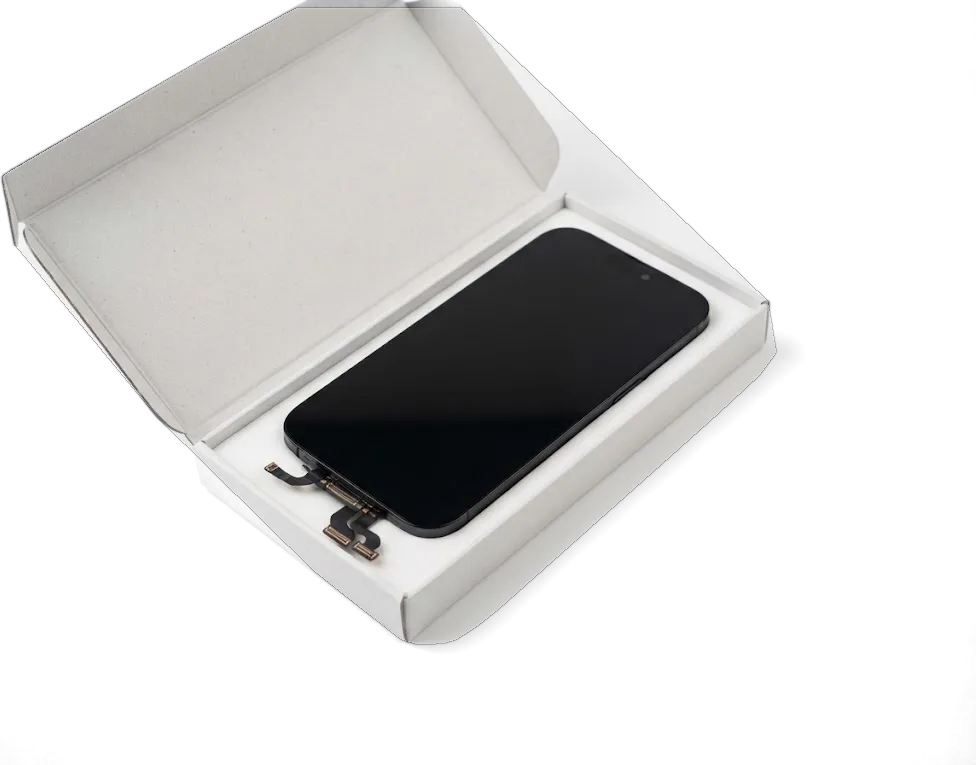
- Module removal: the display assembly comes out of the frame first, with the home button cable and front camera flex kept intact.
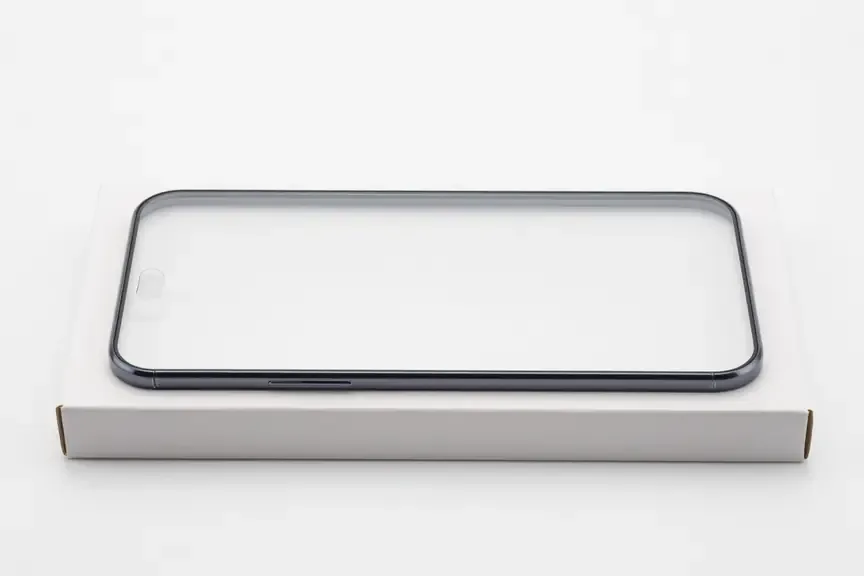
- Glass separation: a heated wire lifts the cracked glass off the LCD, and the surface underneath stays untouched.
- Adhesive cleanup: old glue is scraped and wiped from the panel surface until the glass bed is completely flat.
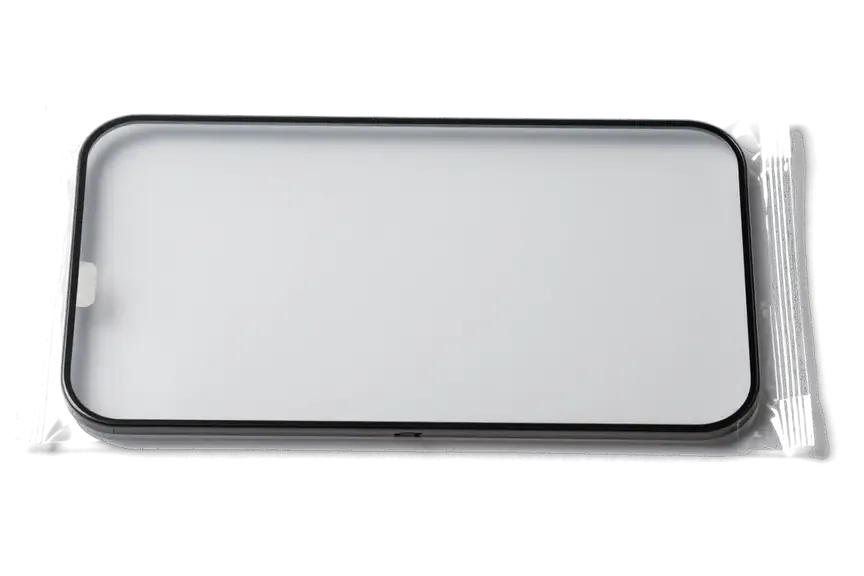
- Optical bonding: new glass is laid onto optical OCA, a clear adhesive that cures without clouding the image.
- Lamination and reinstall: the stack goes into a vacuum press, then the module is fitted back and the phone is reassembled.
- Final check: lamination under vacuum is the step that decides the result, since trapped air later shows as bubbles or a milky patch — which is why we inspect the screen before you leave, not after.
Why the 6 Plus LCD is easier to re-glass than an OLED
The 6 Plus uses a liquid-crystal display, which tolerates the heat and separation step far better than the thinner OLED screens in later X and XS models. Such a panel carries its liquid crystal layer between two glass plates, so a heated wire can travel under the cracked front glass without stressing the screen itself. OLED panels are built on a single flexible substrate and sit closer to the surface, so the same separation pulls on the light-emitting layer. That is why a 6 Plus is a strong candidate for keeping its original screen, while on OLED the same separation carries real risk to the screen. If you are looking for iPhone 6 Plus glass replacement in Astana, this LCD design is exactly what makes the job predictable.
What Stays Original After the Repair
Owners of a 6 Plus usually ask one thing before handing over the phone: will the features I rely on survive the work? Here is what stays exactly as it was, and why.
The original LCD, Touch ID and the Home button
Your original display stays in the phone, and the mechanical Home button with Touch ID is never touched, because the glass sits above it and the button is a separate part. When we re-glass a 6 Plus, the display module comes out, the cracked cover glass is separated from the screen, and the new glass is bonded back onto the same panel you already own. The Home button, its cable and the Touch ID sensor remain on the module throughout — we do not swap them, and the fingerprint data stays stored in the phone's own secure chip. Colour accuracy, brightness and auto-brightness behaviour come from the original display you already have, so keeping the original screen is also why the picture looks exactly as it did before the crack. Most owners of this model choose the glass-only route for precisely this reason.
A quick reference for what changes and what does not
Which parts survive each type of repair| Part / function | Glass-only repair | Full module repair |
|---|
| Cover glass | Replaced | Replaced |
|---|
| Display panel | Kept (original) | Replaced |
|---|
| Digitizer | Kept | Replaced |
|---|
| Home button / Touch ID | Untouched | Untouched |
|---|
Checking the Result and Your Warranty
Handing over the phone is a joint inspection, not a signature on the way out. Here is what we check with you at the counter, and what documents and cover leave the workshop with the device.
How to accept the work without missing a defect
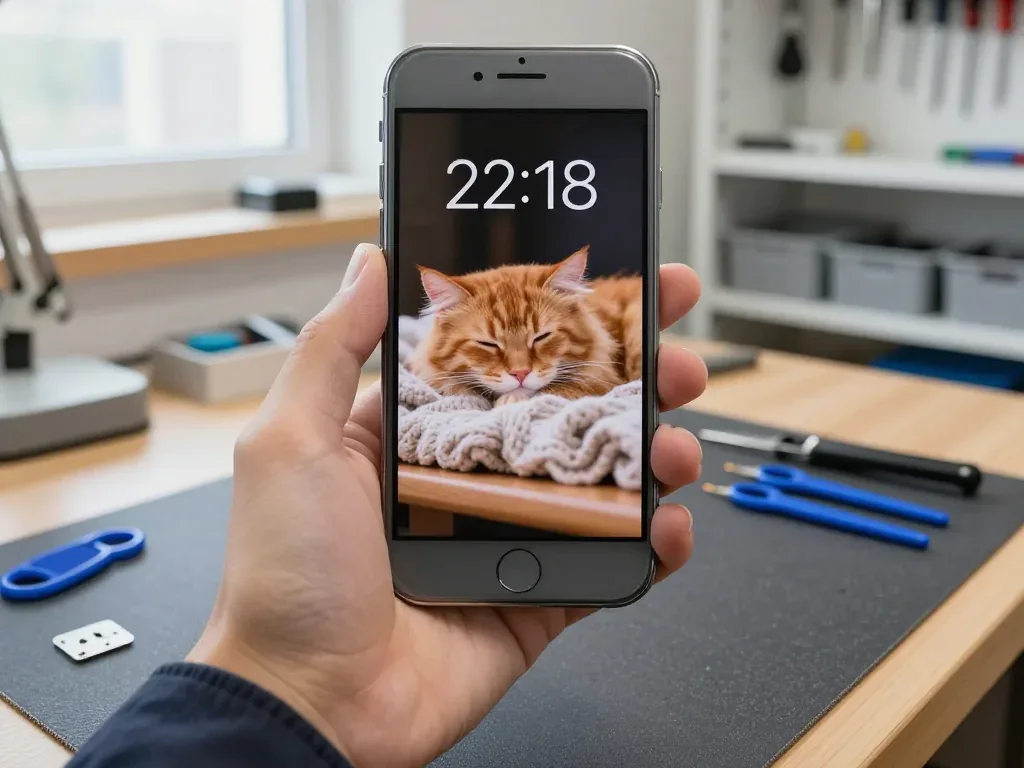
After the repair you check the glass together with the engineer — taps across all four corners, no bubbles or dust under the surface, even backlight and working cameras, speakers and charging. We set aside about ten minutes for this and run through 32 functions, from the earpiece to the microphone, so nothing is discovered at home. Run a finger along each edge and open a keyboard to test the far corners, where a lazy digitiser shows up first. Tilt the phone against a light source to spot dust or a faint bubble; these show up at an angle long before they are visible straight on, and catching them at the counter is far easier than later.
Receipt, warranty card and the old part
You leave with the receipt, a warranty card covering the work up to 1 year, and the old glass, and the part, turnaround and warranty were fixed on the receipt before any work began. Payment runs by Kaspi, card or cash, whichever suits you at the counter. The warranty card names the work done, not the whole device, so read the line describing the glass before you fold it away. Keep the old glass until the warranty period ends — it is your proof of what was removed, and it settles any later question about which part was fitted. If a bubble or a dead corner appears within that year, bring the phone and the paperwork back and the engineer re-examines the same area under the microscope.
Summary: iPhone 6 Plus Glass Replacement
The repair decision comes down to one question: is the glass the only damaged layer, or has the damage reached the screen beneath it. These five points sum up how to tell the difference and what to expect.
- Glass-only repair fits even damage: it works when the image is uniform and touches register across the whole screen, corners included.
- Spots or dead zones mean the LCD: lines, dark patches or an unresponsive area point to a damaged display, and a full module is the honest fix.
- The 6 Plus display re-glasses well: its LCD tolerates the process better than later OLED screens, which keeps the original screen realistic to save.
- Most of the device stays original: the display, touch sensor and Home button with Touch ID remain in place, and only the cover glass is swapped.
- Check before you leave: test taps at the edges, look for dust and bubbles under the glass, then confirm backlight and core functions on the spot.








 iPad
 MacBook
 iMac
 Mac mini and Studio
 Apple Watch
 AirPods
 Apple Pencil
 Apple TV
 HomePod