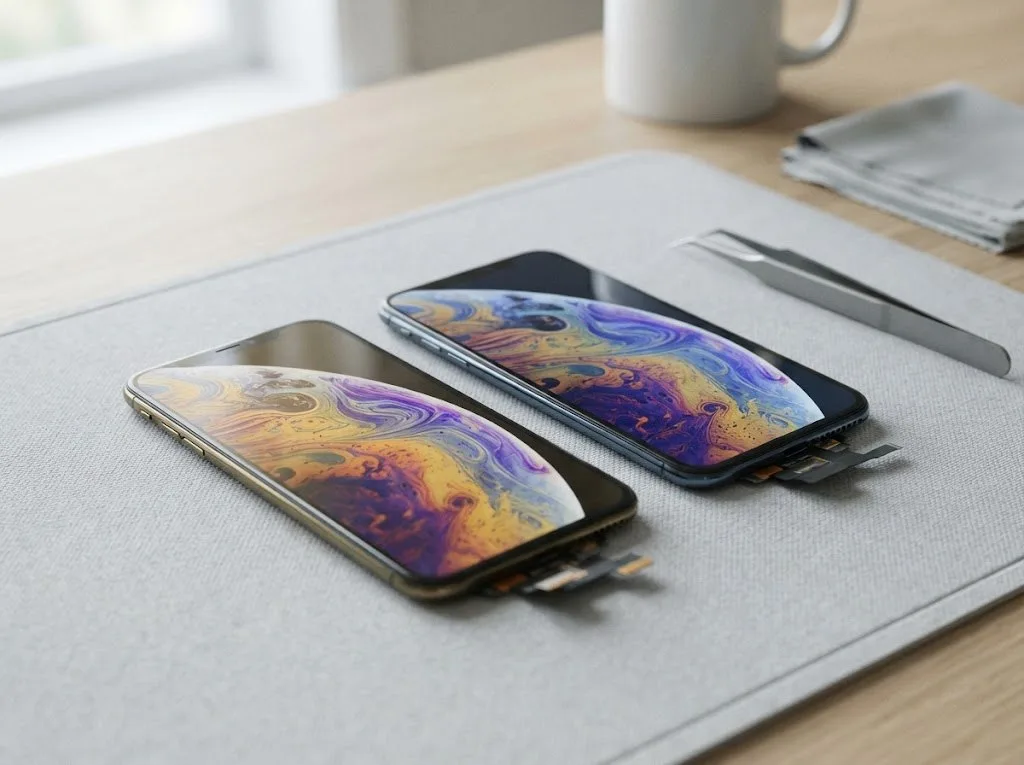
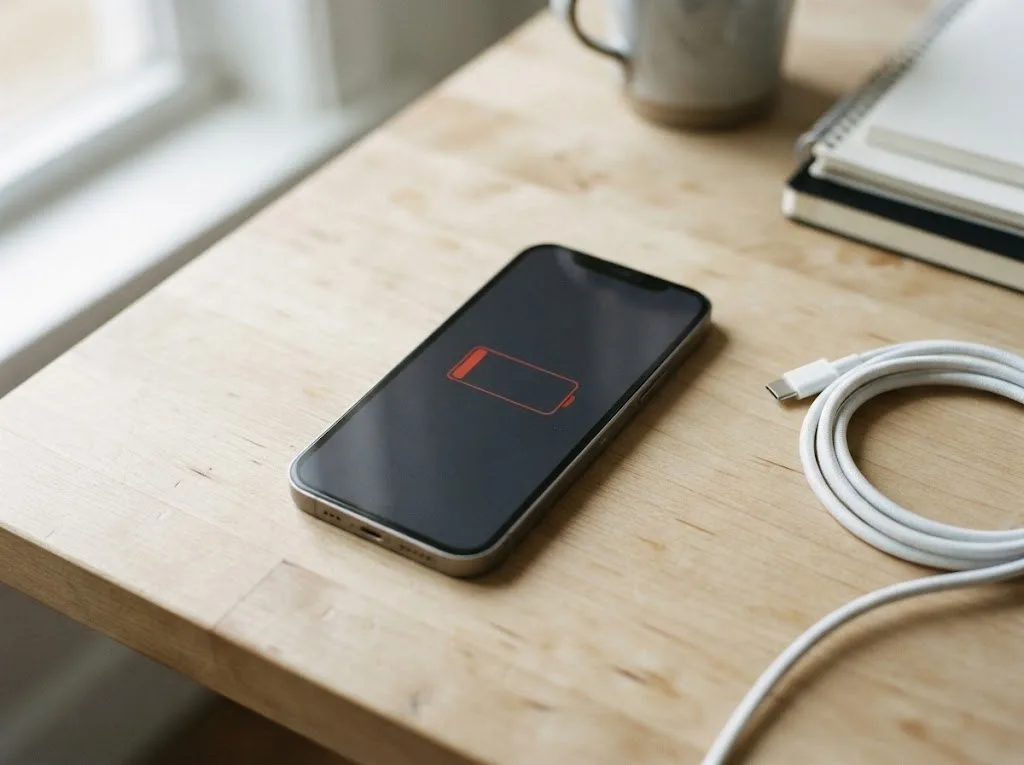
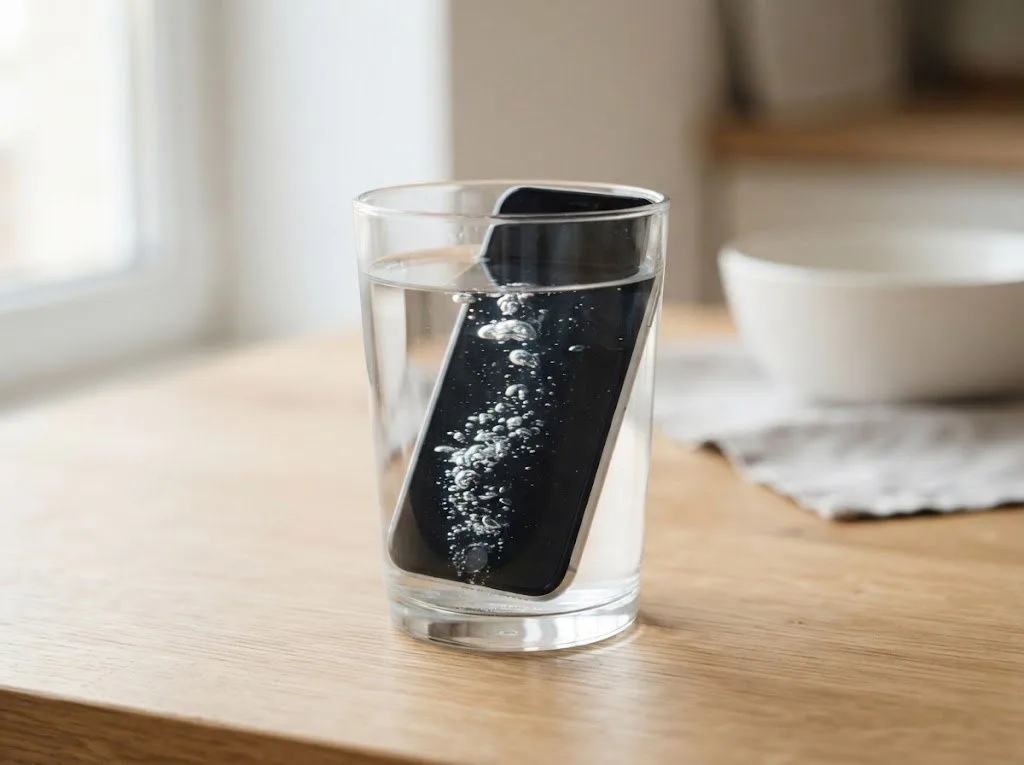
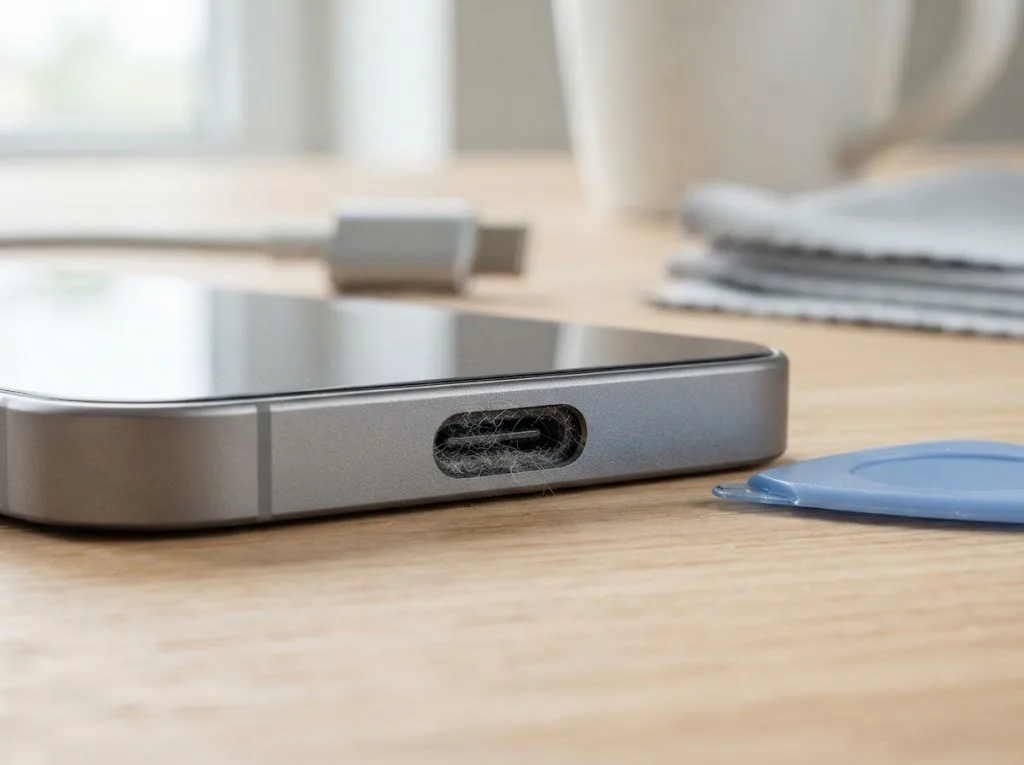
A dead 4s is not automatically a dead board. We walk through the symptoms that point at the logic board and the ones that point at the battery, the 30-pin connector or the power button.
Symptoms That Point at the Logic Board
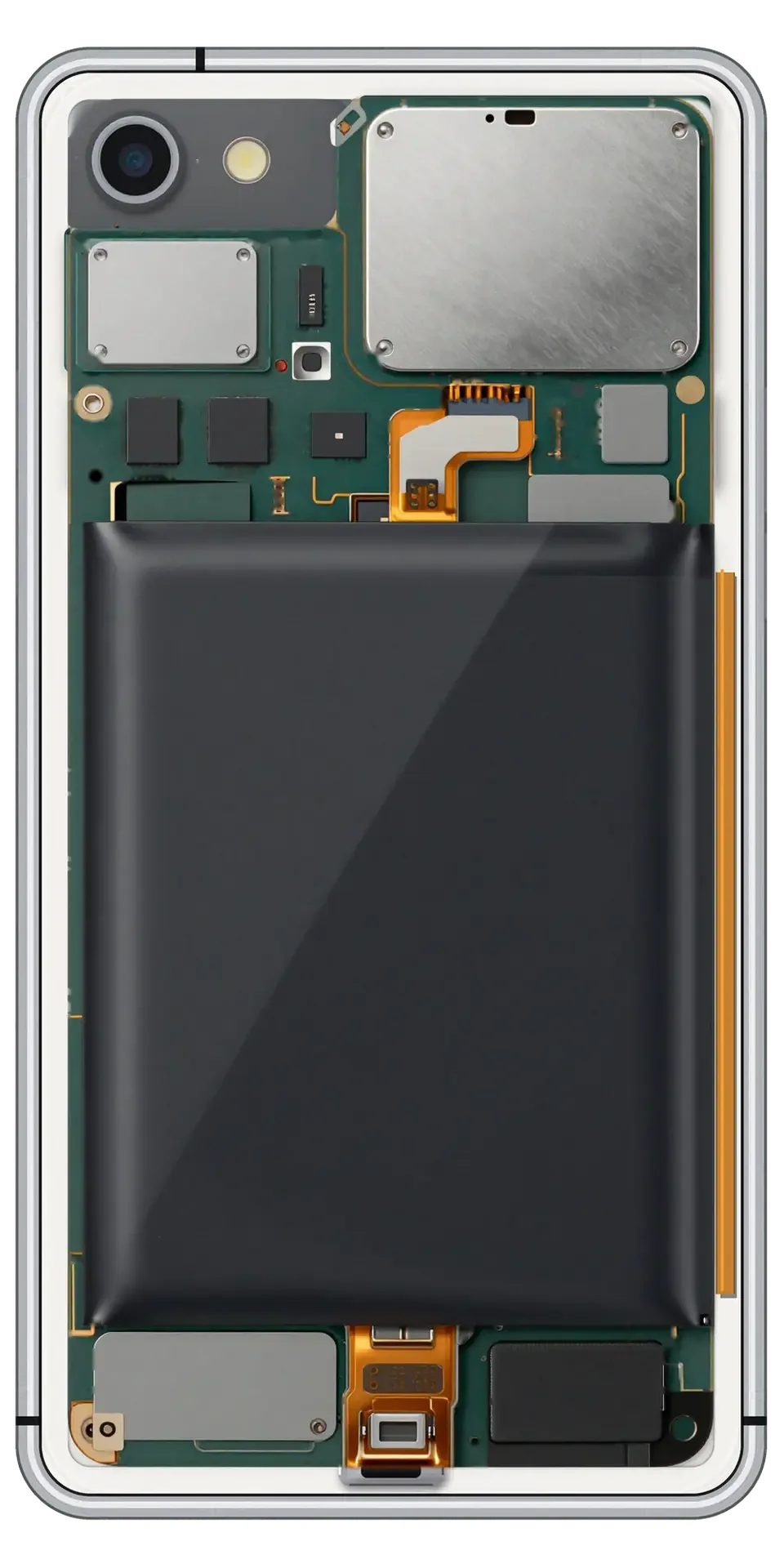
- No boot but draw: the phone pulls energy on a lab supply yet never reaches the home screen, which points at the A5 SoC or the PMIC.
- Hang on the Apple logo: the boot sequence stalls partway, often at NAND initialisation, and the device never finishes loading.
- Reboot loop: the 4s restarts every few seconds on its own, a pattern tied to a failing management rail.
- Heat near the camera: the upper board area warms within seconds of charging, a sign of a short on a supply line.
- Charging but silent: a dirty 30-pin connector or a worn battery mimics this, so a flat handset for hours is usually not the board.
How We Test the Board in Front of You
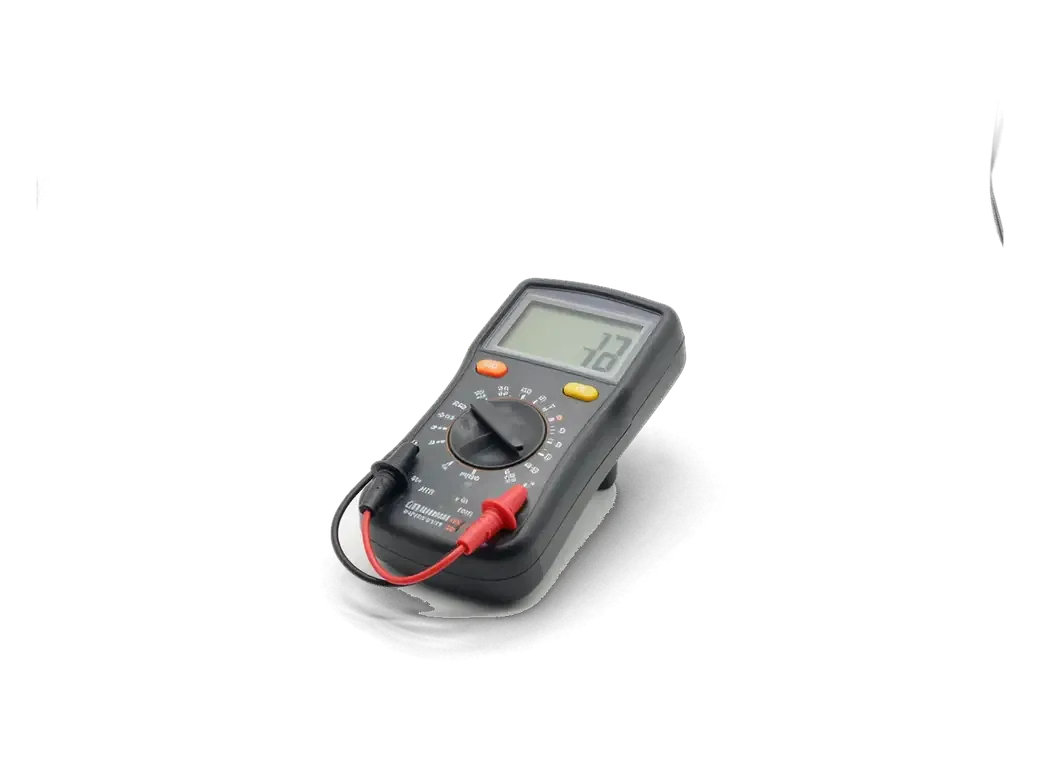
We run free diagnostics in front of you for about 15 minutes, measuring draw on a lab power supply and hunting for a short circuit, and the check stays free even if you decide not to repair. The engineer opens the device at the bench, shows the measured values and explains which node is suspect ahead of any quote. That reading tells the story before any screwdriver touches the board — a phone that pulls a steady low load behaves differently from a unit that spikes and drops, and the difference narrows the suspect node fast. Board work itself goes under a microscope, which is how we trace a short to a single component instead of condemning the whole board. At our Astana workshop the first measurement is always the same, and it is the one that saves you from paying for a replacement you do not need.
iPhone 4s Logic Board Repair or Full Board Replacement on the 4s
On a 4s the choice between repairing a component and swapping the whole board comes down to what failed and what you want to keep.
When a Single Component Can Be Repaired
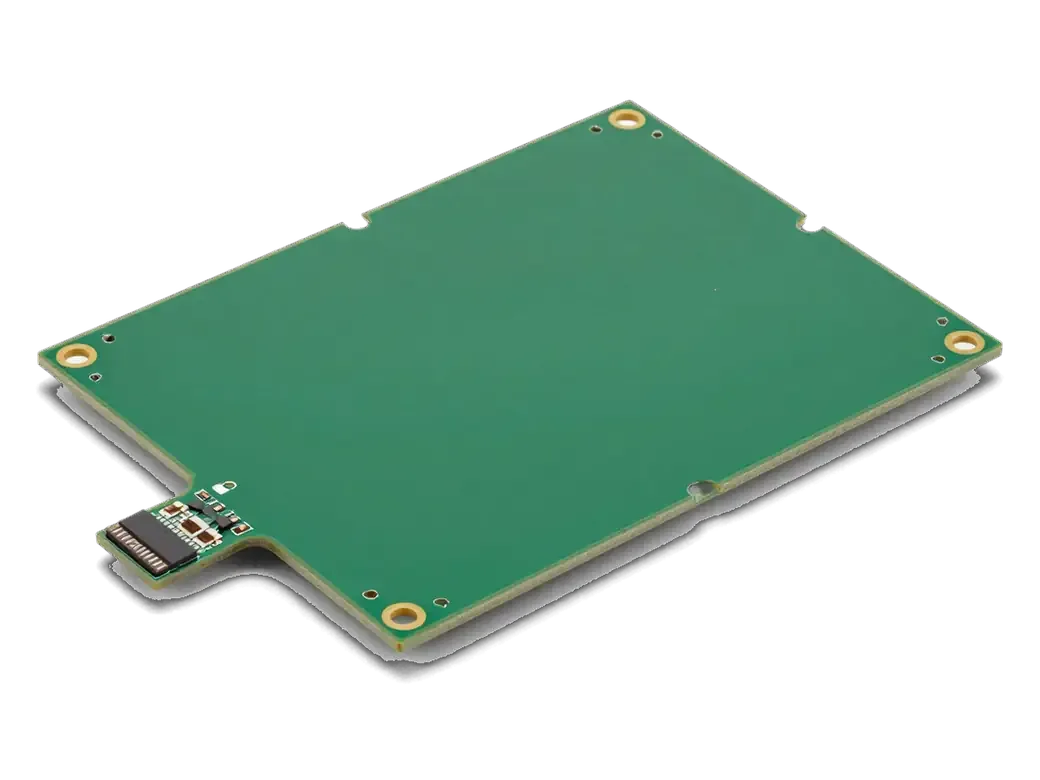
If the fault sits in one part — a power management chip, a charging controller, a cracked trace or a corroded pad — we repair it by micro-soldering under a microscope and your data stays on the original NAND. The PMIC and the Tristar charging controller are the two chips we resolder most often on this model, and both jobs run under a microscope. We test the rail after every joint. For iPhone 4s logic board repair in Astana, this component-level route is only worth it when the SoC and NAND are healthy, because a board with a failing processor will keep returning to the bench no matter how clean the repair looks.
Repair or Replace the Board
three logic board options and what each means| Option | What happens to your data | Best when |
|---|
| Component repair | Stays on your original board | SoC and NAND are healthy |
|---|
| Full board replacement | Not carried over | SoC or NAND is dead |
|---|
| Donor board swap | Not carried over | A clean unlocked donor is found |
|---|
What Survives the Repair on an iPhone 4s
The 4s is the last model without a fingerprint sensor, which simplifies one question and complicates another. Data and identity are the two things owners ask about first.
Your Photos and Files After Board Work
Your photos, messages and files live in the encrypted NAND flash on the board itself, so a component repair keeps them and a full board replacement does not carry them across. The 4s stores user data in that single chip, and pulling the storage chip off one board and placing it on another does not give the new chipset access to that data. That is why a donor-board swap gives you a working handset with a clean, empty system rather than your old library. iCloud backup remains the one route that survives any board outcome, provided the handset synced ahead of the failure. If the original board still powers on even briefly, take a backup ahead of the repair — a dead storage chip cannot be read afterwards.
IMEI, Serial Number and Biometrics on the 4s
The 4s has no Touch ID, so a board repair or replacement never affects biometrics, but the IMEI and serial number are tied to the board and change with a donor swap. We read both values from the handset ahead of any service and write them on the receipt, so you can see exactly what changed when the device comes back. A swapped board brings its own IMEI, which means the number in Settings will no longer match your original box or your carrier records. We check the replacement board for a clean activation state before quoting, because an iCloud-locked board turns a straightforward swap into a device that cannot be set up. Ask us to confirm the activation status in writing before you approve the job — it takes a minute and prevents a dead end.
A Wet or Dropped 4s and What the Board Needs Next
Water and drops hit the 4s board in different ways, and the first hours matter more than the repair itself. Here is what to do before you bring the phone in.
Why Corrosion Keeps Working After the Phone Dries
Corrosion on a wet logic board keeps eating contacts and traces after the handset looks dry, so a 4s that took on water should be powered off and brought in rather than charged to test it. Moisture trapped under the shields and around the BGA chips stays active for a long stretch, and each power-on feeds the reaction along the copper. What looks like a dead handset after a drop into a sink is often a board with only a few shorted lines and surface oxides on the pads. Cleaning the board and removing the oxides is what stops the spread, and it works best ahead of the corrosion reaching the pads under the BGA chips.
Why Water Diagnostics Can Take Up to Two Days
After water damage our diagnostics can take up to two days, because we clean the board, let it stabilise and re-test current draw before we commit to a repair plan. The engineer puts the board under the microscope and re-tests the current draw. A board that passes a quick test on day one can still fail on day two once residual moisture works into a powered circuit, so the wait protects the repair rather than delaying it. We would rather lose a day at the bench than hand back a handset that dies a week later, and the re-test is what tells us the board is genuinely stable.
How the Repair Runs and What You Get Back
From the first WhatsApp message to the moment you walk out with the phone, the steps are fixed and written down. Here is the sequence and what you leave with.
From a WhatsApp Photo to a Fixed Receipt
You send a picture of the damage on WhatsApp, an engineer replies within 5 minutes with a price based on it, and ahead of any work the price, component, turnaround and warranty are fixed on the receipt in about 2 minutes. The unit is either original or aftermarket, and that choice is written down rather than left to memory. Board repair here runs 1–3 days, so the slot is booked around that window, and the new part is shown in factory packaging ahead of installation. Fixing the terms on paper ahead of time means the number you agreed to is the number you pay, even if the fault turns out to sit deeper than the image suggested.
The Final Check and the Warranty You Take Home
- Charging and network: the engineer plugs in a charger and checks the cellular signal with you watching, so a loose connector surfaces early.
- Cameras and microphones: both cameras fire and a voice memo records and plays back, confirming the connectors on the board are live.
- Speakers and earpiece: a call goes on speaker, then on the earpiece, to catch an unseated audio flex.
- Warranty card: coverage runs up to 1 year on the work and the installed part, handed over with the receipt.
- Old board: you keep it — the old part is returned with the receipt and warranty card.
Summary: iPhone 4s Logic Board Repair
Five points decide how a fourth-generation board case ends: which fault pattern you see, what the procedure preserves, and what gets written down before a screwdriver touches the device.
- Boot symptoms: a 4s that draws current but never boots, loops on the logo or overheats points at the board, while a silent flat handset often means battery or connector.
- Data location: component-level service keeps your files because they stay on the original NAND, and a full board swap does not carry them across.
- Identity markers: the 4s has no fingerprint sensor, so board service never touches biometrics, but the IMEI and serial number follow the board.
- Water damage: corrosion keeps eating traces after the handset dries, so power it off and get it checked rather than charged.
- Paper terms: fixing the price, part, turnaround and warranty on a receipt ahead of service is what makes the final bill predictable.







 iPad
 MacBook
 iMac
 Mac mini and Studio
 Apple Watch
 AirPods
 Apple Pencil
 Apple TV
 HomePod