The Air 2 packs a slim chassis and a laminated display, so the typical fault list is narrower than on older tablets, yet the consequences run deeper. Here is what owners most often bring in.
Cracked glass, dead touch and lines across the display
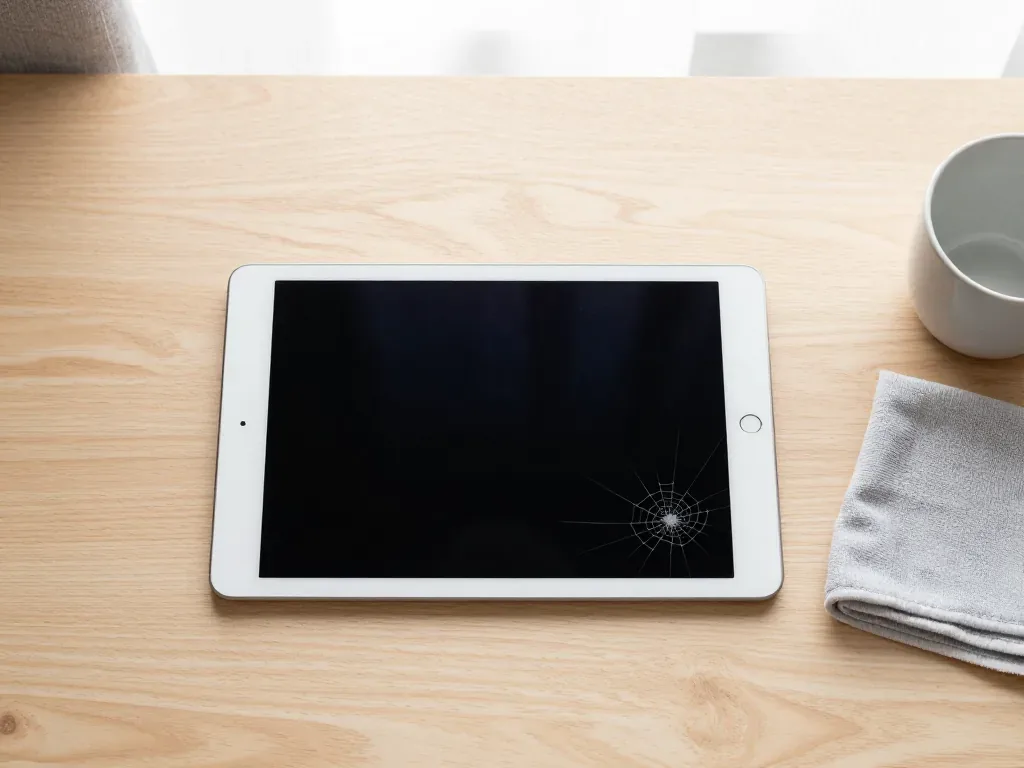
On the Air 2 a crack almost always means the touch layer and the LCD are damaged together, because they are bonded into one unit. The digitizer, the LCD matrix and the backlight sit in a single laminated assembly, so a chip near the edge spreads spider lines across the picture within days while the device still boots and shows the home screen. Owners describe it as "the glass is fine but touch is dead" — in practice the sensing layer under intact-looking glass has already failed. A display that still shows a picture while ignoring fingers is not a cheap glass-only case: pressing on it can push shards into the LCD and turn a working matrix into a dead one. If you are looking for iPad Air 2 repair in Astana, the engineer first checks whether the touch layer and matrix can be saved together.
A battery that swells and pushes the screen out
We see swollen Air 2 batteries regularly, and the first sign is usually a gap along the display edge rather than a battery warning. The cell is glued under the panel inside the aluminium body, so as it expands it lifts the module and the frame starts to bend near the Home button; shutdowns at 30–40% charge and a charge that drops overnight come later. A swollen cell keeps expanding even when the device is off, so the safe move is to stop charging it and bring it in — the battery sits under the display and has to come out through it.
Charging, camera and sound faults we check first
- Lightning port and its cable connector: a cord that only charges at a certain angle points to a worn socket, not a tired battery.
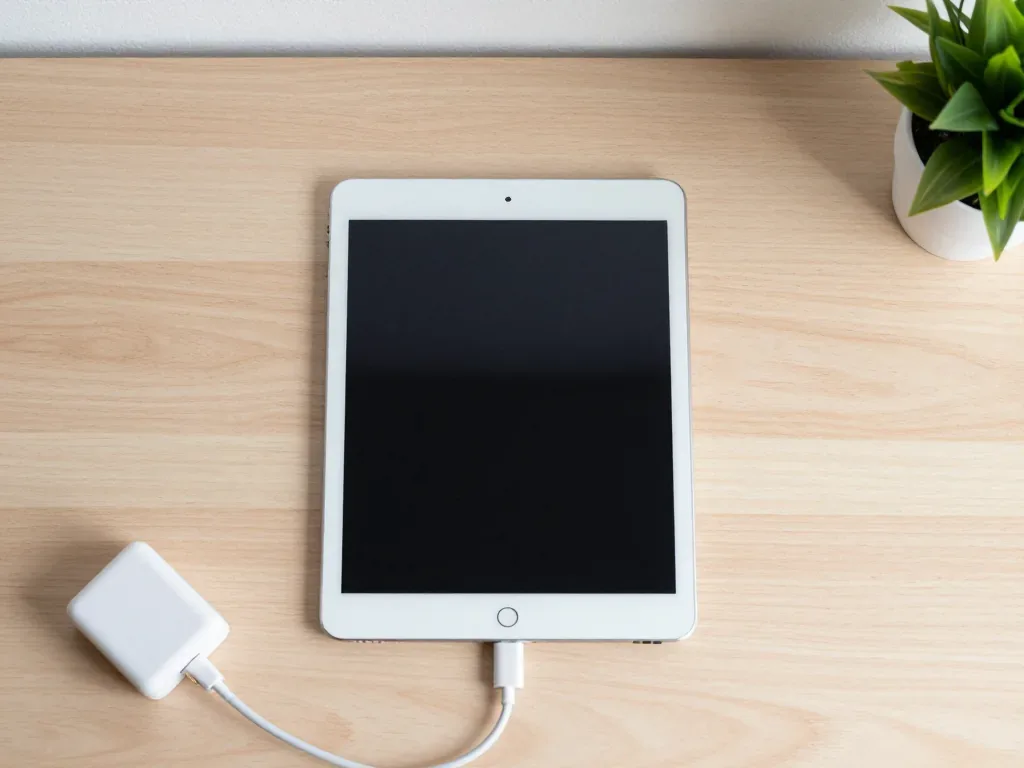
- Power controller: a device that shows the charging bolt yet gains no percentage usually has a fault on the power rail.
- Rear camera: a blurred or shaking image comes from a damaged module or a loose connector, not from software.
- Microphones and speakers: muffled calls or a silent speaker on one side trace back to a blocked mesh or a failed ribbon.
- Home button and Touch ID: a button that clicks yet does not register is a connector issue we test alongside the display.
Why the Air 2 Screen Is Replaced as a Whole Module
The Air 2 was the first iPad with a fully laminated display, and that single design decision defines what can and cannot be repaired on it. Here is how it differs from earlier and later models.
Laminated versus separate glass and what it means for your repair
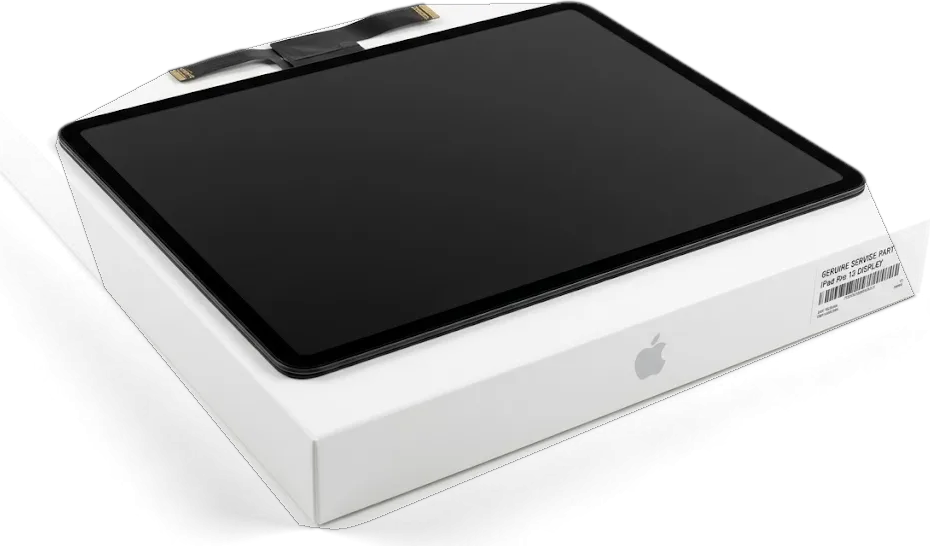
On the Air 2 the glass and the LCD are glued into one unit, so a cracked display is replaced as a whole rather than glass alone. The protective layer sits on an optically clear adhesive directly over the matrix, and there is no air gap between them to work through. Separating them in a workshop means heating the panel to soften the adhesive, slicing through it with a wire, then re-gluing new glass onto a matrix that is easy to damage in the process. That is why a glass-only job on this tablet rarely makes sense: the risk of killing a working LCD outweighs the saving. On older tablets with separate layers a glass-only swap is possible when the matrix is intact, which is why the same crack costs very different amounts of work on different generations.
How the generations compare on screen construction
Which models take glass only and which take the whole module| Generation | Screen construction | What a cracked screen needs |
|---|
| iPad 2, 3, 4, 9, 10 | Separate glass and LCD | Glass alone if the matrix is intact |
|---|
| iPad Air (1st gen), mini 1–3 | Separate glass and LCD | Glass alone if the matrix is intact |
|---|
| iPad Air 2, mini 4, mini 5 | Laminated module | Full module replacement |
|---|
| iPad Air 3 | Laminated module | Full module replacement |
|---|
| iPad Pro 11 and 12.9 | Laminated module | Full module replacement |
|---|
Keeping Touch ID and the Home button working after a screen swap
We move your original Home button with its Touch ID onto the new module, because the sensor is paired to the logic board and a new button would not unlock the tablet. The pairing is written into the board at the factory, and no workshop tool rewrites it. When we take the old module off, the button and its flex cable come out first and go straight onto the replacement before anything is screwed down, so the fingerprint reader keeps working exactly as before. If a workshop offers a new button with Touch ID included, the fingerprint function will not work afterwards — the pairing cannot be recreated by swapping hardware. Ask which button goes into your tablet before you leave it, and check the unlock with your own finger at pickup.
How We Handle Your iPad From First Message to Pickup
The whole route is built so you know the price, the component and the turnaround before anyone opens the tablet. Here is each step and what you get at the end.
From a WhatsApp photo to a fixed price on the receipt
Send a photo of the damage on WhatsApp and an engineer replies within 5 minutes with a price estimate and a free time slot. The estimate becomes binding only after the 15-minute diagnostics in front of you — a photo cannot show a swollen battery or a bent frame, and those change the job. We open the tablet at the counter, point at what is broken and name the component: original or aftermarket. Price, component, turnaround and warranty are then fixed on the receipt in about 2 minutes, before any work starts. The photo saves the first trip, while the bench check saves the argument later. Ask for the estimate in writing on the same chat thread, so you can compare it with the paperwork at pickup.
What you see before we install the part
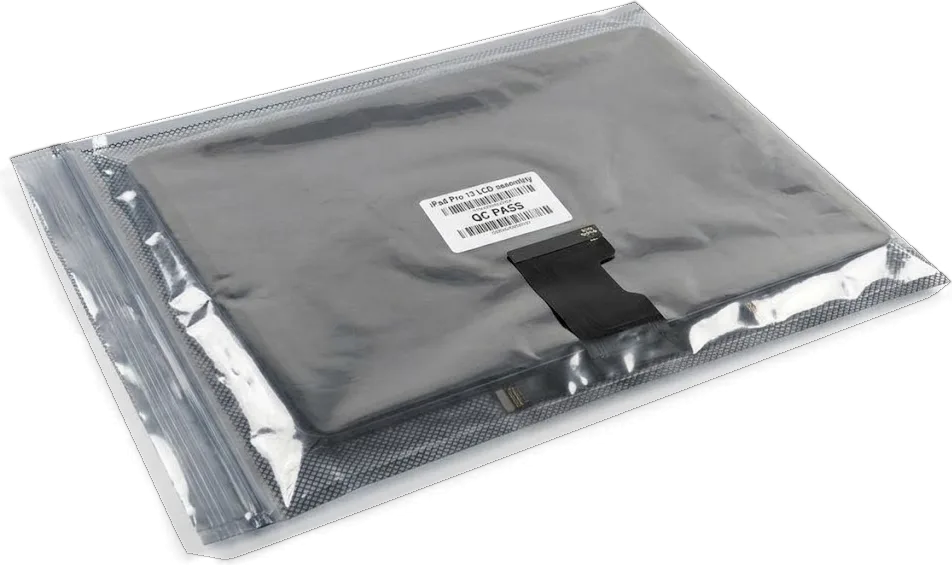
- Factory packaging: we open the new part in front of you, sealed and labelled, so you see it has not been handled before.
- Type on paper: the receipt states original or aftermarket, and the engineer shows which one you paid for.
- Old component returned: the removed display or battery goes back to you with the tablet, not into a bin.
- Warranty card: the card carries the same dates as the paperwork, up to 1 year depending on the component.
- Copy for you: you keep one, we keep one, and both list turnaround and warranty.
The 32-point check you go through with the engineer
After assembly we run a 32-function check that takes about 10 minutes, and you repeat the key tests yourself with the engineer. You tap through Touch ID, switch True Tone on and off, open both cameras, record a voice note on each microphone, play a track on the speakers, plug in the charger and join the Wi-Fi. The engineer works from the same list beside you, so nothing is signed off on trust. Test Touch ID, True Tone, both cameras, the microphones, speakers, charging and network before you leave the counter — a fault found there is our problem, a fault found at home is a debate. The tablet then goes back to you with the paperwork, the warranty card and the old part in one bag.
Original Part or Aftermarket and What the Warranty Covers
Both routes are legitimate and both are covered by our guarantee, but they behave differently in daily use. Here is what actually changes when you pick one or the other.
What changes in daily use with an original screen or battery
A genuine display keeps the colour accuracy, True Tone behaviour and touch response the Air 2 shipped with, while an aftermarket panel can look slightly cooler or dimmer. A factory cell holds its full design capacity from the first cycle, whereas a compatible one typically reaches close to it but varies by batch and can drift after twelve months of daily charging. True Tone is the setting owners notice first: with a genuine display it shifts warm and cool with the room exactly as before, and with some aftermarket panels the shift is muted or absent. We show both components in factory packaging before installation so you can compare brightness and hue at the counter. For a tablet used mostly for reading and video the difference is subtle; for drawing with a stylus or colour work it is the first thing you notice.
Comparing the two options side by side
How the two part types differ in daily use| Point | Original part | Aftermarket part |
|---|
| Display look | Matches factory colour and brightness | May be cooler or slightly dimmer |
|---|
| Touch and True Tone | Behave as designed | Usually fine, occasionally less precise |
|---|
| Battery behaviour | Full design capacity | Close, varies by batch |
|---|
| Warranty | Up to 1 year | 6 months |
|---|
What the warranty actually covers
Every job comes with a guarantee up to 1 year, written on the receipt and the card you take home. That document names the component installed and the work performed, so there is no ambiguity later about what was replaced and when. We cover the fitted item and our workmanship: if a swapped display develops dead touch or a new cell stops holding charge within the term, we take it back and redo the job at no extra cost. The terms do not extend to a fresh drop or liquid ingress — which is why the check at the counter is worth the ten minutes. Keep the card with the receipt: it is the only proof the counter team needs to start a claim.
Turnaround Times and Waiting While We Work
Most Air 2 jobs are done the same day, but a few cases need longer. Here is what to expect and how to plan your visit around it.
How long each type of job takes
Expected time per repair type| Job | Typical turnaround | Notes |
|---|
| Display module swap | From 1 hour | Usually done while you wait |
|---|
| Battery replacement | From 1 hour | Glass has to come off first |
|---|
| Charging port or flex | Same day | Depends on part in stock |
|---|
| Board-level repair | 1–3 days | Done under a microscope |
|---|
Water damage and why the diagnosis can take longer
After liquid contact the diagnostics can take up to two days, because corrosion under the shields only shows up after cleaning and testing. We strip the logic board, clean it in an ultrasonic bath and inspect the power controller and nearby lines under a microscope — a shorted rail that looks fine on the surface often reveals itself only once the residue is gone. A wet Air 2 that powered on straight after the spill is the harder case, not the easier one. Do not charge a damp device to "see if it still works" — power running through a wet circuit turns a cleanable short into a burned component.
Is it worth repairing an older tablet at all
An Air 2 is worth repairing when the rest of the tablet is healthy and the fault is a display or a battery, not when the mainboard has failed and the case is bent. The aluminium body holds its shape well, so a straight frame with an intact laminated panel usually means the fault is isolated and the fix restores full function. A swollen cell that has already pushed the glass out is a different story: the display may be distorted, and the repair only makes sense if the housing is still square. Age alone is a poor guide — a well-kept Air 2 that still holds a charge and runs your apps is a better repair candidate than a newer tablet with a cracked frame.
Summary: iPad Air 2 Repair
A few checks decide whether an iPad Air 2 repair holds up months later. Here is what to keep in mind before you hand the tablet over.
- Laminated screen: a cracked display on this generation is replaced as a full module, not as separate glass.
- Swollen battery: a gap along the display edge signals a battery that has expanded and needs checking before the next charge.
- Touch ID: the fingerprint sensor lives in the Home button and is paired to the board, so the original button must move to the new display.
- Paperwork: ask for the part, turnaround and warranty in writing before work starts, and keep the old component.
- Counter test: check the fingerprint sensor, cameras, speakers and charging at the counter, not at home.













 MacBook
 iMac
 Mac mini and Studio
 Apple Watch
 AirPods
 Apple Pencil
 Apple TV
 HomePod